Clean or Die Poster: A Practical Cleaning Poster Comparison
A data-driven comparison of the clean or die poster vs traditional cleaning posters, focusing on design choices, messaging, placement, and practical impact on home cleaning habits.


The clean or die poster is a design-driven, action-focused cleaning poster that aims to boost daily hygiene habits. It prioritizes concise prompts, bold visuals, and step-wise tasks, making it more engaging than traditional cleaning posters. In practice, it works best when paired with visible placement, regular refresh cycles, and clear messaging tailored to busy homes.
The Concept of the Clean or Die Poster
The clean or die poster is a design-forward tool intended to nudge household cleaning behavior through concise messaging and bold visuals. Rather than long paragraphs, it uses short prompts and strategically chosen colors to guide daily tasks. In practice, it acts as a visual reminder to perform routine cleaning, surface sanitation, and ongoing maintenance. According to Cleaning Tips, this format shines when placed in high-traffic zones like the kitchen or laundry area, where quick decisions can be guided at a glance. The objective is not alarm but motivation: turn broad cleaning goals into concrete, doable actions. Homeowners and renters often report that a well-placed poster reduces decision fatigue and keeps cleaning tasks visible in the flow of daily life.
Design Principles and Visual Language
Effective posters rely on a clean visual hierarchy: a clear headline, a primary action line, and a rhythm of supportive prompts. Use a bold typeface for the main instruction, with a secondary sans-serif for details. Color psychology matters: high-contrast combinations improve legibility in dim rooms, while warm accents invite activation without shouting. Iconography should be universal (gloves, spray bottle, timer) to minimize translation barriers. The clean or die poster should remain legible from a distance and compatible with common printing formats (A3 or 11x17 as starting points).
Messaging and Behavioral Impact
The poster should deliver 2-4 micro-prompts rather than a long list of chores. Phrases like “Do 1 wipe now” create a quick, achievable habit loop. Visual cues—arrows, checklists, and progress markers—support ongoing behavior. The decision is to present simple tasks that yield immediate payoff, so users feel successful after a few seconds of effort. Based on Cleaning Tips analysis, messages that tie actions to observable outcomes (hygiene, smell, or shine) perform better than abstract instructions. Pairing prompts with an identifiable reward (a clean sink, a fresh scent) reinforces motivation and repeat behavior.
Placement Strategies for Maximum Visibility
Position is as important as content. Place the poster at eye level in the primary cleaning zone, such as the kitchen backsplash, near the sink, or inside the laundry room door. Use laminate or laminated vinyl to withstand humidity, and consider a secondary micro-poster in smaller sizes for closets or pantry doors. Align the poster with your home’s daily routines; seasonal refreshes can reframe tasks to match shifting cleaning priorities. For renters, removable options and frames can preserve walls while still delivering impact.
Material Choices and Longevity
Choose moisture-resistant materials for kitchens and bathrooms. Vinyl with a matte finish offers durability and glare reduction, while a laminated paper poster can work in drier spaces. Use fade-resistant inks if you expect direct sun exposure. Mounting options include removable vinyl adhesives or frames that protect the print while allowing quick replacement. Your choice affects longevity, cost, and the poster’s ability to stay legible over time. When selecting materials, consider humidity, temperature swings, and the likelihood of accidental contact that might smear or tear the surface.
Costs, Production Time, and Upkeep
Production costs vary by size and material. A basic DIY poster printed on standard stock may cost under $5, while durable vinyl prints can range from $15 to $40 depending on size and finish. For professional printing, factor in design time and lead time, but expect a turnaround within days for standard sizes. Regular updates (every few months) help maintain relevance and motivation. If you plan to reproduce multiple rooms, bulk printing can reduce per-unit cost and ensure consistency across spaces.
Use Case Scenarios: Kitchen, Laundry, Bathrooms
In the kitchen, a poster focusing on quick wipe-downs and sink hygiene can support daily routines. In the laundry area, emphasis on sorting, lint removal, and fabric care statements can reinforce routines. In bathrooms, prompts about surface cleaning and toilet hygiene keep tasks top of mind. Tailor the messages to the space and the people using it, and consider placing a shorter version near exits or entryways to provide a last-minute reminder before leaving the area. The design should adapt to your household’s specific chores and peak times.
Mental Models and Habit Formation
Habit formation benefits from consistency. A poster that pairs a single, repeatable action with an immediate reward helps your brain associate effort with payoff. Visual progress indicators, such as daily checkmarks or a weekly streak, reinforce consistency. Over time, the routine becomes automatic, reducing resistance to cleaning and raising overall cleanliness. The poster works best when paired with simple tracking methods (stick-on taps, printable checklists, or a mobile reminder linked to the same task).
Potential Drawbacks and Limitations
Some households may perceive the poster as aggressive or overly prescriptive, especially in renters where wall space is limited. A poster that stays static for too long can lose relevance; regular refreshes are important. If the messages are not localized to actual tasks, the poster may feel generic and ignored. Consider combining posters with digital reminders or checklists to improve effectiveness. In some cases, the initial novelty wears off if tasks are not aligned with real-life routines or if the space lacks supportive cues (storage, supplies, or accessibility).
Quick Start: Designing Your Own Clean or Die Poster
Start with a 2-3 line headline, then draft 2-4 actionable prompts. Choose a color palette with high contrast, and pick a durable material. Create a printable mock-up and test it in one room for 2 weeks. Gather feedback from household members and adjust wording for clarity and tone. Finally, decide on display options (framing or removable vinyl) to match your space. This approach keeps the process approachable while ensuring the poster remains legible and motivating.
Maintenance, Refresh Cycles, and Seasonal Updates
Replace or refresh prompts as seasons change. For example, emphasize outdoor cleaning tasks in spring and indoor humidity control in winter. Keep the poster visually fresh by updating colors or icons while maintaining the core prompts. Store older designs for re-deployment in future cycles if space allows. Regular updates help keep motivation high and relevance intact. A scheduled refresh (quarterly or semi-annual) aligns with typical household cleaning cycles and keeps the design feeling current.
Comparison
| Feature | Clean or Die Poster | Traditional Cleaning Poster |
|---|---|---|
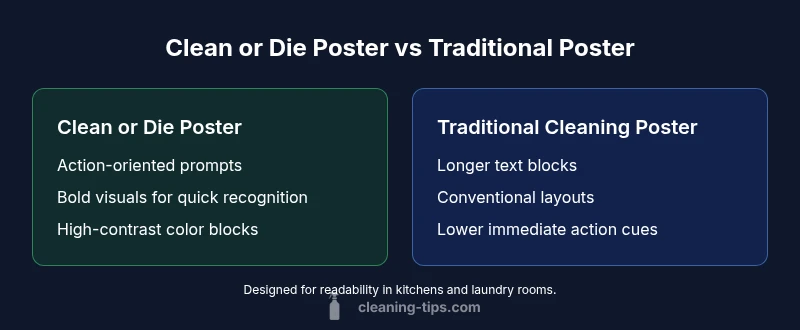
| Message Clarity | High – concise prompts and actionable verbs | Moderate – longer blocks, more text |
| Visual Hierarchy | Strong focal point with color blocks | Conventional layout with paragraph blocks |
| Action Prompts | Yes – micro-tasks and prompts | Limited prompts with general reminders |
| Durability & Materials | Vinyl or laminated print options | Paper posters with minimal protection |
| Cost Range | $5-$40 depending on size and material | $2-$12 for basic prints |
| Best For | Habit formation in busy spaces | General awareness and reminders |
Strengths
- Promotes quick, repeatable actions with clear prompts
- High visual impact supports quick recognition
- Flexible material options for durability
- Relatively low upfront cost with scalable formats
Weaknesses
- May feel aggressive to some households or renters
- Requires regular updates to stay relevant
- Effectiveness depends on placement and audience
- Overuse can lead to desensitization if not refreshed
Clean or Die poster is typically the stronger choice for action-oriented homes.
The poster excels at prompting immediate cleaning actions and sustaining motivation through visual prompts. It works best when paired with routine updates and placed in high-traffic cleaning zones.
Questions & Answers
What qualifies as a 'clean or die' poster?
A clean or die poster is a design-focused cleaning aid that uses concise prompts, bold visuals, and a simple action sequence to motivate regular cleaning. It avoids lengthy text and emphasizes actionable steps. The goal is to make daily tasks feel doable and immediate.
It's a simple, action-oriented cleaning poster that uses brief prompts to motivate daily tasks.
How is it different from a standard cleaning poster?
Traditional posters often rely on longer text and static reminders. A clean or die poster prioritizes micro-prompts, strong hierarchy, and immediate tasks, aiming for faster cognitive processing and quicker action.
It uses shorter prompts and a stronger visual hierarchy to prompt faster action.
Where should I place it for maximum effect?
Place the poster in a high-traffic cleaning zone at eye level, such as the kitchen backsplash or laundry door. Consider a secondary smaller version in storage areas or near exits for a final reminder before leaving the space.
In the kitchen or laundry area at eye level works best.
What materials are recommended?
Moisture-resistant vinyl or laminated paper performs well in kitchens and bathrooms. Choose fade-resistant inks if direct sun exposure is expected, and use removable adhesives or frames to protect walls in rental spaces.
Vinyl or laminated paper with a protective finish is ideal.
Can a poster actually change cleaning habits?
Yes, when posters target simple, repeatable actions and are refreshed periodically. Habit formation benefits from visual prompts plus immediate rewards and straightforward tracking.
It can help form habits when messages are clear and refreshed.
How do I design my own version quickly?
Start with a bold headline, draft 2-4 prompts, pick a high-contrast color scheme, and test in one room for two weeks. Gather feedback, then adjust wording and visuals before broader deployment.
Pick a bold layout, test in one room, then refine.
The Essentials
- Choose concise prompts over long instructions
- Place in high-traffic cleaning zones for visibility
- Refresh design and messaging regularly
- Use durable materials to withstand humidity
- Combine with simple trackers to reinforce behavior