Clean Perfume Scents: A Practical Guide to Safer Fragrances
Learn how to choose clean perfume scents that are skin-friendly and environmentally mindful. This guide covers ingredient labels, certifications, and practical testing tips for healthier fragrance choices.


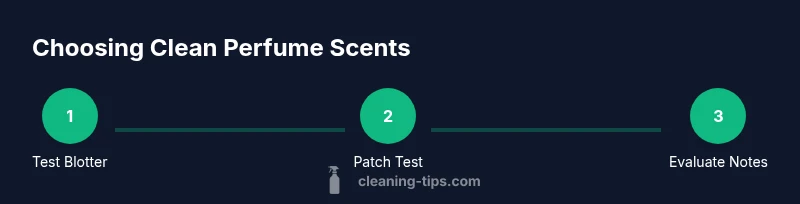
In this guide you will learn to pick clean perfume scents by examining ingredient transparency, avoiding irritants, and favoring safe packaging. You’ll learn to read labels, verify certifications, test fragrances on blotters, patch-test on skin, and store scents properly to maintain freshness while reducing exposure to unwanted chemicals. This approach emphasizes transparency, skin safety, and environmental considerations for healthier fragrance choices. This guidance is practical for homeowners and renters alike.
Understanding clean perfume scents
In today’s market, 'clean' is a moving target, but most shoppers agree it means fragrances that favor transparent ingredients, lower irritation risk, and responsible sourcing. According to Cleaning Tips, clean perfume scents prioritize clear ingredient lists, minimal synthetic irritants, and packaging mindful of the environment. This section defines what counts as clean in perfumery, how labels communicate safety, and how to spot marketing hype from real value. You’ll learn to balance fragrance enjoyment with skin health and air quality in your home. When you see terms like 'hypoallergenic', 'fragrance-free', or 'IFRA-compliant', use them as starting clues, not guarantees. The goal is informed testing and smarter purchasing, not fear or fanaticism. By focusing on transparency, you’ll reduce exposure to unknown additives and make choices that fit your daily routine and shared spaces.
Key ingredients and labels to look for
Clean perfume scents root their safety in ingredients you can understand and verify. Look for complete ingredient disclosure on the label, including carrier oils, solvents, and flavor/fragrance components. Favor brands that avoid unnecessary parabens, phthalates, and certain synthetic allergens. Certifications or claims such as 'IFRA standard compliant', 'cruelty-free', or 'vegan' help, but they’re not guarantees—always cross-check the ingredient list. For air quality at home, consider products with minimal aerosol propellants and solvent-heavy formulas. Keep an eye out for allergen disclosures if you have sensitivities. The right labels guide you toward fragrances that align with your health and environmental goals.
How to read ingredient lists: conventional vs clean
Ingredient lists can be dense, but a few strategies simplify reading them. Start with the fragrance blend—often listed as 'parfum' or 'fragrance'—and look for explicit components you recognize. Clean formulations tend to use simpler solvent systems, fewer synthetic stabilizers, and transparent notes. Note any added colorants or preservatives; many clean perfumes omit these or replace them with safer alternatives. Compare two products side by side: the cleaner option should list fewer controversial substances and more emphasis on plant-based or mineral ingredients. Remember that 'natural' does not automatically equal 'safe' and that some fragrance ingredients are highly regulated for purity. Use a magnifying glass, keep a log, and patch-test new scents before regular use.
Patch testing and skin safety considerations
Patch testing is essential when trying new perfumes, especially if you have sensitive skin. Start by applying a small amount to a discreet patch on your inner forearm and wait 24–48 hours for any reaction. If irritation occurs, wash gently and discontinue use. Consider diluting a sample with unscented lotion to reduce exposure during initial testing. Track any itching, redness, or headaches, and note how the scent changes on your skin over time. Patch testing helps you avoid full-face reactions and makes future shopping safer and more predictable. Always follow product-specific instructions and consult a dermatologist if you have serious allergies.
Recommendations for different skin types and environments
Skin type influences how perfume reads on you. Oily skin tends to develop long-lasting sillage; dry skin may require reapplication. For sensitive skin, opt for simpler formulations with fewer irritants and shorter ingredient lists. In shared spaces like bathrooms or offices, avoiding very strong or alcohol-heavy scents reduces exposure for others. If you’re looking for sustainable options, prioritize brands that source ingredients responsibly and minimize packaging. The goal is a fragrance that performs well on your skin without overpowering your environment or triggering sensitivities.
Fragrance families and notes explained
Fragrance notes unfold in three stages: top, middle, and base notes. Clean perfume scents often highlight fresh citrus, green, or light floral notes as top notes, followed by softer heart notes and a clean dry-down. Understanding these notes helps you predict longevity and mood. For daytime wear, choose lighter notes that remain unobtrusive; for evenings, you may prefer richer bases, but look for safer ingredient blends. Use note sheets to compare possibilities side-by-side and track which notes you enjoy most.
Natural vs synthetic: what 'clean' really means
The phrase 'natural' can be misleading in perfumery; many clean scents use a blend of natural and synthetic ingredients designed to minimize irritants. Natural ingredients offer unique aromas but can carry allergens; synthetics can be engineered to be more stable and less irritating. A thoughtful approach blends both worlds with attention to purity, sourcing, and regulation. The key is not an absolute 'natural' label but the presence of transparent ingredients and controlled exposure.
Certifications, brands, and where to buy
No universal 'clean' certification guarantees safety, so treat labels as helpful hints rather than promises. Look for brands that share detailed ingredient lists, conduct dermatological testing, and adhere to industry standards like IFRA guidelines. When shopping, choose reputable retailers with clear return policies and fragrance samples. If possible, test on blotters in-store and compare several brands to see how they perform on your skin and in your living space. Remember, brand reputation and customer reviews can be useful guides as you navigate this market.
Shopping strategies: sample, test, and compare
A practical approach to finding clean perfume scents involves sampling and comparison. Request or purchase small travel-size samples to minimize waste while you test. Create a simple comparison grid: scent profile, intensity, skin compatibility, packaging, and price. Maintain a scent journal to record how the fragrance evolves over time and how you feel wearing it. If you notice strong mood changes or headaches, re-evaluate your choice. The right method reduces impulse buys and builds a library of trusted scents.
DIY and home-made scent options
If you enjoy DIY, you can craft simple, clean-scented blends using unscented bases, essential oils, and safe carriers. Be mindful of purity, label ingredients, and potential irritants. Start with well-known, skin-safe essential oils, diluted to safe concentrations, and avoid phototoxic oils if you wear perfume in daylight. DIY can be rewarding, but it requires care to avoid skin irritation or unpredictable reactions.
Maintaining scent longevity and storage best practices
Storing perfume properly protects both the aroma and the integrity of ingredients. Keep bottles away from direct sunlight, heat, and humidity. Use a stable cap, store upright, and avoid contamination by using clean testers and applicators. For travel, decant into travel-size atomizers with leak-proof seals. Regularly rotate scents to prevent packaging from degrading. Clean air in your home preserves fragrances you love, so consider keeping scents in a cool, dark cabinet away from household cleaners with strong fumes.
Common pitfalls and how to avoid them
Even with the best intentions, shoppers fall into familiar traps. Beware 'natural' hype without evidence or transparent lists. Avoid fragrances marketed as 'scent boosters' with unknown concentrate levels. Don’t assume cost equals quality; expensive scents can still contain irritants. Always patch-test and read labels, especially in shared spaces. For extra assurance, consult dermatology resources and trusted retailers. For a concise, research-backed reference, see authoritative sources listed below.
Tools & Materials
- Fragrance blotter strips(Use unscented blotters to test fragrance notes without skin contact.)
- Cotton pads or swabs(Apply diluted samples and transfer to patch test areas if needed.)
- Unscented lotion(Dilute samples for initial skin testing to reduce irritation.)
- Travel-size perfume testers(Great for on-the-go testing without committing to full bottles.)
- Timer or clock(Track patch-test observation periods (e.g., 24–48 hours).)
Steps
Estimated time: 2-3 hours
- 1
Define your clean fragrance goals
Clarify whether you prioritize skin-safety, eco-friendly packaging, or transparent ingredient lists. Write a short checklist to guide your shopping, then reference products that meet those criteria.
Tip: Create a two-column comparison sheet: 'ingredients' vs 'claims' to spot greenwashing. - 2
Check ingredient transparency
Read the full ingredient list and look for any restricted substances. Favor brands that reveal all components, not just marketing terms.
Tip: Circle any ingredients you recognize and research unfamiliar items before buying. - 3
Look for credible certifications
Seek third-party indicators such as dermatological testing, cruelty-free, vegan, or IFRA-compliance marks. Use them as guidance, not guarantees.
Tip: Cross-check certifications with the brand’s own disclosures. - 4
Patch-test on skin
Apply a tiny amount to a discreet skin patch and wait 24–48 hours for a reaction. If irritation occurs, discontinue use and consult a clinician.
Tip: If you have sensitive skin, dilute the sample with unscented lotion first. - 5
Test in real-world conditions
Wear the fragrance for short periods in your home to observe how it interacts with your environment and other scents in the air.
Tip: Note scent evolution over 2–4 hours to gauge longevity. - 6
Compare notes and families
Create a simple jot-down of top/middle/base notes and decide which notes you enjoy most in daily life.
Tip: Prefer clean notes (citrus, green, light florals) for daytime use. - 7
Evaluate packaging and sourcing
Assess packaging recyclability and ingredient sourcing disclosures. Prefer brands with clear environmental commitments.
Tip: Choose refills or minimal packaging where possible. - 8
Finalize a small, phased purchase
Buy a small bottle or sampler set of your top choice and monitor comfort and satisfaction over a few weeks.
Tip: Keep a fragrance journal to track your experiences.
Questions & Answers
What qualifies as a 'clean' perfume scent?
A clean perfume scent uses transparent ingredient lists, minimizes irritants, and aligns with ethical packaging. Definitions vary, so rely on full ingredient disclosures and third-party certifications when available.
A clean perfume scent is defined by clear ingredients, fewer irritants, and responsible packaging. Always check the full ingredient list.
Are there universal certifications for clean perfumes?
There is no universal standard for clean perfumes. Look for labels like dermatological testing, cruelty-free, vegan, or IFRA-compliance and verify against the ingredient list.
No universal certification exists; look for dermatology testing, cruelty-free marks, and IFRA compliance.
How should I patch-test perfumes safely?
Patch-test on a small skin area for 24–48 hours. If any reaction occurs, discontinue use and seek medical advice if needed.
Patch-test on a small skin area for a day or two, and stop if it itches or reddens.
Do natural perfumes automatically mean safer?
Natural ingredients can still cause irritation. Safety depends on the overall formulation, purity, and how ingredients interact with your skin.
Natural doesn’t always mean safer; you still need to read labels and patch-test.
How long do clean perfumes last on skin?
Longevity varies by notes and concentration. Top notes fade quickly, while base notes linger longer. Patch-testing helps estimate personal longevity.
Top notes fade fast; base notes stay longer. Patch-test to see how long it lasts on you.
Where can I buy clean perfume scents?
Shop at reputable retailers that provide complete ingredient disclosures, tester samples, and fair return policies. Look for brands with transparent sourcing and clear safety practices.
Buy from reputable retailers with full ingredient lists and tester samples.
Watch Video
The Essentials
- Define clear clean-fragrance goals before shopping.
- Prioritize transparent ingredient lists and credible labels.
- Patch-test and observe scent evolution on your skin.
- Choose real-world tested scents that suit your environment.