How to Clean to jerk: Step-by-Step Cleaning Guide
Learn how to clean to jerk safely and effectively with step-by-step tips, tools, and pro techniques for a healthier home.


This guide shows you how to clean to jerk safely and effectively using a step-by-step approach. You’ll learn the exact tools, surfaces, and techniques needed, plus safety reminders and time-saving tips to achieve a thorough, streak-free result in your home. We’ll cover common problem spots, product choices, and quick checklists to keep you on track.
What 'clean to jerk' means in cleaning contexts
In Cleaning Tips, the phrase clean to jerk is used to describe a deliberate, targeted approach to cleaning that emphasizes efficiency and control. Rather than random scrubbing, this method treats each area as a small workspace with a clear plan. The goal is to remove grime with minimal effort and without damaging delicate surfaces. In practice, clean to jerk means selecting the right cleaner for the job, applying it in measured amounts, and using technique that minimizes streaking and residue. If you’re trying to restore a frequently used zone, you’ll benefit from a repeatable routine you can reuse across rooms. This article teaches a practical version of clean to jerk that you can adapt to kitchens, bathrooms, and laundry areas. According to Cleaning Tips, adopting a focused routine reduces waste and improves overall cleanliness over time.
Surfaces and problem areas to tackle
To clean to jerk effectively, identify zones that accumulate grime fastest and plan a targeted approach for each. In kitchens, focus on countertops, stovetops, and the sink area where grease and soap scum build up. Bathrooms demand attention on faucets, mirrors, tile grout, and shower doors, where mineral deposits and mildew threaten clarity. Living spaces deserve focus on high-touch surfaces like light switches, door handles, and electronics screens. Don’t forget hidden spots: vent grilles, under-sink cabinetry, and the backs of appliances. The goal with clean to jerk is to create a short, repeatable workflow that you can apply across rooms. This approach helps you avoid re-cleaning and keeps surfaces healthier long-term.
Tools and products for clean to jerk efficiently
Building the right toolkit accelerates the clean to jerk process. Choose a set of microfiber cloths that are soft and lint-free, a spray bottle for precise application, and a neutral all-purpose cleaner suitable for most surfaces. For deodorizing and gentle abrasion, keep baking soda on hand, plus white vinegar for tough grime and mineral deposits. A mild dish soap can help break down grease, while a non-scratch scrub brush handles textured surfaces without damage. Rubber gloves protect hands, and a bucket plus towels simplify rinsing and drying. Optional: a squeegee for smooth mirror and glass surfaces. With the right tools, you can apply products efficiently and minimize streaking.
Safety considerations and handling delicate surfaces
Safety and surface compatibility are essential when you’re practicing clean to jerk. Always read product labels and test cleaners on an inconspicuous area first. Ventilate the space when using liquids to avoid fumes. Wear gloves to protect skin, and avoid mixing cleaners, especially bleach with ammonia or other cleaners, which can release toxic fumes. For electronics and screens, use a microfiber cloth lightly dampened with water or a dedicated electronics cleaner. Delicate finishes like brushed metal or natural stone may require pH-neutral cleaners. Following these precautions helps you clean with confidence while preserving finishes and indoor air quality.
High-impact workflow overview
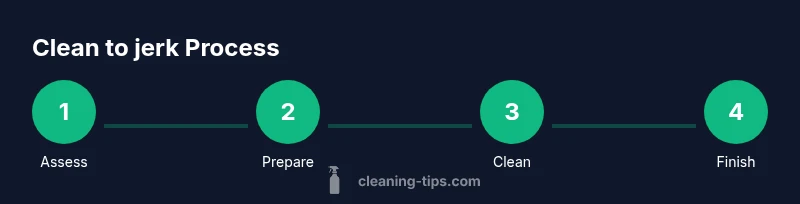
A practical clean to jerk workflow follows a repeatable sequence: assess the area, gather materials, pre-treat spots, clean with controlled motions, rinse, dry, and inspect. The emphasis is on targeted cleaning rather than brute scrubbing. Using a two-bucket approach—one for rinse water and one for fresh cleaner—minimizes cross-contamination and reduces residue. Work from top to bottom and from less dirty to more soiled zones to keep debris from redistributing. Document any stubborn spots so you can revisit them with spot treatments. This overview helps you stay consistent and efficient across rooms.
Stain removal and deodorizing specifics
For stubborn stains and odors, a baking soda and vinegar strategy can be effective when used carefully. Sprinkle baking soda on the spot, then mist with a small amount of vinegar to create a gentle fizz that loosens grime. After it buffers, scrub with a non-scratch brush and wipe clean. If odor persists, let the area air out briefly and re-clean with a neutral cleaner. Always avoid saturating porous materials; test on a hidden area first and adjust your approach based on the surface type. This targeted method is central to clean to jerk for achieving fresh, deodorized results.
Drying, ventilation, and odor control
Drying thoroughly is a crucial finish for clean to jerk. After rinsing, wipe surfaces dry with a clean microfiber cloth and keep the area well-ventilated to prevent moisture from lingering. For bathrooms and kitchens, a quick pass with a dry cloth on metal parts and seals helps prevent water spots. If you notice lingering odors, consider an open window or a small fan to improve air circulation. Proper drying reduces the chance of streaks, residue, and new grime forming, ensuring your results last longer between cleanings.
Maintenance and long-term care to keep results
To sustain the benefits of clean to jerk, establish a quick weekly routine that addresses high-traffic zones and a deeper monthly clean for stubborn spots. Keep a dedicated cleaning kit in a ready-to-go location so you can perform routine touch-ups with minimal effort. Replace worn cloths and check cleaning solutions for expiration or separation to maintain efficacy. Routine upkeep reduces the need for heavy cleaning and helps surfaces stay clearer, longer. By integrating this approach into your lifestyle, you’ll experience a consistently healthier home environment.
Common mistakes to avoid
Common mistakes in clean to jerk include using too much cleaner, which leads to residue, and scrubbing aggressively on delicate finishes, which causes micro-scratches. Skipping a rinse step can leave soap film behind, making surfaces appear dull. Another pitfall is ignoring ventilation, which can cause fumes or moisture buildup in small spaces. Finally, not testing products on hidden areas risks discoloration or damage. Being mindful of these missteps helps you achieve reliable, safe outcomes.
Quick-start checklist for rapid results
- Identify surfaces and problem areas for targeted cleaning.
- Gather tools: microfiber cloths, neutral cleaner, baking soda, vinegar, bucket, gloves.
- Pre-treat obvious grime, then clean with controlled motions.
- Rinse thoroughly and dry completely.
- Inspect and re-treat any stubborn spots.
- Ventilate space during and after cleaning to keep air quality high.
Authoritative sources and further reading
For evidence-based cleaning guidance, consult established authorities. The Centers for Disease Control and Prevention (CDC) provides general cleaning and disinfection guidelines for households and workplaces. The Environmental Protection Agency (EPA) offers resources on safe cleaning products and surface care. The Occupational Safety and Health Administration (OSHA) emphasizes proper ventilation and personal protective equipment when handling cleaning chemicals. These sources support best practices for homes and help you implement an effective clean to jerk method with safety in mind.
Tools & Materials
- microfiber cloths(Lint-free, at least 12x12 inches)
- spray bottle (16 oz)(For precise application)
- neutral all-purpose cleaner(pH-neutral if possible)
- white vinegar(Dilute 1:1 with water for general use)
- baking soda(Deodorizing and gentle abrasion)
- dish soap(Mild formulation)
- rubber gloves(Protect skin from cleaners)
- scrub brush (non-scratch)(For textured surfaces)
- bucket(Rinsing water)
- old towels or drying cloths(Drying and blotting)
Steps
Estimated time: 35-50 minutes
- 1
Assess and prep area
Survey the space and clear loose debris. Remove items that block access and put away valuables to avoid accidental spills. This first step sets up a smooth cleaning session and helps you target the right spots with the right tools.
Tip: Take photos of problem areas to guide your approach. - 2
Gather materials and protect the area
Assemble your kit within arm’s reach. Put down towels to catch drips and wear gloves to protect skin. Having everything ready reduces trips back to the supply cupboard and keeps your workflow efficient.
Tip: Pre-fill your spray bottle and line up cloths by task. - 3
Pre-treat stubborn grime
Apply cleaner to the toughest spots first and let it sit for a few minutes. Pre-treating concentrates cleaning power and shortens overall scrubbing time. Avoid letting cleaners dry on surfaces.
Tip: Avoid applying cleaner to heat-exposed surfaces that could warp finishes. - 4
Clean with controlled motions
Use steady, overlapping motions across each surface. Work from top to bottom to keep grime from dripping onto cleaned areas. Use a damp cloth and light pressure to minimize streaks.
Tip: Dip cloth in rinse water frequently to avoid spreading residue. - 5
Rinse and blot dry
Rinse surfaces with a clean, damp cloth and wipe away any cleaner residue. Dry thoroughly with a fresh microfiber cloth to prevent water spots and mineral build-up.
Tip: Finish with a final wipe to ensure a streak-free finish. - 6
Ventilate and cool down
Open windows or run a fan to improve air circulation as cleaning progresses. Adequate ventilation helps odors dissipate and speeds drying.
Tip: Switch to a dry cloth for the final wipe to maximize dryness. - 7
Inspect and touch up
Do a quick pass over all surfaces to catch missed spots. Re-clean where needed and document areas that require ongoing care.
Tip: Mark stubborn zones for targeted follow-up cleanups.
Questions & Answers
What does 'clean to jerk' mean in cleaning?
Clean to jerk refers to a focused, stepwise cleaning method that targets problem areas with the appropriate cleaners and controlled technique to prevent damage and waste. It emphasizes efficiency and safety across different rooms.
Clean to jerk means a focused, stepwise cleaning method that protects surfaces and saves time.
Can I use vinegar on all surfaces?
Vinegar works well on many non-porous surfaces but is not ideal for natural stone, terrazzo, or certain enamel finishes. Always test first and follow up with a neutral cleaner if needed.
Test on a hidden area and avoid natural stone where not recommended.
How long does a typical clean to jerk session take?
Most sessions take 30-50 minutes depending on area size and surface variety. Break larger spaces into zones to stay efficient and avoid fatigue.
Expect about half an hour to an hour per room, depending on surfaces.
Is a steam cleaner suitable for clean to jerk?
Steam can be effective for some surfaces but is not universal. Check surface compatibility and manufacturer guidelines before using steam on delicate finishes.
Steam isn’t always appropriate; check surfaces first.
Should I re-clean the area after finishing?
If you notice streaks, residue, or odors, a quick follow-up wipe with a clean cloth is recommended. Regular maintenance reduces the need for repeated deep cleans.
Do a quick follow-up if you see issues.
What’s the best way to store cleaning supplies?
Store cleaners in a cool, dry cabinet away from children and pets. Label containers clearly and keep sharing equipment separate to prevent cross-contamination.
Keep cleaners out of reach and labeled.
Watch Video
The Essentials
- Identify target areas before you start.
- Use the right cleaners and tools for each surface.
- Apply products with controlled motions and rinse well.
- Dry thoroughly to prevent streaks and odors.
- The Cleaning Tips team recommends a repeatable routine for best results.