Commercial Window Clean: A Practical How-To Guide
Learn a safe, efficient approach to a commercial window clean for storefronts and office buildings. This step-by-step guide covers tools, technique, eco-friendly options, safety, and maintenance to keep glass clear and frames protected.


This guide shows you how to perform a professional commercial window clean, safely and efficiently. You’ll learn pre-clean prep, the right equipment, step-by-step techniques, and maintenance tips to keep exterior glass sparkling without damaging frames or seals. Whether you manage a storefront or an office complex, this tutorial covers weather considerations, safety protocols, and cost-saving practices that keep windows clear and dues low from start to finish.
The scope and purpose of a commercial window clean
A commercial window clean isn’t the same as cleaning a home window. Buildings face constant exposure to weather, pollution, and mineral deposits that demand a targeted approach. For a commercial window clean, preparation and a proven technique determine whether results are streak-free and surfaces remain undamaged. This section outlines why commercial clients require consistent methods and how to plan for cleaning services that fit storefronts, high-traffic corridors, and multi-story office towers. The goal is reliable visibility, curb appeal, and long-term protection of seals and frames, even under demanding weather conditions.
Tools and materials essentials
Having the right tools on hand speeds up the job and improves results. A typical kit includes a squeegee (12–14 inch) with a sharp blade, high-absorbency microfiber cloths, a two-bucket system for wash and rinse, an extendable pole for hard-to-reach panes, a sturdy ladder or scaffold with fall protection, and a non-slip footwear set. For frames, tracks, and sills you’ll want a stiff brush and a mild detergent or eco-friendly cleaner. Always include PPE: gloves, eye protection, and a mask if you’re using solvent-based cleaners. Special note: separate tools for interior and exterior work to prevent cross-contamination of dirt and cleaning solutions.
Safety planning and risk management
Safety is non-negotiable in commercial window work. Before starting, perform a brief site risk assessment: identify pedestrians, vehicles, overhead hazards, and unstable surfaces. Use fall protection when working on ladders or elevated platforms, secure bases, and never lean over unsupported edges. Weather check: avoid cleaning in high winds, freezing temperatures, or during heavy rain. A clearly marked exclusion zone around the work area reduces interference from customers or staff and minimizes liability. Cleaning Tips emphasizes that following safety protocols reduces injuries and insurance claims.
Exterior glass cleaning: getting the glass to gleam
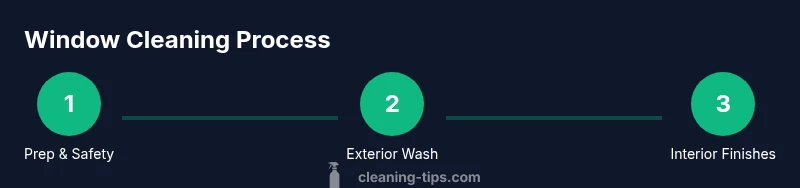
Exterior windows accumulate airborne grime, bird droppings, and mineral deposits that require longer dwell time and a deliberate technique. Begin with a pre-rinse to loosen dirt, then apply cleaner with a microfiber applicator. Work in sections from top to bottom, using a consistent S- or N-shaped stroke to minimize streaks. Rinse thoroughly with a clean spray and finish with a squeegee pull from top to bottom, wiping the blade edge after each pass. If you see streaks near edges, re-wipe with a dry microfiber cloth. Consistency is key for a professional commercial window clean.
Interior glass cleaning: finishing touches that count
Interior panes usually stay cleaner longer but still demand attention to corners, frames, and sills. Remove dust with a soft cloth before applying cleaner, then use a clean microfiber to wipe in a grid pattern from top left to bottom right. Pay particular attention to edge seals where condensation can form. Dry the glass with a lint-free microfiber, inspecting against a bright light source to catch any streaks. A well-executed interior clean enhances overall appearance and visitor confidence in the space.
Eco-friendly options and dilution guides
Eco-conscious cleaners can deliver professional results when used correctly. Start with a basic vinegar-water solution (about one part white vinegar to two parts water) for routine tasks, supplemented by a small amount of a commercially labeled eco-friendly cleaner if deposits are stubborn. Avoid mixing cleaners that can create harmful fumes, such as ammonia with bleach. Always follow the manufacturer’s dilution guidelines for any product and test on a small area before broader use. For heavy grime, consider a purpose-made glass cleaner that is labeled as environmentally safe.
Maintenance, scheduling, and record-keeping
Regular scheduling is the backbone of a successful commercial window program. Create a calendar that aligns with local climate, pollution cycles, and business hours. Keep maintenance logs noting date, area cleaned, products used, and any issues observed (e.g., seal wear, frame corrosion). Consistent records help justify service frequency to property managers and can reveal the best times for cleaning to minimize disruption. Cleaning Tips recommends quarterly or semi-annual cleanings for many storefronts, with adjustments made for seasonal pollution and business volume.
Common mistakes and how to avoid them
Even seasoned cleaners slip into bad habits. Common errors include using too much cleaner on glass, which leaves residue; over-wetting squeegees and causing dripping; or neglecting edge areas where grime hides. Another frequent pitfall is cleaning in direct sunlight, which dries products too quickly and causes streaks. To avoid these, work in cool, shaded conditions when possible, use the right tool for the job, and routinely switch cloths to prevent re-depositing dirt. A disciplined routine yields consistent, streak-free results.
Authority sources and further reading
For safety and best practices, consult industry standards and government resources. OSHA provides guidance on ladder and fall-protection safety, while EPA resources cover safe cleaning practices. For further reading, see the following sources: OSHA - Ladder Safety (https://www.osha.gov/ladders), EPA - Safer Chemical Alternatives (https://www.epa.gov/saferchoice), and Energy.gov on energy-efficient cleaning approaches (https://www.energy.gov/energysaver). These references complement professional guidance and Cleaning Tips analyses.
Tools & Materials
- Squeegee (12–14 inch)(Sturdy, rust-resistant blade; keep edge sharp for smooth pulls)
- Triple-weave microfiber cloths(Lint-free; use separate cloths for interior and exterior surfaces)
- Two-bucket washing system(One for clean wash solution, one for rinse; avoid re-contaminating solution)
- Extendable pole or telescoping handle(Reach upper panes safely without overreaching)
- Ladder or scaffold with fall protection(Select appropriate height; ensure stabilizers and tie-offs)
- Stiff-bristled brush(For frames, tracks, and stubborn grime)
- Safety gloves, goggles, non-slip shoes( PPE to prevent chemical contact and slips)
- Ventilated cleaner or mask(Use when recommended by product label)
Steps
Estimated time: 2-4 hours
- 1
Prepare safety setup
Clear the area, set up barriers, and put on PPE. Verify weather conditions and establish an exclusion zone to protect pedestrians. Secure a stable ladder or scaffold and position it on a solid surface.
Tip: Place warning signs and ensure the ladder base is level on firm ground. - 2
Mix cleaning solution
Follow manufacturer guidelines to prepare the appropriate cleaning solution. Test a small area first to confirm no staining or damage to frames. Label the bucket to avoid cross-contamination.
Tip: Never mix cleaners that can release toxic fumes (e.g., ammonia with bleach). - 3
Protect surrounding surfaces
Lay drop cloths over nearby sills and floor areas. Use painter’s tape to shield seals and frames from overspray. Keep windows closed if possible to prevent interior contamination.
Tip: Cover air intakes to prevent cleaner entering HVAC systems. - 4
Rinse exterior glass
Rinse the exterior pane to loosen loose dirt. Work from the top down with a steady flow, maintaining a clean rinse to prevent re-depositing grime.
Tip: Reserve a separate cloth for edges to avoid streaks. - 5
Apply cleaner to exterior glass
Apply cleaner evenly using a microfiber applicator; avoid pooling in window sills. Allow a brief dwell time for greasy deposits to loosen.
Tip: Use a crosshatch motion to promote even coverage. - 6
Squeegee exterior glass
Pull the squeegee from top to bottom in smooth, consistent strokes. Wipe the blade edge after each pass to prevent drag and streaks.
Tip: Tilt the blade slightly toward the dry edge for better contact. - 7
Clean interior glass
Wipe interior panes with a clean microfiber using a top-to-bottom motion. Focus on corners and edges where dust accumulates. Dry with a separate microfiber for a streak-free finish.
Tip: Work before sunset to avoid glare that hides streaks. - 8
Final inspection and touch-up
Check for streaks, drips, and missed spots under good lighting. Re-clean problematic areas using a dry cloth and a small amount of cleaner as needed.
Tip: Document any issues for future maintenance planning.
Questions & Answers
How often should a commercial window clean be performed?
Most storefronts and offices consider quarterly cleanings, with adjustments for climate, pollution levels, and foot traffic. Regular scheduling helps prevent buildup and maintains professional appearance.
Most storefronts schedule quarterly cleanings, with more frequent service in polluted or coastal areas.
Is DIY window cleaning suitable for large commercial properties?
DIY work is feasible for small storefronts or ground-level windows, but tall buildings, busy street fronts, or multi-story offices should be handled by trained professionals with proper safety gear.
DIY is okay for small jobs; for tall or multiple-story windows, hire professionals with safety equipment.
What safety gear is mandatory for exterior cleaning?
Mandatory safety gear includes fall protection, a properly rated ladder or scaffold, non-slip footwear, gloves, goggles, and a mask if required by the cleaner.
Always wear fall protection and PPE when cleaning exterior windows.
Which cleaners work best for streak-free windows?
A commercial glass cleaner or a vinegar-water solution with proper dilution works well for most jobs. Avoid mixing with ammonia or bleach due to hazardous fumes.
Use a good glass cleaner or diluted vinegar, and never mix cleaners with ammonia or bleach.
Are eco-friendly cleaners effective on tough grime?
Eco-friendly options can handle most grime, especially with proper dwell time and mechanical action. For stubborn buildup, a stronger, product-labeled cleaner may be needed.
Yes, eco-friendly cleaners can work well when used correctly, but some grime may require stronger products.
Watch Video
The Essentials
- Plan around weather and foot traffic before starting.
- Use the right tools to prevent streaks and damage.
- Prioritize ladder safety and PPE for all exterior work.
- Choose eco-friendly cleaners and follow dilution guidelines.
- Maintain a documented schedule for consistent results.