Difference Between Clean and Sober: A Practical Cleaning Perspective
Explore the difference between clean and sober in home life. This analytical guide clarifies definitions, overlaps, and practical steps to foster a tidy, mindful living space.


TL;DR: The difference between clean and sober hinges on habit and lifestyle. Clean describes a tidy home and proactive maintenance; sober describes abstaining from alcohol and maintaining clear judgement. In practical terms, clean routines support healthier spaces, while sobriety supports safer decision-making and steadier daily living.
Understanding the Difference Between Clean and Sober in Home Living
According to Cleaning Tips, the difference between clean and sober refers to two distinct but interrelated domains: physical tidiness and personal sobriety. In home life, clean describes the observable state of a space—bright surfaces, minimal clutter, and routines that keep dirt from building up. Sober describes a lifestyle choice—abstinence from alcohol and a commitment to clear, focused decision-making. Both concepts influence daily life, yet they operate in different spheres. The power comes from recognizing how they reinforce each other: a clean, orderly environment reduces stress and decision fatigue, while a sober mindset improves consistency in chores, boundaries, and self-care. In this section we lay the groundwork by defining terms and outlining how they commonly show up in kitchens, living rooms, bathrooms, and entryways.
The Psychology Behind Clean and Sober
The psychology of habit formation plays a crucial role in whether someone can sustain both clean living and sobriety. Routine-building strengthens self-efficacy, particularly when goals are concrete and incremental. From a Cleaning Tips perspective, small, repeatable actions—like a 10-minute nightly tidy or a weekly kitchen wipe-down—build momentum that can translate into steadier, sober-minded choices. The brain rewards consistent routines with a sense of control, which reduces stress and the likelihood of impulsive decisions. In practical terms, the brain chemistry of habit formation supports a dual emphasis on cleanliness and sobriety, making it easier to maintain both over weeks and months.
How These Concepts Interact in a Home
Clean and sober living interact in multiple rooms and contexts. In the kitchen, a clean surface reduces visual clutter and supports safer cooking, while sobriety reduces the temptation to overconsume or rely on quick, unhealthy coping strategies. In living spaces, tidy floors and organized storage reduce stress triggers, and a sober mindset helps avoid risky social situations that could derail routines. Bathrooms benefit from regular cleaning as a baseline for hygienic living, and sober choices reinforce the discipline needed for consistent maintenance. The crucial point is that cleanliness creates a stable environment, and sobriety provides the mental clarity to maintain it over time.
Practical Examples in Daily Routines
A practical daily routine showcasing both concepts might include: 1) a 5-minute morning reset (put away items, wipe a few surfaces), 2) a 10-minute evening tidy (folded towels, emptied trash, wipe-down of high-use areas), and 3) a weekly deep-clean plan that rotates through kitchen, bathroom, and living areas. Pair each cleaning task with a sober cue—set a designated non-alcoholic beverage alternative during cleaning time, or use a calendar reminder to reinforce consistency. By tying tidy habits to sober choices, households create a pattern that reduces clutter while reinforcing steady judgment and self-discipline.Over time, these routines become automatic, making it easier to sustain both dimensions without constant willpower.
Comparison
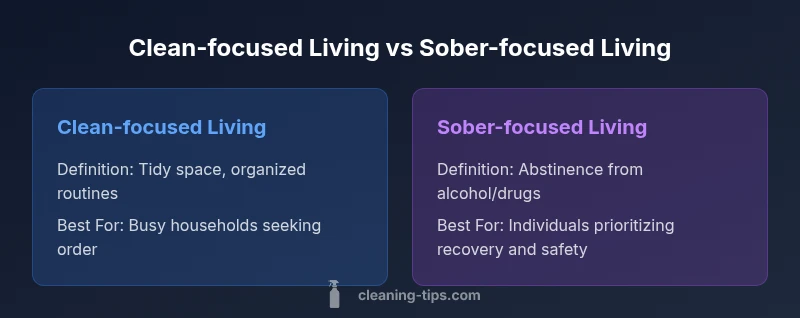
| Feature | Clean-focused Living | Sober-focused Living |
|---|---|---|
| Definition | Tidy space, organized routines | Abstinence from alcohol and maintaining clear judgment |
| Key Benefits | Less clutter, improved hygiene, faster cleaning cycles | Greater stability, reduced relapse risk, safer decision-making |
| Challenges | Requires ongoing maintenance and time | May involve lifestyle changes and social adjustments |
| Best For | Busy households that need predictable routines | Individuals prioritizing recovery and safety |
| Cost/Resource Considerations | Moderate time investment; basic supplies suffice | Potentially lower material costs but higher non-financial costs |
Strengths
- Promotes a healthier, safer home environment
- Supports consistent cleaning routines and habits
- Encourages mindful consumption and boundaries
- Creates a predictable daily structure
Weaknesses
- Requires ongoing commitment and discipline
- Sobriety aspects may introduce social and lifestyle adjustments
- Not all households will need both dimensions to succeed
Adopt a dual approach: prioritize clean routines while supporting sobriety commitments for the healthiest home.
A balanced focus on both cleanliness and sobriety yields the most stable home environment. Clean habits reduce clutter and stress, while sobriety strengthens judgment and safety. The combined approach offers practical, sustainable benefits for daily living.
Questions & Answers
What is the difference between clean and sober in everyday language?
In everyday use, clean refers to a tidy, organized space, while sober refers to abstaining from alcohol or drugs. The terms describe different aspects of life—environmental order versus personal behavior. Together, they influence household routines and self-discipline.
Clean means tidy spaces; sober means abstaining from alcohol. They’re related through routines and self-control.
Can a person be clean but not sober?
Yes. A person can maintain a clean home and still struggle with sobriety. Conversely, sobriety alone doesn’t guarantee a perfectly tidy space. The most resilient setups combine both, aligning environment and behavior.
Yes, you can be clean without sobriety, but combining both helps long-term stability.
How can I implement clean and sober living at home?
Start with small, repeatable habits: set a 10-minute nightly tidy, choose non-alcoholic beverages for routines, and create a simple weekly plan. Reinforce with visible cues and a supportive environment to sustain progress.
Start small, stay consistent, and support yourself with cues and plans.
Does sobriety impact cleaning product choices?
Sobriety doesn’t dictate specific products, but many households choose non-toxic cleaners for a healthier environment and fewer triggers. Pair any product choice with a safety routine that supports overall well-being.
Popular choice is non-toxic cleaners for a healthier space, aligned with sober living.
Are there common misconceptions about 'clean' vs 'sober'?
A common myth is that cleanliness equals sobriety. They are distinct but complementary. Another misconception is that sobriety automatically solves organizational challenges, which may require targeted routines and supports.
People often think clean equals sober; they’re related but not the same.
The Essentials
- Define clean vs. sober early to set expectations
- Link cleaning tasks to sober cues for consistency
- Build routines that reinforce both space and mindset
- Regularly revisit goals and adapt plans as life changes