Difference Between Clean and Unclean Animals: Practical Insights
Explore the difference between clean and unclean animals through historical rules, modern hygiene, and practical kitchen guidance. Learn criteria, examples, and safe handling tips for homes.


Based on historical dietary laws, the difference between clean and unclean animals identifies which species were permissible for consumption and ritual use. In modern kitchens, the core idea translates into practical hygiene and safe handling practices, emphasizing cleanliness, integrity of food sources, and careful preparation to minimize risk while respecting cultural contexts. This concise comparison highlights key criteria, typical examples, and how traditional rules inform today’s hygiene-focused cooking.
The difference between clean and unclean animals: Historical origins and scope
The difference between clean and unclean animals is a concept rooted in ancient dietary laws, notably within early ritual communities described in religious texts. The distinction guided what people could eat, sacrifice, and how certain animal products could be used in ceremonial contexts. For modern readers, the idea intersects with kitchen hygiene, food safety, and cultural literacy. According to Cleaning Tips, these classifications reveal how communities historically connected concepts of purity with daily routines, meal planning, and even property management. This block sets the stage for a practical exploration of how rules shaped everyday life while inviting readers to examine their own practices through a hygienic lens.
Historical criteria used to classify animals
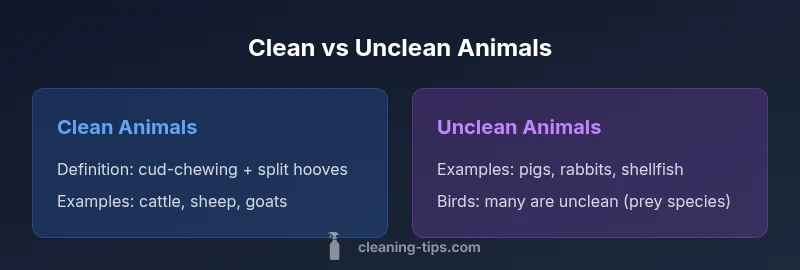
In many traditional sources, clean animals are those that meet specific criteria such as cud-chewing and having split hooves, while unclean animals fail to meet one or more criteria or are explicitly listed as prohibited. This framework created clear boundaries for dietary choices and ritual use. It also influenced agricultural practices, animal husbandry, and even the design of food preparation spaces. The Cleaning Tips team highlights that understanding these categories helps readers interpret ancient guidance without assuming modern science. However, readers should distinguish ceremonial rules from current food-safety science when planning meals or managing kitchens.
Clean vs unclean in dietary practice across cultures
Across cultures, the concept of clean vs unclean can manifest in dietary norms, religious observances, and community ethics. Some traditions emphasize ritual purity, while others focus on humane treatment, sustainable sourcing, and hygiene standards. Regardless of the framework, the underlying emphasis on careful handling and thorough cleaning remains relevant. This section compares how different communities approach classification, how these approaches influence menus, and where modern practice diverges from traditional prescriptions. The aim is not to judge but to illuminate how culture and cleanliness intersect in everyday cooking.
Practical implications for modern households
Today’s households rarely follow ancient classificatory rules for every ingredient, yet the emphasis on hygiene remains universal. Handling meat safely, avoiding cross-contamination, washing produce, and storing foods properly are practical applications of the difference between clean and unclean animals in a modern kitchen. This block provides concrete steps: separate cutting boards for meat and produce, sanitize surfaces after preparation, cook to recommended temperatures, and practice personal hygiene before cooking. By focusing on universal cleanliness principles, families can enjoy diverse foods while maintaining high safety standards.
Examples of clean vs unclean animals in historical texts
Common examples of clean animals include cattle, sheep, and goats, which are often cited for meeting cud-chewing and split-hoof criteria. Unclean examples include pigs, rabbits, and certain birds, which either do not meet the criteria or are specifically listed as unclean. In aquatic life, fish with fins and scales are typically considered clean, while shellfish and other seafood lacking these features are deemed unclean. These examples are used to illustrate how classification guided daily life and ritual practice, and they remain a useful reference point when discussing kitchen hygiene today.
Translating ceremonial rules to modern food safety
Translating ancient rules into modern practice means separating symbolic meanings from scientific guidelines. The core lesson is to emphasize microbial safety, cross-contamination prevention, and proper cooking temperatures for all animal products, regardless of their traditional classification. Readers should apply consistent hygiene measures across foods, source products from reputable suppliers, and follow current food-safety guidelines. This approach aligns cultural literacy with practical kitchen routines, enabling safer, more informed cooking decisions for households of all backgrounds. Cleaning Tips emphasizes that hygiene is universally applicable.
Cultural and ethical considerations
The label of clean or unclean animals often carries cultural and ethical implications beyond food safety. Debates may arise around animal welfare, sustainable farming, and respect for religious practices. When discussing these topics, it helps to acknowledge diverse perspectives while prioritizing transparent handling and sanitation. This section encourages readers to explore how beliefs shape eating habits, and how households can honor tradition while integrating evidence-based hygiene practices. The overarching takeaway is that cleanliness in the kitchen serves everyone, regardless of creed or culture.
Common myths and misconceptions
A frequent misconception is that ancient rules provide modern nutritional guidance. In reality, most dietary distinctions are ceremonial rather than nutritional. Another myth is that all unclean animals are unsafe if thoroughly cooked; safety depends on handling and cooking, not classification alone. Readers should rely on established cooking temperatures, clean equipment, and proper storage to ensure safety. By debunking myths, this block helps readers focus on actionable steps that improve food safety while respecting cultural contexts. Cleaning Tips supports thoughtful discussion grounded in evidence.
Quick reference guide to categories and safeguards
To assist practical decision-making, this block offers a compact reference: clean animals typically include those meeting cud-chewing and split-hoof criteria; unclean animals are listed or fail to meet those criteria. Regardless of classification, apply hygiene best practices: separate raw and cooked foods, sanitize surfaces, and keep hands clean. The guide emphasizes that modern kitchens benefit from universal safeguards rather than relying solely on ancient categories. Keeping to rigorous standards minimizes risk and supports healthier cooking for everyone.
How to talk about the difference between clean and unclean animals with family
Conversations about dietary classifications can be sensitive. This final blocks provides strategies for respectful discussion: present historical context, explain the hygiene implications, and emphasize safety practices used today. Encourage questions, invite cultural perspectives, and model safe cooking habits. By framing discussions around practical kitchen safety and healthy eating, families can learn together while honoring tradition. This approach aligns with Cleaning Tips’ mission to empower homeowners with actionable cleaning guidance.
Comparison
| Feature | Clean Animals | Unclean Animals |
|---|---|---|
| Definition criteria | Chews cud and has split hooves (biblical criteria typically cited) | Does not meet criteria or is explicitly listed as unclean |
| Examples | Cattle, sheep, goats (commonly cited as clean in historical texts) | Pigs, rabbits, certain birds; shellfish lacking fins/scales |
| Dietary practice implications | Permitted for consumption under specific traditions | Historically prohibited or restricted in related rituals |
| Modern kitchen hygiene | Irrelevance to safety rules; treated as ceremonial guidance | Relevance to safety via universal hygiene practices |
| Best for | Households observing traditional dietary laws | Any household seeking strong hygiene and safe handling |
Strengths
- Clarifies dietary boundaries for communities with religious purity laws
- Encourages structured cleanliness practices in kitchens
- Promotes mindful sourcing and meat handling
- Stimulates ethical discussions about animal welfare
Weaknesses
- Can complicate dietary choices for diverse households
- Ambiguities in some classifications
- May be confusing when not paired with current food-safety guidance
There is no universal winner; the concept informs hygiene and dining practices in different contexts.
Interpretations vary by culture and tradition. In modern kitchens, apply rigorous hygiene to all animal products, using universal food-safety standards.
Questions & Answers
What defines clean vs unclean animals in ancient texts?
Ancient texts describe clean animals as those meeting criteria such as cud-chewing and having split hooves, while unclean animals fail to meet these or are listed as prohibited. These rules shaped dietary and ritual practices in historical contexts, rather than serving as modern nutritional guidance.
Ancient rules set categories for eating and ritual use; they’re not today’s nutrition guides.
Do these distinctions apply to modern cooking?
In most homes, these distinctions are not used as dietary laws. Modern safety guidelines apply to all foods, regardless of traditional classifications, emphasizing hygiene, proper cooking, and preventing cross-contamination.
Modern cooking follows universal safety rules, not ceremonial categories.
Are all unclean animals prohibited today?
Not universally. Some households observe specific restrictions for religious reasons, while others interpret the rules historically or culturally. In general, safety guidelines govern preparation and handling of all animal products.
Bans depend on tradition; safety practices apply to all foods today.
How can I prevent cross-contamination in my kitchen?
Use separate cutting boards, sanitize surfaces after handling raw meat, wash hands frequently, and cook meats to recommended temperatures. These practices protect all foods, regardless of traditional classifications.
Keep raw and cooked foods separate and clean as you prep.
Do classifications vary by culture or denomination?
Yes, classifications and practices vary widely. Some communities maintain strict dietary laws, others treat them as historical or symbolic. The underlying emphasis on hygiene is common across perspectives.
Variations exist, but hygiene basics are widely shared.
What about pet animals? How are they treated?
Pets are generally outside dietary classifications in modern households, but ethics and hygiene still guide how households manage pet-related foods and waste to maintain a clean kitchen.
Pets aren’t food, but hygiene still matters around them.
Can you explain the difference between ceremonial and scientific cleanliness?
Ceremonial cleanliness refers to ritual purity rules, while scientific cleanliness focuses on reducing pathogens and contamination. In practice, modern kitchens combine both, but rely on science-based safety for food.
Ritual rules differ from scientific safety; both influence behavior, but safety is science-based.
What is the best way to discuss these topics with family?
Present historical context, explain current safety practices, and invite questions. Use practical tips to emphasize safe handling and inclusive dialogue.
Share context, prioritize safety, and invite questions.
The Essentials
- Assess classifications with both tradition and safety in mind
- Prioritize universal kitchen hygiene for all foods
- Respect cultural contexts while following science-based guidelines
- Use separate prep areas for raw and cooked foods
- Educate family members on safe handling and storage