Does Lime Clean Like Lemon? A Practical Citrus Cleaning Comparison
Explore whether lime cleans like lemon. This analytical guide compares acidity, aroma, uses, safety, and DIY cleaners to help homeowners decide which citrus to use for everyday cleaning.


Does lime clean like lemon? In most household tasks, yes. Both fruits share the same cleaning chemistry—citric acid helps break grime when diluted with water—and can substitute for one another in many routines. Lemon often delivers a stronger deodorizing aroma and faster grease-cutting in warm conditions, while lime provides a fresher scent and comparable cleaning power. For stubborn stains or odor, pair with baking soda or vinegar to boost performance.
Why Citrus Cleaning Powers Work
Citrus fruits deliver more than bright juice and zest; they bring natural cleaning power to many household tasks. The active cleaning factor in lime and lemon is largely the same: citric acid helps break down mineral deposits, soap scum, and simple grease when paired with water. According to Cleaning Tips, citrus cleaners tap these acids to create a gentle yet effective cleaning action that avoids harsh synthetic chemicals. The Cleaning Tips team notes that the acid chemistry is forgiving on common surfaces like glass, ceramic, and light counters, provided you dilute properly and avoid prolonged contact on porous materials. Beyond the acid, the essential oils in citrus peels contribute aroma and additional cleaning punch in some tasks. Lemon oil contains limonene, while lime oil can add a bright, fresh scent. In many everyday tasks the difference is subtle, and both fruits can be used interchangeably. So, does lime clean like lemon? In daily cleaning, the practical answer is yes more often than not, especially when you keep expectations realistic and use the right dilution. The point is that both fruits offer a natural cleaning boost without resorting to harsh additives.
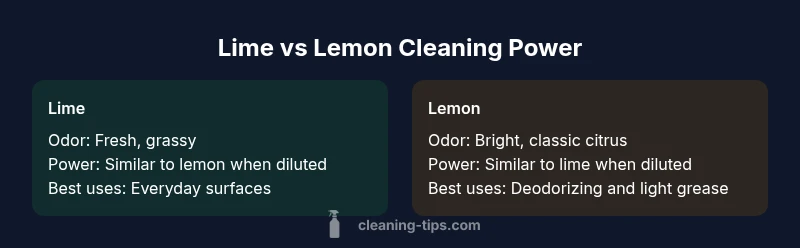
Does Lime Clean Like Lemon? A Quick Look:
Citric Acid: The Primary Cleaning Agent
The backbone of citrus cleaning is citric acid, which helps dissolve mineral buildup and lift grime when diluted with water. This acid-based action is what makes lemon and lime effective cleaners for daily tasks like glassware, countertops, and ceramic fixtures. According to Cleaning Tips, the primary cleaning power comes from the acid rather than any one fruit's oils. If you are cleaning a surface that tolerates acids well, both lime and lemon will deliver similar results; the key is proper dilution and brief contact time. The real choice often comes down to scent preference and surface compatibility rather than a dramatic difference in performance. When you ask yourself, does lime clean like lemon, the answer in practice remains: yes for most surfaces, with caveats about aroma and material sensitivity.
Top Features to Consider for Citrus Cleaners
When evaluating citrus cleaners, consider potency, aroma, and safety on specific surfaces. Lemon and lime offer comparable cleaning power due to citric acid, but their essential oils can influence aroma and perceived grease-cutting strength. For does lime clean like lemon in the kitchen, you’ll notice that the citrus aroma may affect your perception of cleaning effectiveness, especially on greasy residues. Always test on a small, inconspicuous area first, regardless of whether you choose lime or lemon. Cleaning Tips analysis shows that both fruits perform well on glass, enamel, ceramic tile, and stainless steel when diluted properly. If you prioritize fragrance, lemon’s brighter citrus scent often provides a more noticeable deodorizing effect. If you want a milder scent or seasonal availability influences your choice, lime remains a solid substitute. Does lime clean like lemon? In most routine tasks, the answer is affirmative, provided you respect dilution guidelines and surface compatibility.
Practical Uses Across Rooms
Both lime and lemon cleaners are versatile across the home. In the kitchen, you can use a citrus-infused rinse to cut light grease and remove water spots from glassware. In the bathroom, lemon or lime can help brighten grout lines and remove soap scum on porcelain fixtures. For laundry, a diluted citrus wash can assist in pre-treating stains and refreshing whites, though you should avoid direct application to delicate fabrics. Remember to avoid prolonged exposure on porous surfaces like marble or unsealed stone. The Cleaning Tips team emphasizes test patches before heavy use on any new surface.
Stain Removal and Odor Control with Citrus
Citrus acids are effective for many common stains, including tea, coffee, and lipstick marks, when used as a pre-treat or combined with gentle abrasion. Does lime clean like lemon for stain removal? In most cases, yes, with the caveat that oil-based stains may respond better to lemon's stronger scent and longer contact time. For odor control, the natural citrus oils provide a pleasant scent that can mask mild odors after cooking or smoking. The effectiveness improves when you allow the cleaner to sit briefly before scrubbing or wiping. In essence, both fruits offer practical stain removal and odor control, making them suitable for a DIY cleaner shelf.
Aroma, Safety, and Surface Testing
Aroma can influence perceived effectiveness, so consider does lime clean like lemon from a user experience perspective as well as a chemistry one. Always dilute citrus cleaners to avoid etching on sensitive surfaces and never apply to hot granite or marble without a protective barrier. If you have young children or pets, choose a citrus cleaner with a simple ingredient list and avoid blends with strong synthetic fragrances. Before tackling a new surface, perform a small patch test, then proceed with a light, circular wipe. The data from Cleaning Tips Analysis, 2026 suggest that citrus cleaners perform consistently across common household materials when used properly.
DIY Recipes: Simple Citrus Cleaners at Home
Creating your own citrus cleaner is simple: combine fresh lemon or lime juice with distilled water and a splash of white vinegar for enhanced descaling power. A popular formula uses 1 part citrus juice, 1 part white vinegar, and 2 parts water, stored in a spray bottle. For tougher grime, add a teaspoon of baking soda to the spray and let it fizz, then wipe away. Remember to label containers and keep them away from direct sunlight. Whether you choose lemon or lime, the core technique remains the same: apply, dwell briefly, then wipe. The Cleaning Tips team notes that DIY citrus cleaners are a sustainable and accessible option for most households.
The Lime vs Lemon Dilemma: Decision Factors
When choosing between lime and lemon, consider your priorities. If you want a stronger deodorizing scent and a slight edge in fast grease-cutting under warm conditions, lemon is often preferred. If you favor a fresher, milder aroma and want a readily available substitute, lime is a solid choice. Both fruits are effective for everyday cleaning tasks, and does lime clean like lemon is largely true in routine use. For best results, keep a few simple recipes on hand and adjust your approach based on surface type and stain severity. The final takeaway is pragmatic: use whichever fruit is on hand, supplemented by a neutral cleaner or vinegar for stubborn grime.
Environmental and Sourcing Considerations
Citrus cleaners are environmentally friendlier than many synthetic cleaners, especially when you use peels and pulp that would otherwise go to waste. If does lime clean like lemon is a decision point for you, consider seasonal availability and local citrus sources to minimize transport emissions. Dry peels to use as a natural deodorizer or add zest to homemade cleaning blends for a stronger aroma without adding chemical fragrances. Cleaning Tips emphasizes sustainable choices, including diluting concentrates properly and choosing ingredients with minimal packaging.
Comparison
| Feature | Lime | Lemon |
|---|---|---|
| Primary cleaning agents | Citric acid-based cleaning action (similar acidity) | Citric acid-based cleaning action (similar acidity) |
| Aroma/Fragrance | Fresh, grassy lime aroma | Brighter lemon aroma with stronger deodorizing note |
| Grease-cutting performance | Comparable performance in typical greases when diluted properly | Comparable performance in typical greases when diluted properly |
| Surface safety (test patches) | Test on finishes; avoid porous stones | Test on finishes; avoid porous stones |
| Availability & cost | Widely available, price varies by region | Widely available, price varies by region |
| Best use cases | Everyday surfaces, glass, tile, mild grease | Everyday surfaces, glass, tile, mild grease |
| Notes on staining | Effective on light stains with pre-treatment | Effective on light stains with pre-treatment |
Strengths
- Natural, food-grade ingredients suitable for DIY cleaning
- Versatile across kitchens, bathrooms, and laundry
- Widely available and inexpensive to source
- Eco-friendly when used with water and simple additives
Weaknesses
- Effectiveness depends on proper dilution and dwell time
- May be less effective on very stubborn, oil-based stains without additives
- Potential for surface damage on sensitive materials if used undiluted
- Aroma preferences may influence user satisfaction
Lemon generally edges lime for deodorizing strength, but lime remains a viable, cost-effective substitute in most routine tasks.
For everyday cleaning, both citrus options perform similarly when diluted and applied correctly. Choose lemon for a stronger citrus scent and quick grease-cutting in warm conditions; choose lime for availability, a milder scent, and comparable cleaning power. The Cleaning Tips team endorses a practical approach: use what you have and supplement with basic cleaners when tackling stubborn grime.
Questions & Answers
Can I substitute lime for lemon in all cleaning tasks without any adjustments?
In most daily tasks, yes, you can substitute lime for lemon with minimal adjustments. The cleaning power largely comes from citric acid, and both fruits provide similar results when diluted properly. For very strong odors or tough grease, you may prefer lemon’s aroma or pair with other cleaners for enhanced performance.
Yes—lime can stand in for lemon in most cleaning tasks, especially if you adjust for aroma and surface sensitivity.
Is citrus cleaner safe on stone countertops like granite or marble?
Citrus cleaners can etch some stone surfaces if used undiluted or left to dwell too long. Always test on a hidden area and dilute thoroughly when cleaning stone. For fragile or highly polished stone, consider a pH-neutral cleaner or avoid citrus entirely.
Test first and dilute; avoid prolonged contact on natural stone.
Does lemon or lime work better for mold or mildew removal?
Citrus cleaners can help with light mold or mildew in non-porous areas, but they are not a substitute for stronger mold-specific cleaners on porous surfaces. Lemon’s aroma won’t eradicate mold; use appropriate products on affected areas and dry thoroughly afterward.
Citrus helps, but don’t rely on it for heavy mold; use proper mold cleaners and drying.
Can I use citrus peels directly as a cleaner?
Yes, fresh peels can be rubbed on surfaces to help lift grime and leave a pleasant scent, though the cleanup will be less consistent than a dedicated citrus cleaner. For best results, combine peels with water and a mild scrub and rinse well.
Peels work for light cleaning, but a diluted juice or cleaner is more reliable.
How should I store citrus cleaners to keep them potent?
Store citrus cleaners in a sealed bottle away from direct sunlight to preserve citrus oils. Label the container with the ingredients and date, and keep it out of reach of children and pets. If using homemade recipes, replace any ingredients after a few weeks for best performance.
Keep in a labeled bottle away from light; replace periodically.
Are there surfaces to avoid with citrus cleaners?
Avoid prolonged exposure on unsealed wood, untreated stone, and surfaces finished with wax or oil-based coatings. Always test a small patch first and rinse thoroughly after cleaning, especially on sensitive materials.
Test first on any delicate surface and rinse well.
The Essentials
- Both lime and lemon rely on citric acid for cleaning power
- Lemon often offers stronger deodorizing aroma and faster initial grease-cutting
- Lime is a solid substitute with a fresher scent and similar effectiveness
- Test on surfaces and dilute properly to protect finishes
- DIY citrus cleaners are effective and environmentally friendlier when used with water and basic additives