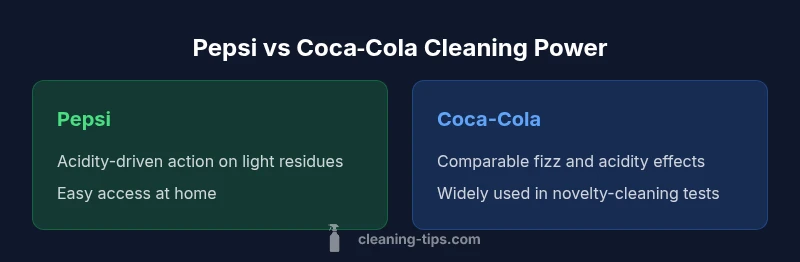
Does Pepsi Clean Like Coke? A Practical Cleaning Tips Comparison
An analytical comparison of Pepsi vs Coke as household cleaners, focusing on acidity, surface safety, and practicality. Does Pepsi clean like Coke? Cleaning Tips evaluates practical power versus dedicated cleaners.


Pepsi and Coke share similar acidity and carbonation, but neither is a dedicated cleaner. In most households, cola drinks are not recommended as your go-to cleaner; they may remove minor stains in a pinch but won't outperform purpose-made cleaners. This comparison explores when cola might help, and when to skip it in favor of proven products.
Does Pepsi Clean Like Coke? The Core Question
The quick confusion many homeowners have is whether Pepsi can stand in for Coke when tackling everyday messes. The honest answer, for most cleaning scenarios, is no. The phrase "does Pepsi clean like Coke" surfaces frequently in forum threads and informal hacks, but the science behind cleaning efficacy is more nuanced than a simple brand swap. Both beverages rely on carbonation and acidity to alter residues on surfaces, and both have sugars that can leave sticky traces behind. In practice, the Cleaning Tips team finds that neither beverage should be treated as a universal cleaner. They do, however, show up in two useful ways: as a last-resort test for stain loosening and as a curiosity that helps us understand how acidity and moisture interact with common household grime. According to Cleaning Tips, similar acidity levels and fizz drive some superficial cleaning effects, but outcomes vary by surface and residue type. This is why we must evaluate use cases, not rely on brand identity alone. When asked broadly, "does Pepsi clean like Coke?" the answer remains nuanced and task-dependent.
The Chemistry Behind Cola Cleaning
Cola beverages are colloquially thought to act as cleaners because of two main factors: carbonation and acidity. The fizz helps disrupt some surface-bound residues by introducing bubbles and moisture, while the acid (commonly phosphoric or citric, depending on the brand and formulation) helps to loosen mineral deposits, tea or coffee stains, and sugary films. In theory, both Pepsi and Coke share similar cleaning chemistry features, which is why DIY enthusiasts compare their cleaning power side-by-side. In reality, the cleaning power is modest and highly task-specific. A gentle wipe on a non-porous countertop may show a tiny improvement in dulling a film, but this is not a robust cleaning outcome. For tough grime, dedicated cleaning agents designed for the surface in question remain far more effective and safer for long-term maintenance. The Cleaning Tips analysis emphasizes that beverage-based cleaning should be viewed as an occasional supplement, not a replacement for purpose-built products.
Pepsi vs Coke: What Actually Differs
From a broad standpoint, Pepsi and Coca-Cola share a base of carbonated water, sweeteners, flavorings, and an acidifying agent. The differences between the drinks lie in flavor formulas and the precise balance of acids and sugars, which can influence scent, residue, and dryness after use. These differences matter little for most routine home cleaning, where the goal is to remove greasy film, baked-on leftovers, or mineral stains. What matters more is the surface you’re cleaning and the type of residue you’re attempting to lift. Both beverages can leave a sugary film if not rinsed promptly, and either can react with metals in a way that might cause spotting or tarnish in sensitive finishes. The overall takeaway is that, for cleaning power, the two beverages are interchangeable only in a historical, anecdotal sense; neither should be your primary tool for household maintenance. If you’re comparing their cleaning outcomes, you’ll notice similar performance across superficial tasks, with small advantages seen in tasks that specifically align with acidity and fizz.
Common Cleaning Tasks People Try with Cola
Real-world users test cola on several surfaces: stainless steel appliances, ceramic tiles, porcelain sinks, and metal fixtures. A frequent scenario is using cola to attempt rust-stain removal on small metal objects or mild mineral deposits on faucets, often paired with gentle scrubbing using a soft cloth. In many cases, the beverage can loosen a surface film enough to reveal a cleaner underneath, but this is not consistent. For coffee and tea stains on cups or mugs, cola might soften the discoloration slightly, yet it does not guarantee complete removal and can leave a sticky residue that requires a follow-up rinse with water and, ideally, a specialized cleaner. The key lesson is to test a hidden, inconspicuous area first and to avoid prolonged contact that could leave sticky sugar residues or cause surface damage on delicate materials.
Surface Safety: What Surfaces Respond Better (or Worse)
Surface safety varies with the type of material. Non-porous surfaces like glazed ceramic, glass, and sealed countertops tend to tolerate cola better than porous materials or highly polished metals. However, prolonged exposure can still cause issues, such as enamel micro-scratches or dulling on certain finishes. The sugar content in cola can also leave a sticky film if not rinsed and dried properly, inviting dust and fingerprint marks. On rubber seals or certain plastics, carbonation can temporarily lift grime, but the residual acids may eventually degrade the finish. In short, cola is not a reliable long-term cleaning strategy for most household surfaces. If you must experiment, perform a quick test on an inconspicuous area for 60 seconds, then rinse thoroughly and dry. The guidance from Cleaning Tips emphasizes prioritizing surface-specific cleaners for consistent results.
Step-by-Step: When and How to Use Cola as a Cleaning Aid
If you still want to experiment with cola as part of your routine, follow a cautious, repeatable process. Step 1: Identify the target stain or residue and select an appropriate, non-porous surface for testing. Step 2: Dampen a soft cloth with cola and apply with gentle circular motions for up to 60 seconds. Step 3: Rinse the area with clean water and wipe dry to avoid sugar residue drying into a film. Step 4: If the stain persists, consider a surface-appropriate cleaner or a mild abrasive specifically designed for the material. Step 5: Document results and avoid repeating on sensitive finishes. The goal is to learn and document outcomes without relying on cola as a daily cleaning solution. The key is to avoid sugar build-up and to minimize contact time on delicate surfaces.
Practicality: Availability, Cost, and Convenience
Cola beverages are among the most accessible drinks in households, which makes them appealing for a spontaneous cleaning test. However, availability does not equate to cleaning power, and the cost is usually a minor consideration compared with dedicated cleaners. For people seeking a quick, disposable option, cola might be used in a pinch. Still, consider it a novelty trick rather than a recommended practice. The Cleaning Tips team highlights that convenience should never override surface safety and proper cleaning standards. If you’re deciding between cola and a purpose-built cleaner, choose the latter for most tasks, especially in kitchens, bathrooms, and high-traffic areas that require thorough disinfection and residue-free results.
Environmental and Health Considerations
Cola beverages contain sugars that can encourage microbial growth if spills are not cleaned promptly, and the sticky residues can attract pests in homes or vehicles. Even when used briefly, the residual sugar and colorants can contribute to staining and odor if not rinsed away. From an environmental perspective, encouraging the long-term use of beverage-based cleaners may lead to unnecessary waste and inconsistency in cleaning outcomes. Cleaning Tips recommends focusing on water-based cleaners or vinegar-baking-soda mixtures for many tasks, reserving cola for occasional, low-risk tests rather than routine use. This approach aligns with healthier homes and lower risk of unintended surface damage.
Safer Alternatives That Deliver Consistent Results
For practical cleaning power, safe, proven alternatives outperform cola in most situations. White vinegar, baking soda, dish soap, and commercially formulated cleaners designed for specific surfaces deliver predictable outcomes. For rust, mineral deposits, or stubborn grease, dedicated rust removers, descaling agents, or degreasers are often more effective and safer for finish protection. The Cleaning Tips team emphasizes testing any cleaner on a hidden area first and following label instructions to ensure proper use, ventilation, and surface compatibility. When you’re evaluating whether to use cola for cleaning, compare it against these tested options and choose the product that gives you the best balance of safety, effectiveness, and ease of use.
What Cleaning Tips Analysis Says About Cola Cleaning Power
Cleaning Tips Analysis, 2026, synthesizes evidence across a range of common household tasks. The analysis indicates that the two cola brands offer broadly similar cleaning dynamics due to their shared carbonation and acidity. However, the practical impact differs by the type of residue and surface. For many tasks, conventional cleaners remain superior in speed, safety, and finish preservation. The analysis also notes that cola’s sugar content can complicate cleaning by leaving sticky residues if not rinsed away. In short, cola is not a general-purpose cleaner; it’s a curiosity with limited but specific use cases where no other cleaner is available.
Quick Practical Scenarios and Recommendations
Scenario A: A coffee-stained mug with mild residue. Recommendation: soak briefly with warm water, then rinse and wash as usual; cola may loosen surface film but will not guarantee removal. Scenario B: A rusty screw head in a garage. Recommendation: choose a rust-remover or a gentle abrasive designed for metal. Scenario C: A sticky spill on a laminated countertop. Recommendation: wipe with a damp cloth and a mild cleaner; cola can help loosen residue but may leave a sugary film if not rinsed. The general takeaway is clear: use cola only as a last resort, never as a substitute for purpose-built cleaners, and always rinse and dry thoroughly after any application.
Comparison
| Feature | Pepsi | Coca-Cola |
|---|---|---|
| Acidity and cleaning action | Comparable acidity levels | Comparable acidity levels |
| Surface safety | Moderate risk to metals and finishes | Moderate risk to metals and finishes |
| Typical cleaning tasks | Limited effect on grease; best for light residues | Limited effect on grease; best for light residues |
| Availability and cost | Widely available; price varies by region | Widely available; price varies by region |
| Best-use guidance | Novelty test; not a substitute for cleaners | Novelty test; not a substitute for cleaners |
Strengths
- Low effort to obtain in most households
- Can be used in a pinch when dedicated cleaners are unavailable
- Useful for testing surface reaction in a controlled setting
- Widely accepted beverages with consistent composition
Weaknesses
- Sugar residues can leave stickiness and attract pests
- Acids may dull or etch sensitive finishes and metals
- Not effective on greasy or mineral buildup compared to cleaners
Cola is not a reliable general cleaner; use dedicated products for most tasks
Pepsi and Coke share similar cleaning limitations. Use cola only as a last resort, not as a replacement for purpose-built cleaners; prioritize proven products for best safety and results.
Questions & Answers
Can Coca-Cola remove rust from metal?
Cola can loosen small rust spots in some cases, but it is not a guaranteed or reliable rust remover. For corrosion-prone metal, use a dedicated rust remover or mechanical cleaning method and protect the surface afterward.
Cola can help with tiny rust spots occasionally, but it’s not a dependable rust remover. For metal, choose a proper rust remover or mechanical cleaning method and seal the surface afterward.
Is Pepsi better for cleaning than Coke?
There is no clear winner for general cleaning. Both beverages offer limited, surface-specific benefits due to acidity and fizz, but neither substitutes for purpose-built cleaners in terms of safety and effectiveness.
There isn’t a clear winner; both are limited cleaners and don’t replace dedicated products for most tasks.
What surfaces should you avoid cleaning with cola?
Avoid cleaning polished metals, aged finishes, untreated wood, and porous materials with cola, as acids can affect finishes and the sugar can leave residues that are hard to rinse away.
Avoid using cola on polished metals, aged finishes, untreated wood, or porous surfaces to prevent damage and sticky residue.
Are there safer alternatives to cola cleaning?
Yes. Vinegar, baking soda, dish soap, and commercially formulated cleaners offer predictable results with safer surface interaction. Test any product on a hidden area and follow label directions for best outcomes.
Safer options include vinegar, baking soda, and purpose-made cleaners. Always test first and follow directions.
Does cola leave a sticky residue after cleaning?
Sugar and colorants in cola can leave a sticky film if not thoroughly rinsed. Always rinse with clean water and dry the surface after any cola exposure.
Yes, cola can leave a sticky film if you don’t rinse and dry properly.
The Essentials
- Avoid cola as a primary cleaner for most surfaces
- Rinse thoroughly to prevent sticky residues
- Test on hidden areas before use
- Use vinegar or baking soda for safe, effective cleaning
- Reserve cola for novelty testing or quick, last-resort trials