DPF How to Clean: Safe, Effective Steps
A practical, step-by-step guide to cleaning a diesel particulate filter (DPF) safely. Learn when to DIY, when to go pro, and how to maintain your DPF to prevent clogs.


A diesel particulate filter (DPF) should be cleaned or regenerated by professional equipment. At home, you should diagnose symptoms, avoid aggressive DIY cleaning, and schedule a professional service when needed. In this guide, you'll learn safe diagnostic steps, when to attempt light maintenance, and how to choose a service provider.
What is a DPF and why it needs cleaning
The diesel particulate filter (DPF) is a ceramic honeycomb device in the exhaust system designed to trap soot from diesel engines. Soot builds up over time, and periodic regeneration burns off the accumulated particles. If the DPF becomes too clogged, backpressure increases, fuel efficiency drops, and the ECU may initiate a limp-home mode or trigger warning lights. According to Cleaning Tips, the safest approach is to treat DPF issues as maintenance tasks that often require professional aid rather than brute-force cleaning with household products. DIY attempts in an unventilated space or without proper equipment can damage the ceramic walls or distort the substrate, potentially causing costly repairs. The goal of cleaning is not simply removing surface ash but restoring the filter’s filtration efficiency while preserving structural integrity. Always verify that any cleaning method aligns with your vehicle’s OEM specifications and local emission rules. This is why many drivers opt for professional cleaning or regeneration rather than a risky home fix. This guidance also aligns with what the Cleaning Tips team recommends for long-term DPF health.
Signs your DPF might be clogged and need service
A failing DPF often reveals itself through a mix of symptoms. Look for reduced engine power, long idle cycles with stubborn exhaust smells, frequent regeneration cycles, or warning lights on the dash. If the vehicle goes into limp mode or emits dense smoke, it’s a red flag that the DPF requires professional assessment. Regularly checking exhaust backpressure (if your scanner supports it) and reviewing diagnostic trouble codes (DTCs) can help you gauge severity. Early detection can prevent accidental damage to your exhaust system and catalytic components. As you monitor, document the codes and driving conditions leading up to the issue to share with your technician. The goal is to determine whether a simple cleaning or a more thorough regeneration is appropriate. In this section we explore common patterns and what they usually imply for maintenance planning.
DIY vs Professional cleaning: risks, limits, and when to choose
DIY approaches to DPF cleaning are limited and risky. While some households attempt high-heat temperature fluctuations or chemical cleaners, improper methods can crack the ceramic walls, misalign seals, or leave ash behind that continues to clog. Cleaning Tips analysis shows that most DIY attempts fail to restore reliable backpressure or emissions performance and often lead to repeat service visits. By contrast, professional DPF cleaning uses specialized equipment to perform thermal regeneration and, if needed, chemical or high-pressure ash cleaning in a controlled environment. This yields more predictable results and a documented post-cleaning test. If you’re unsure, prioritize professional service. In many cases, a regeneration or cleaning performed by a qualified shop is more cost-effective in the long run than repeated DIY trials.
How professional DPF cleaning works: a closer look
Professional DPF cleaning typically involves diagnosing the DPF’s condition, removing the filter for access, and applying a combination of thermal regeneration and cleaning solvents or ash removal, followed by a post-cleaning backpressure test. Some shops perform a controlled heat cycle to burn off soot and an ultrasonic or high-pressure wash to remove ash without damaging the porous walls. After cleaning, technicians may reattach the DPF and run an ECU diagnostic to clear codes if the system is ready. Expect a formal report detailing backpressure before and after cleaning, as well as any faults addressed during service. This method is designed to restore the DPF to near-new performance while maintaining compliance with emission standards.
How to prepare for a DPF cleaning appointment
Preparation starts with collecting service records, current codes, and recent mileage. Ensure you have a clear maintenance history and note any prior regeneration attempts. Verify your fuel level, as running out of fuel during cleaning can complicate the process. If your vehicle requires DPF removal, a shop will provide torque specs and gasket replacements if needed. Be ready to discuss driving history (short trips vs. highway driving) because this affects soot loading. Finally, ask for a written estimate, expected turnaround, and a post-cleaning verification test so you can confirm success when you pick up the vehicle.
Maintenance to prevent future DPF clogging
Prevention centers on consistent heat cycles, quality fuel, and timely service. Short trips don’t give the DPF enough time to heat and regenerate, accelerating ash buildup. Incorporate regular highway driving to facilitate passive regeneration, and avoid excessive idling. Use reputable fuel and consider a fuel-system service if you notice recurring ash or injector issues. A simple maintenance log—tracking mileage, trips, and service dates—helps you anticipate when attention is needed. Above all, follow your manufacturer’s maintenance schedule to keep the DPF in good shape.
Common mistakes to avoid during DPF maintenance
Avoid attempting aggressive chemical sprays or water flushes inside the DPF. Never remove the DPF yourself unless you’re trained and equipped for automotive exhaust systems; improper handling can be dangerous. Don’t reset ECU fault codes without confirming the underlying issue is addressed, as this can mask a problem and lead to repeated failures. Finally, don’t rely on off-brand cleaners that claim to “rejuvenate” the DPF; trusted professional methods are proven to work within emission regulations.
Interim safety checks and home care until service
Until you reach a professional service, limit risky DIY actions. Check for exhaust leaks, listen for unusual noises, and monitor dash warnings. If the vehicle emits heavy smoke or experiences power loss, pull over safely and seek roadside assistance. For owners who want to stay proactive, perform gentle driving cycles when possible to reduce soot buildup, and avoid forcing high-load operation on an overheated DPF. Remember: the right move is to schedule a professional evaluation if warning lights persist beyond a highway trip.
Tools & Materials
- OBD-II scanner with DPF data capability(Reads fault codes and live DPF data (backpressure, soot level) if supported by vehicle.)
- Diagnostic interface cable/software(Ensures compatibility with your vehicle’s ECU and DPF diagnostics.)
- Personal protective equipment (PPE)(Gloves, safety glasses, and a mask to protect from dust and chemical exposure.)
- Work light or headlamp(Helpful for visibility during inspection and component access.)
- Vehicle service manual or OEM repair guide(Vehicle-specific steps, torque specs, and DPF removal guidance.)
- Replacement gaskets/clamps (if removal is needed)(Only if your inspection requires DPF removal or resealing.)
Steps
Estimated time: 2-8 hours
- 1
Connect a diagnostic scanner and read DPF data
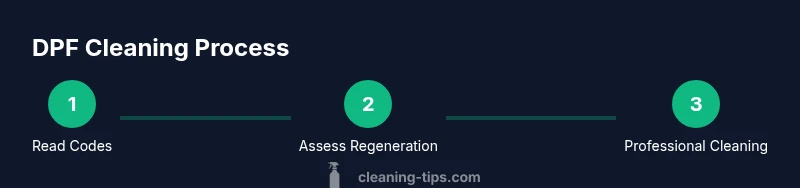
Attach your OBD-II scanner and retrieve DPF-related codes plus live data such as backpressure and soot loading where available. Record the readings and note any abnormal values.
Tip: Keep a copy of the initial readings to compare after service. - 2
Assess whether active regeneration is possible
Review the fault codes to determine if the system can perform an active regeneration or if sensor faults prevent it. Do not force a regeneration if the codes indicate a hardware fault that requires repair.
Tip: If a fault code indicates a sensor issue, address that first before attempting regeneration. - 3
Attempt an approved driving cycle (if advised by manufacturer)
If the manual allows, perform a highway-speed driving cycle to heat the DPF for passive regeneration. Monitor temperatures and backpressure during the run.
Tip: Avoid heavy loads or long idle periods during the cycle. - 4
Inspect exterior and access points visually
Check for obvious damage, loose clamps, or exhaust leaks that could affect cleaning or safety. Do not attempt internal cleaning without proper equipment.
Tip: Take photos of any visible issues to share with your technician. - 5
Document findings and prepare service notes
Create a concise report listing codes, observed symptoms, miles, and recent maintenance. This helps the service provider tailor the cleaning plan.
Tip: Bring a copy of any warranty or service history if available. - 6
Book a professional DPF cleaning appointment
Choose a reputable shop with DPF cleaning capability and request a written estimate, expected turnaround, and post-cleaning test procedures.
Tip: Ask for a before/after backpressure test and test drive results. - 7
Verify service and perform a post-service drive
After cleaning, confirm that codes are cleared and monitor for any residual warning lights. Do a short road test to ensure normal performance and regen readiness.
Tip: Keep the service receipt and post-cleaning test data for records.
Questions & Answers
What is a DPF and why does it clog?
A DPF traps soot from diesel exhaust; over time, ash buildup and incomplete regenerations lead to clogging. Regular maintenance and proper driving can help prevent this.
A DPF filters soot from diesel exhaust and can clog over time if it isn’t heated enough or cleaned properly.
Can I clean a DPF at home?
DIY cleaning is generally not recommended because improper methods can damage the filter. Seek professional cleaning or regeneration when possible.
DIY DPF cleaning is risky; it’s best to rely on a professional service.
How long does a DPF cleaning take?
Professional cleaning can take a few hours, depending on vehicle access, the method used, and whether the DPF must be removed.
Most cleaning takes a few hours, but it varies with the vehicle.
Will cleaning reset the maintenance light?
Cleaning may clear fault codes if the issue is resolved, but lights and codes often require rechecking by a technician to confirm proper operation.
If the fault is resolved, codes may clear; otherwise you’ll need a technician to verify.
What can I do to prevent DPF issues?
Drive on regular long trips to heat and regenerate the DPF, use quality fuel, and keep up with scheduled maintenance to minimize clogging.
Regular highway driving and good fuel quality help prevent DPF problems.
Should I use fuel additives to clean the DPF?
Most OEMs caution against relying on additives for DPF cleaning; professional cleaning is more reliable and safer for the filter.
Additives aren’t a reliable solution; a professional cleaning is usually better.
Watch Video
The Essentials
- Schedule professional cleaning when in doubt
- Diagnose with an OBD-II scanner before any action
- Follow manufacturer recommendations for driving cycles
- Prevent future clogging with regular highway driving and quality fuel