Free iPhone Clean Up: A Practical Guide to Freeing Space
A comprehensive, step-by-step guide to free up iPhone storage without losing data. Learn to offload apps, optimize photos, manage messages, and streamline browser data using built-in tools.


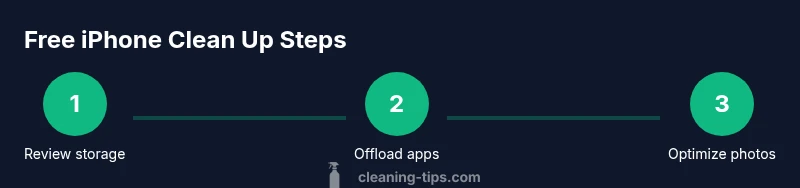
Goal: free up iPhone storage without sacrificing data. You can achieve this by running a quick storage review, offloading unused apps, and optimizing photos. Then tackle messages, browser data, and large attachments. These steps keep your essential content accessible while reclaiming valuable space. Many users free space by applying these practices, often without deleting memories.
Why free iphone clean up matters
A well-timed free iphone clean up keeps your device responsive, extends battery life, and safeguards personal data. When storage runs low, iPhones can slow down, show warning prompts, or struggle with app updates. The Cleaning Tips team has found that a proactive approach—not waiting until you’re at the last gigabyte—helps maintain smooth operation and better privacy. A clean device also makes it easier to access essential apps and media when you need them, rather than hunting through clutter. For homeowners who rely on their phone for work, school, or family organization, maintaining clear storage translates into fewer interruptions and faster back-up during cloud syncing. The goal of this guide is not to punish you for having memories, but to help you keep what you need and shed what you don’t. By focusing on the core culprits—apps you rarely open, duplicate photos, and heavy attachments—you can keep your iPhone performing at its best while using less mental energy managing clutter. A practical approach to free iphone clean up starts with identifying what’s taking up space and planning which changes deliver the biggest benefits.
Understanding data usage on an iPhone
On an iPhone, space gets filled by a mix of apps, media, and system data. Photos and videos, if not optimized, can dominate storage quickly. Messages and their attachments—especially large video clips—can accumulate with time. Cached data from apps and web browsers adds up, even when you rarely use those apps. Regularly reviewing these areas helps you distinguish between space you actually need and space that’s safe to remove. Clean-up should be intentional, not punitive; you’re aiming to keep what’s valuable and reduce what’s redundant. The most impactful gains come from targeted actions rather than sweeping deletions. Start by looking at the Settings > General > iPhone Storage screen to identify top offenders and plan how to address them logically.
Quick wins you can implement today
- Review storage usage in Settings to identify space hogs and prioritize targets.
- Offload unused apps to reclaim space while keeping app data intact for when you re-install.
- Enable photo optimization to keep memories accessible while saving local space.
- Delete unnecessary message attachments and large conversations to free up chunked data.
- Clear Safari data and other browser caches to reclaim small, persistent space waste.
- Remove duplicate media and download-worthy files you no longer need.
- Consider backing up critical items before larger cleanups to avoid data loss.
These quick wins create immediate relief while you plan deeper optimizations. Remember, the aim is to maximize usable space without compromising access to important content.
Deep dive: optimizing photos and videos
Photos and videos are the most common space eaters. If you enable iCloud Photos or a similar cloud solution and choose Optimize iPhone Storage, the full-resolution copies stay in the cloud while device-side thumbnails fill the gallery. This preserves your memory library without occupying the device’s entire storage pool. For heavy camera users, consider removing large videos from local storage after backing them up. Regularly review albums and delete duplicates. If you retain originals on a computer or external drive, you can delete local copies with confidence, knowing a cloud backup exists. The key is to balance accessibility with space; you don’t need every video on your phone to enjoy your day-to-day life.
Messages and attachments: clean up conversations
Messages often accumulate large attachments over time. Start by listing the largest attachments in Messages and remove ones no longer needed. You can search through conversations for large files by using the built-in search function to filter by 'Attachments' in the Messages app. Deleting conversations you no longer need also frees space, but be careful to preserve important receipts or conversations. Before you delete, ensure you’ve backed up essential data to iCloud or your computer. This ensures you can retrieve critical information later if needed.
Safari data and app caches: tame the clutter
Web data, cookies, and cached files from Safari and other browsers can quietly consume space. Clearing history and website data regularly is a safe way to reclaim space without affecting bookmarks or saved passwords. For apps, many use caches that can be cleared from Settings within each app or via the system storage options. Regular cache maintenance helps keep apps responsive and reduces background data usage. If you’re unsure whether a cache holds essential data, back up first or check notes within the app for saved work before clearing.
Offload unused apps vs delete the app
Offloading removes the app but preserves its documents and data. If you later reinstall the app, your data reappears automatically. This approach is ideal for rarely used apps because it minimizes data loss while reclaiming space. Deleting an app permanently removes its data unless you have a separate backup. Decide which approach to use based on whether you anticipate reusing the app soon and whether the app stores critical information locally. When in doubt, offload first and monitor how much space you recover before deciding to delete.
Backups: balancing safety and space
Before performing substantial cleanups, back up your device to iCloud or a computer. Backups ensure you won’t lose important messages, photos, or documents if something goes wrong during cleanup. After backing up, you can proceed with aggressive cleanups more confidently. Regular backups also make it easier to restore only what you need later, which helps minimize disruption if you switch devices or reset the phone. Incorporate a routine backup as part of your regular maintenance plan.
Tools & Materials
- iPhone with latest iOS(Ensure battery is above 50% or plugged in during cleanup)
- Reliable Wi‑Fi connection(Needed for backups and cloud syncs)
- Apple ID access(Required to access iCloud backups and settings)
- Backup option (iCloud or computer)(Recommended before large deletions; helps data safety)
- Backup cable or charger(Helpful if you perform local backups with a computer)
Steps
Estimated time: 20-40 minutes
- 1
Review storage usage
Open Settings > General > iPhone Storage and review how space is used. Identify top offenders such as apps with large caches, photos, and message attachments. This step establishes your cleanup plan and helps you prioritize actions.
Tip: Use the 'Review Large Attachments' feature to quickly spot big items. - 2
Offload unused apps
Enable Offload Unused Apps to remove rarely used apps while keeping documents and data. If you anticipate returning to an app soon, you can reinstall without losing progress or settings.
Tip: Verify which apps you rarely open by checking the 'Documents & Data' size under each app. - 3
Optimize photos and videos
Turn on iCloud Photos or another cloud backup and select Optimize iPhone Storage. This stores full-resolution files in the cloud and keeps smaller, device-friendly versions locally.
Tip: Back up photos before making bulk changes to ensure you can recover originals if needed. - 4
Clean up messages and attachments
Delete large message attachments and consider setting messages to auto-delete after a period. Archive or back up important conversations before removal.
Tip: Search for attachments within Messages using keywords like 'video' or 'image' to identify the biggest items. - 5
Clear browser data
In Safari (or other browsers), clear history, cookies, and cached data. This can reclaim a noticeable amount of space without affecting bookmarks or saved passwords.
Tip: Regularly review saved passwords and bookmarks after clearing caches. - 6
Manage files and caches
Review the Files app for large PDFs and documents. Delete or move files to cloud storage or a computer-based archive as needed. Clear app caches from within individual apps where possible.
Tip: Keep a minimal local archive of critical files for quick access. - 7
Back up and verify
Perform a backup to iCloud or a computer after the clean-up. Verify that essential items—photos, documents, and messages—are safely stored before removing more data.
Tip: Ensure backup completes successfully before deleting anything critical.
Questions & Answers
What does free iphone clean up mean in practice?
Free up space by removing unnecessary data while preserving essential items. Focus on identifying space hogs and using built-in tools to offload or back up content. The goal is improved performance without losing access to important data.
Free up space by removing unnecessary data while keeping what’s important. Use built-in tools to offload apps and back up essential items for easy restoration.
Does offloading apps delete app data?
Offloading removes the app itself but preserves its documents and data. If you reinstall the app later, your data reappears. This makes it safe to reclaim space for apps you don’t use often.
No, offloading keeps your data. Reinstalling restores the app and its data automatically.
Is it safe to delete messages and attachments for space?
Deleting old messages and large attachments is generally safe if you’ve backed up important conversations. Consider archiving key threads before removal to avoid losing information.
Yes, with a backup. Archive anything important before removing messages or attachments.
How often should I perform a storage clean up?
Aim for a monthly check or whenever your device starts showing performance slowdowns. A quick quarterly sweep can prevent clutter from building up.
Try to clean up once a month, or whenever you notice slowdowns.
Can I clean up without internet access?
Yes. You can delete local files and manage apps offline, but cloud backups and syncs require internet access to ensure data safety.
Yes, you can clean up offline, but back up when you’re online.
What’s the best way to back up my data before cleaning?
Back up to iCloud or a computer before making large deletions. Verify the backup is complete to ensure you can restore if needed.
Back up to iCloud or your computer before major cleanup and verify it completed.
Watch Video
The Essentials
- Identify what uses most space before cleaning.
- Offload apps to reclaim space without data loss.
- Enable photo optimization to preserve memory in the cloud.
- Back up before major Clean Up to protect data.
- Regular maintenance keeps storage manageable.