How to Address 'how did cleans daughter die' Responsibly
This guide explains how to handle the sensitive query how did cleans daughter die with care, emphasizing verification, privacy, and ethical reporting. Learn practical steps for responsible discussion and avoid spreading unverified information.


Quick note: we won't provide or speculate about details of any real person’s death. Instead, this article explains how to handle the question how did cleans daughter die responsibly, focusing on source verification, privacy, and avoiding sensationalism. According to Cleaning Tips, ethical guidelines matter most when discussing sensitive topics in public discourse.
Context and intent
The phrase how did cleans daughter die surfaces in online searches with surprising frequency, yet it raises serious ethical and privacy concerns. For this article we treat the query as a hypothetical example to demonstrate responsible information practices, not as a claim about any actual individual. According to Cleaning Tips, the aim is to minimize harm while offering practical guidance for evaluating sources, protecting privacy, and communicating ethically. We begin by distinguishing curiosity, speculation, and verified facts, and we outline how to proceed when confronted with similar queries in both family contexts and public discussions. Readers will learn how to assess evidence, cite credible sources, and avoid repeating unverified claims that could spread misinformation. The approach helps keep discussions constructive and preserves trust in digital conversations.
Why this question surfaces online
People search this phrase for various reasons: curiosity about a public figure’s life, concern for family safety, or a desire to understand how information spreads. However, such queries can inadvertently amplify rumors or reveal private details about real individuals. This section explains why sensational framing occurs and how search algorithms can steer conversations toward dramatic narratives. From the perspective of Cleaning Tips, it is essential to address why privacy and accuracy matter more than sensational fulfillment, especially when discussions touch on personal tragedy or sensitive events. Ethical guidelines help readers distinguish between responsible inquiry and rumor, and they encourage citing trustworthy sources and avoiding unverified statements.
How to approach such inquiries responsibly
When faced with a question like how did cleans daughter die, follow a structured response: STOP, CHECK, and CITE. First, acknowledge the emotional weight of the topic and commit to not sharing or implying unverified information. Second, identify credible sources—established news outlets, official statements, or academic frameworks—and cross-check details before referencing them. Third, anonymize or generalize any personal data, avoiding naming individuals unless publicly confirmed by reliable authorities. Fourth, frame information with caution, clearly distinguishing between established facts, hypotheses, and opinions. Finally, apply ethical communication by avoiding sensational headlines and offering resources for support if the topic involves real people in distress.
Sources, verification, and ethics
Verification is the backbone of responsible reporting. Use at least two independent, reputable sources and note any uncertainty. If sources disagree, describe the divergence rather than selecting a side. Ethics demand transparency about what is known, what is unknown, and what is inferred. In everyday life, this translates to explaining why you trust a source, citing it properly, and avoiding language that could mislead or harm. Cleaning Tips emphasizes these practices in all cleaning and home-care content because a healthier home also depends on a healthier information environment.
Privacy considerations and legal boundaries
Discussing sensitive topics requires careful attention to privacy laws and personal rights. Do not reveal private circumstances, family identifiers, or confidential information. When in doubt, prioritize anonymization and consent. There can be legal implications for publishing unverified or defamatory content about real people. This section offers practical guidance on maintaining privacy while sharing general information and educational context, including how to present data responsibly and how to handle user-generated questions with care.
Practical steps for home-focused audiences
For homeowners and renters, applying these principles means adopting digital hygiene practices in the home: verify information before sharing, encourage reliable sourcing in family discussions, and model respectful communication when engaging with online communities. In cleaning-related contexts, mirror the same standards by avoiding speculation about individuals and focusing on practical, verifiable tips instead. This alignment between information ethics and everyday cleaning routines helps create a safer, more trustworthy household and online environment. Clean spaces begin with clear, careful information as much as with clean surfaces.
Implementing digital hygiene in households
A practical blueprint: (1) treat any sensational headline as a cue to pause; (2) research with reputable outlets and official statements; (3) avoid sharing identifying details; (4) discuss the topic in general terms or with anonymized examples; (5) teach family members how to check facts and avoid spreading rumors. By integrating these steps into routine household education, families can promote responsible information practices alongside routine cleaning habits, reinforcing a culture of care both online and offline.
Guidelines for handling sensitive online inquiries
| Aspect | Recommendation | Rationale |
|---|---|---|
| Source verification | Cross-check at least two reputable sources | Reduces reliance on single, potentially biased outlets |
| Privacy respect | Avoid naming individuals in sensitive cases | Prevents harm to real people and families |
| Avoid sensationalism | Use neutral language | Maintains trust and avoids triggering harm |
Questions & Answers
Is it appropriate to discuss a real person's death in casual search results?
Discussing a real person’s death in casual searches is ethically delicate and often inappropriate without verified, official confirmation. This article emphasizes caution, privacy, and accuracy, steering readers toward responsible discourse rather than unverified rumors.
Discussions about a real person’s death should be handled with care and verify facts with reliable sources.
How should I verify information about sensitive topics online?
Use at least two credible sources, prefer official statements or peer-reviewed reports, and note any uncertainties. If sources conflict, describe the differences rather than choosing a side.
Always check multiple reputable sources before sharing or forming opinions.
What should I do if I encounter unverified claims about a sensitive topic?
Do not amplify the claim. Pause, check credible sources, and consider whether sharing would cause harm. If in doubt, refrain from posting.
If you’re unsure, don’t post—seek reliable sources first.
Are there legal risks to sharing rumors about a real person?
Yes. Publishing or repeating unverified information about private individuals can expose you to defamation claims or privacy violations. Always prioritize accuracy and consent.
There can be legal consequences for spreading unverified claims about real people.
How can these guidelines apply to everyday cleaning content?
Treat cleaning-related content as you would sensitive topics: verify facts, cite credible sources, and avoid personal data or sensational framing. This maintains trust with your audience.
Even cleaning tips deserve careful, factual presentation.
What is the role of ethics in online information?
Ethics guide us to protect privacy, prevent harm, and maintain trust. They’re foundational to both responsible journalism and responsible home content creation.
Ethics keep our online spaces safe and trustworthy.
“Responsible information handling protects individuals and communities from harm while preserving public trust.”
The Essentials
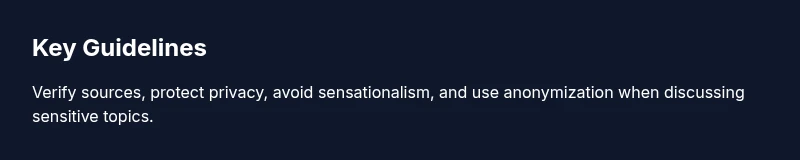
- Verify information with multiple credible sources
- Respect privacy; do not name individuals without confirmation
- Avoid sensational language and rumors
- Anonymize personal details in sensitive discussions
- Apply the same ethical standards to online research as to home-cleaning practices