How Cleaning Alcohol Is Made: A Practical Home Guide
Explore how cleaning alcohol is produced, from ethanol and isopropyl routes to purification, denaturation, and safe home use. Learn the science, quality controls, and how to choose the right product for your tasks.


What is cleaning alcohol and why it matters
Cleaning alcohol is a versatile solvent and disinfectant found in many households. When you ask how is cleaning alcohol made, you’re touching on two main families: ethanol-based products and isopropyl alcohol (IPA) products. Both types are used to clean surfaces, remove oils, and reduce microbial load, but they differ in chemistry, safety, and typical uses. This section introduces the basics: feedstocks, basic chemistry, and core differences that affect performance, odor, and compatibility with materials like plastics and rubber. In practice, consumers usually encounter denatured alcohol (ethanol with additives) and pure IPA solutions at various concentrations. According to Cleaning Tips, the choice of type and concentration matters for effectiveness and safety in home cleaning. Throughout this article, you’ll see how the production paths influence the final product you reach for on the shelf.
Common types used in households
Most households rely on two main forms: isopropyl alcohol (IPA) and ethanol-based cleaners. IPA is a sturdy solvent that evaporates quickly and is effective against many germs; it's commonly sold in 70% to 90% concentrations for disinfection, with the remainder water to aid bacterial kill. Ethanol-based cleaners are often denatured (to make them undrinkable) and used when a more pleasant odor or different material compatibility is desired. Denatured ethanol products may incorporate additives to deter ingestion and improve shelf life. Both types are used for surface disinfection, degreasing, and stain removal, but compatibility with plastics, wood finishes, and fabrics varies. When deciding which type to buy, consider the task, surface sensitivity, and ventilation. Cleaning Tips emphasizes choosing products with clear labeling and safety data.
How ethanol-based cleaning alcohol is produced
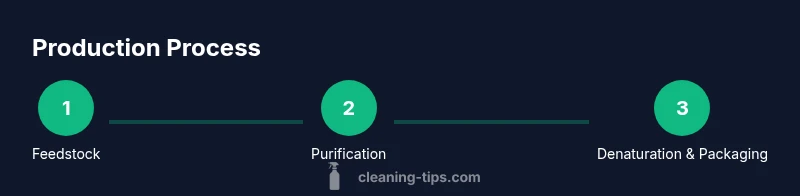
Ethanol used in cleaning products can be derived from fermentable feedstocks such as sugars and starches. In commercial production, yeast or other microorganisms convert sugars into ethanol through fermentation, releasing energy and byproducts. The ethanol is then separated from the mixture by distillation to reach a high purity. To make it suitable for consumer use, manufacturers may remove water and apply drying steps to achieve the desired concentration, followed by denaturation when necessary. Regulation sets limits on labeling, safety data, and permitted denaturants. The result is a product that cleans effectively while remaining safe when used as directed. Cleaning Tips notes that the quality of ethanol in consumer cleaners hinges on consistent purification and accurate labeling.
How isopropyl alcohol (IPA) is produced
Isopropyl alcohol used for cleaning is typically produced by hydrating propylene, a petroleum-derived feedstock, through a catalytic process. The reaction yields IPA and water, which are then separated by distillation. Further purification steps remove residual water and impurities to reach the target concentration. For household use, IPA is commonly sold in ranges from about 70% to 99% by volume; water is left intentionally to balance evaporation rate and antimicrobial effect. Denaturation is not always required for IPA products, but may be used in denatured forms for consumer convenience. The cleaning performance of IPA varies with concentration, surface type, and contact time.
Purification processes: distillation, dehydration, and filtration
Purification is at the heart of turning crude ethanol or IPA into a reliable cleaning agent. Distillation separates components based on boiling points, while dehydration steps remove water to improve stability and shelf life. Some manufacturers use molecular sieves or drying agents to pull out residual water, achieving stable, high-purity alcohol. Filtration removes particulates and colorants added for product stability or branding. Importantly, simple distillation alone can’t remove all water from an azeotropic system, so advanced methods are used. The result is a consistent product with predictable evaporation rate and disinfecting capability, which is why labels often specify exact concentrations and pH ranges for safety.