How Long Does It Take to Clean a Pool? A Practical Time Guide for 2026
Discover realistic cleaning times for pools of different sizes, factors that affect duration, and tactics to speed up sessions while maintaining water quality in 2026.


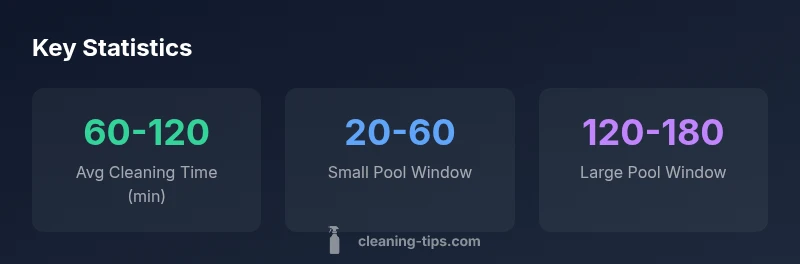
On average, a typical residential pool cleaning session takes about 60-120 minutes for a standard-size pool when you skim, brush, vacuum, balance chemicals, and run the filter. Smaller pools or light debris can be done in 20-60 minutes, while large pools or those with algae or heavy leaves can extend to 2 hours or more. According to Cleaning Tips, the exact time depends on pool size, debris load, and equipment.
How long does it take to clean a pool: factors that matter
When homeowners ask how long does it take to clean a pool, the answer hinges on several variables that can swing a session by a wide margin. The Cleaning Tips team notes that the most influential factors include pool size, debris load, water chemistry, and the efficiency of your equipment. A compact pool with light leaf fall and a well-maintained filter often takes less time than a large, heavily used pool with algae or frequent storms. Sunlight, wind, and local climate can also affect evaporation rates and chemical balancing, subtly altering the duration of a cleaning cycle. In short, there is no one-size-fits-all answer, but understanding these drivers helps you plan more accurately and avoid underestimating the effort involved.
Time ranges by pool type and cleaning level
To set realistic expectations, it helps to break times down by pool size and cleaning intensity. A small pool (roughly 10x20 ft) with minimal debris can often be cleaned in the 20-60 minute range. A mid-sized pool (about 15x30 ft) with moderate debris and routine vacuuming typically requires 60-120 minutes. Large pools (around 20x40 ft) or those with heavy leaf loads, algae, or complex chemical balancing commonly fall into the 120-180 minute window, sometimes longer if backwashing, filter cleaning, or multiple vacuum passes are needed. These ranges are intended as practical guidelines, not guaranteed durations, and reflect typical DIY approaches plus standard pump operation.
According to Cleaning Tips, even experienced cleaners adjust time based on current conditions, so the best plan is to estimate a window, then add a buffer for surprises like sudden algae blooms or storms.
Breaking down the cleaning workflow and how time accumulates
A full cleaning session breaks into a sequence of tasks that each contribute to overall time. Skimming and debris removal are quick but essential; brushing walls and floor helps prevent buildup and reduces future work. Vacuuming is the most time-consuming step for many pools, especially if there are tight corners or deep floors. Running and backwashing the filter, depending on the model, can take 5–15 minutes but may extend if you need thorough media replacement. Finally, balancing chemicals—pH, alkalinity, calcium hardness, and sanitizer levels—often takes additional minutes, particularly if you’re troubleshooting imbalances. The sum of these parts explains why a routine cleaning can vary widely from one session to the next, even for similar pools.
Equipment and technologies that save time
Modern pools benefit from efficient equipment that trims cleaning time. Robotic pool cleaners handle a substantial portion of the vacuuming and scrubbing, reducing the manual effort required. Variable-speed pumps optimize energy use while delivering steady flow for filtration and suction. Automated chemical feeders and pH controllers help maintain water balance between cleanings, minimizing the back-and-forth during sessions. While the initial investment can be high, the long-term time savings—especially during peak season—can be meaningful. The Cleaning Tips team notes that the smarter the setup, the shorter the daily maintenance window tends to be.
Maintenance habits that shorten cleaning sessions
The easiest way to shorten each cleaning session is preventive maintenance. Daily skim and quick brushings cut down on heavy debris later. Keeping leaves raked and gutters clear around the pool area reduces visible debris. Regular filter maintenance—cleaning or replacing filter media as recommended by the manufacturer—prevents clogging and yields faster suction and circulation. Consistent chemical testing and timely adjustments minimize the need for major balancing efforts during a full clean. In short, steady, small practices everywhere in the week reduce the time required on a single cleaning day.
A practical cleaning plan for busy households
If you’re juggling family life or long work hours, a compact, repeatable weekly routine saves time without sacrificing water quality. Schedule light maintenance on weeknights—skim and brush one day, vacuum the next—while reserving one longer block every 7–10 days for a full check of chemistry and a thorough vacuum if needed. Use a robotic cleaner one or two days per week to cover floors and walls when you’re at work. Keep a simple log of chemical readings and tasks so you don’t guess or duplicate efforts. The goal is a predictable, repeatable rhythm that minimizes surprise cleaning sessions and keeps the pool inviting.
Estimated times by pool size and debris level
| Pool Size | Estimated Cleaning Time | Notes |
|---|---|---|
| Small (10x20 ft) | 20-60 min | Light debris, skim + brush |
| Medium (15x30 ft) | 60-120 min | Moderate debris, vacuuming |
| Large (20x40 ft) | 120-180 min | Heavy debris or algae, complex balancing |
Questions & Answers
How long does it take to clean a pool after a storm?
Storms introduce heavy debris and algae challenges that extend cleaning sessions. Expect an additional 30–60 minutes depending on debris volume and water balance. A thorough post-storm check often requires extra backwashing and chemical adjustments to restore clarity.
Storm debris adds time. Plan for an extra half hour to an hour based on how much debris is present.
Do robotic pool cleaners reduce cleaning time?
Yes. Robotic cleaners take on most floor and wall cleaning duties, reducing manual vacuuming time. You still need to skim and balance chemicals, but robots can dramatically cut overall session length when used regularly.
Robots can cut your manual work a lot, especially for big pools.
How long does manual vacuuming take?
Manual vacuuming typically ranges from 20 to 90 minutes, depending on pool size, floor depth, and clutter. It’s the most variable part of a DIY clean, but experienced users can finish faster with a good systematic approach.
Vacuuming time varies with pool size and clutter.
Should I set a weekly cleaning schedule?
Yes. A regular schedule reduces total time by preventing buildup that requires longer sessions. Short, frequent cleanings are typically quicker and more predictable than infrequent, intensive cleanings.
Yes—stick to a regular weekly plan for faster, predictable results.
What routine tasks speed up future cleanings?
Daily quick skim, brushing high-traffic areas, and timely filter cleaning keep debris from accumulating and reduce the time needed for deeper cleans. Regular water testing also minimizes balancing time during main sessions.
Keep up with quick skims and brushing to cut future cleaning time.
Is professional cleaning faster than DIY?
Professionals can often complete a pool cleaning in a shorter window due to equipment access and experience, but you’ll still want to perform routine maintenance yourself to keep the pool in good shape between visits.
Pros may be faster for deep cleans, but regular DIY maintenance matters too.
“A consistent cleaning routine and smart equipment can dramatically reduce total pool maintenance time without compromising water quality. Regular practice helps you catch issues early and keep the pool safer and clearer.”
The Essentials
- Plan for a 60–120 minute window for typical mid-size pools
- Robotic cleaners can significantly cut manual time
- Regular maintenance reduces future cleaning effort
- Tailor estimates to your pool size and debris load