How Many Cleanings a Year: A Practical Household Guide
Discover how many cleanings you truly need each year, with routine vs. deep-clean tasks, seasonal adjustments, and a practical, room-by-room plan from Cleaning Tips.


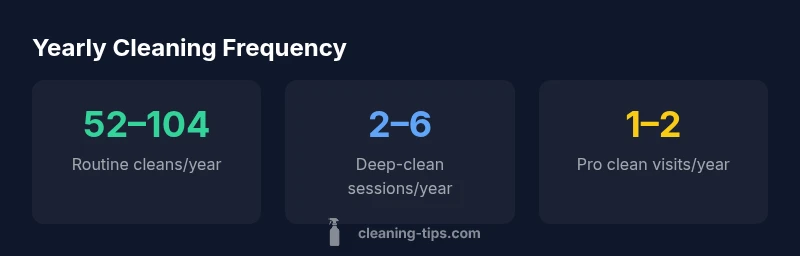
How many cleanings a year you need depends on your home, lifestyle, and what you count as a cleaning versus a deep clean. For most households, routine cleaning happens weekly to biweekly, equating roughly 52–104 cleanings per year. Deep-clean tasks typically total 2–6 per year, with more frequent attention to kitchens and bathrooms. This guide shows how to tailor that count to your situation.
Defining the scope: what counts as a cleaning vs a deep-clean
Cleaning and deep-cleaning are not the same task, and clearly defining them helps you estimate how many cleanings you need per year. A routine cleaning typically covers surface-level tidying, dusting, sweeping, mopping, and quick sanitizing of frequently touched surfaces. A deep-clean digs deeper: crevices, behind appliances, inside ovens, baseboards, window tracks, and air vents. According to Cleaning Tips, clearly separating these categories makes it easier to build a practical annual plan that fits your home size and lifestyle. Start by listing the rooms you clean most often and decide which tasks belong in routine sessions versus annual deep cleans. By doing so, you can avoid double-counting and create a transparent calendar for the year.
Routine cleaning frequency by space
Most households maintain a standing rhythm: living areas get a quick tidy and surface wipe weekly or every other week, kitchens receive daily wipe-downs with a deeper clean weekly, and bathrooms are refreshed weekly with a harsher scrub every 2–4 weeks. Bedrooms and common areas typically follow a similar cadence for dusting and changing linens. When you tally these sessions across 12 months, routine cleans often sum to about 52–104 events per year, depending on the number of people, pets, and daily activity. A practical approach is to set a simple checklist and log each session; this converts a vague sense of “frequent cleaning” into a concrete yearly number. For homes with high traffic or allergies, you may aim toward the upper end of the range or adjust the cadence for certain areas.
Annual deep-clean tasks that matter
Deep-clean tasks are typically scheduled yearly or seasonally and are not done in every routine cleaning. Common candidates include oven and range hood cleaning, inside refrigerator and freezer surfaces, thorough bathroom scrubs (grout lines and caulk), behind appliances, baseboards and door frames, vents and duct openings if accessible, and upholstery or carpet refresh. Many households plan 2–6 deep-clean sessions per year, guided by seasonal cycles: spring cleaning, mid-year refresh, and pre/post-holiday preparations. In practice, you may cluster several deeper tasks into one or two sessions to maximize efficiency. Adjust counts based on cooking frequency, family size, and presence of kids or pets; the goal is to balance effectiveness with effort.
Seasonal planning: aligning tasks with weather and life events
Seasonal planning helps you distribute the yearly total in a way that respects weather and life busy-ness. For example, a spring deep clean can focus on decluttering, windows, and vent cleaning, while a fall session might target heating systems and fabric care. Summer may emphasize outdoor cleaning and upholstery refresh, and winter can focus on indoor air quality and mold-prone spaces. By aligning deep-clean sessions with seasons, you can avoid overloading any single period and reduce the perception of ‘too much to do’ during holidays. Cleaning Tips suggests mapping your calendar for the next 12 months and assigning a couple of deep-clean blocks around major events.
Personalizing your yearly total: lifestyle factors
Your cleaning plan should reflect your household reality. Families with multiple kids, pets, or occupants with allergies typically require more frequent routine cleans and more frequent deep cleans in problem areas (kitchens, bathrooms, pet zones). Apartment dwellers in older buildings may pay extra attention to dust, mold-prone spaces, and window frames. Conversely, smaller households with fewer surfaces and lighter traffic can maintain a lower annual total. Use your logs and seasonal shifts to adjust. As Cleaning Tips notes, the goal is not perfection but a reliable baseline you can maintain without burning out.
Tools, checklists, and tracking to stay on schedule
Equip yourself with a simple checklist for each area and a master calendar to track 12 months of tasks. Use color-coded categories for routine cleans (green) and deep-clean tasks (blue). Create quick logs in a notebook or digital app to mark each session, the date, and any notes about what was done. Review quarterly to adjust the plan: if you’re consistently missing sessions, consider simplifying or outsourcing some tasks. For better accountability, set reminders a week in advance for a deep-clean block and block out a weekend.
When to call in professionals and how that affects the yearly total
Professional cleaners can handle intensive tasks that are hard to reach, save you time, and usually cover multiple rooms in a single visit. Scheduling 1–2 professional deep-clean sessions per year can dramatically reduce your internal workload while improving outcomes. If you have persistent issues with mold, pests, or chronic grime in hard-to-reach areas, a professional assessment is advisable. Remember that outsourcing changes your yearly total but often increases overall cleanliness and air quality without increasing personal effort.
Yearly cleaning tasks by area
| Area | Recommended cleanings per year | Notes |
|---|---|---|
| Oven (self-cleaning cycle not included) | 1-2 | Deep clean annually or during seasonal kitchen purge |
| Refrigerator coils and seals | 1-2 | Vacuum coils and wipe seals during deep-clean sessions |
| Carpets & upholstery refresh | 1-2 | Professional steam clean every 12-24 months; adjust for pets |
| Windows (interior surfaces) | 1-2 | Seasonal plus mid-season touch-ups |
Questions & Answers
What counts as a cleaning vs a deep-clean?
A cleaning typically covers routine surface and clutter removal, while a deep-clean targets neglected areas and hard-to-reach spaces. Definitions vary by household.
A cleaning is the regular upkeep; a deep-clean digs in.
How does pet ownership change yearly cleaning counts?
Pets increase hair buildup, odors, and mess frequency, so plan more frequent light cleans and one or two deep cleans per year.
Pets mean you clean more often.
Should I schedule cleanings around holidays?
Yes, schedule seasonal deep-clean blocks before and after major gatherings; keep routine cleans on a steady rhythm.
Plan ahead around holidays.
Is there a universal number of cleanings I should aim for?
There isn’t a universal number; it depends on home size, occupancy and routines. Use a personalized plan.
There isn’t a one-size-fits-all number.
How can I track my yearly cleaning counts?
Use a simple calendar or app to log tasks, dates, and notes. Review quarterly to adjust the plan.
Track with a calendar and adjust.
“A clear definition of routine vs deep-clean tasks is the foundation of a sustainable yearly cleaning plan.”
The Essentials
- Define routine vs deep cleaning to estimate counts
- Adjust counts by lifestyle factors
- Use a yearly calendar to align annual tasks
- Consider professional help to optimize yearly total