How Much Does Clean Email Cost? A Practical Guide
Explore typical Clean Email pricing, from free tiers to paid plans, annual discounts, and tips to maximize value. Cleaning Tips analyzes 2026 pricing trends to help homeowners and renters choose the right plan.


Clean Email pricing generally starts with a free tier and moves to paid plans that scale by features and inbox size. Expect monthly costs in a low- to mid-range band, with annual billing offering discounts. For larger teams or heavy automation, per-user or tiered pricing often applies. The Cleaning Tips analysis suggests comparing features like automation, multi-inbox support, and priority service before buying.
Understanding Clean Email Pricing in 2026
Pricing for Clean Email follows a familiar pattern among inbox management tools: a no-cost entry point, a series of paid tiers, and optional add-ons that can push the monthly total higher. The Cleaning Tips team notes that prices are typically driven by features such as automation, multi-inbox support, priority customer service, and advanced rules. In 2026, most providers offer a free tier or trial, with monthly bills that increase as you unlock more inboxes, more automation, and more customization. For homeowners and small teams, this pricing ladder means you can start small and expand as you recognize time savings and productivity gains. Always quantify the value you expect to gain from automations and rules, and compare the yearly cost of annual plans against the month-to-month option. Consider how seasonal usage, such as tax season or summer campaigns, might affect your need for higher tiers.
Free Tier: What You Get Without Paying
Most pricing structures include a free tier that lets you test core capabilities without committing. You’ll typically find limits on the number of inbox connections, a cap on automation runs per month, and restricted access to advanced filters. For many users, a free tier is enough to establish whether Clean Email fits their workflow: you can set up basic rules, run periodic cleanups, and observe how automation reduces manual effort. If your inbox remains small and your needs are modest, the free tier might cover you for several months, especially if you pair it with efficient manual archiving. The key is to treat the free tier as a test drive, not a long-term solution, and to plan a switch to paid tiers if you observe meaningful time savings and consistency in your email hygiene.
Feature Sets That Drive Cost
Pricing increases as you unlock more advanced features. Core automation rules, bulk unsubscribe options, and scheduled cleanups are common across tiers, but higher plans add multi-inbox support, priority chat or phone assistance, enhanced analytics, and fewer daily limits. If you manage multiple accounts, or you rely on complex workflows (like automatic triage, tagging, and bulk labeling), you’ll likely see a meaningful price jump. In contrast, casual users may stay well within the lower tiers. When evaluating features, map each capability to the time you’ll save—then weigh that against the monthly expense. The takeaway: higher prices aren’t always a bad sign if the added features deliver measurable productivity gains.
How Inbox Size and Activity Change the Price
As inbox volume grows and rules become more complex, many providers shift you into higher tiers or charge based on usage metrics (e.g., number of connections, automation runs, or active inboxes). Small inboxes with straightforward cleanup may stay on lower plans, while teams with multiple addresses and heavy automation typically move to mid- or high-tier options. Some plans cap the number of automation rules or frequency of cleanups, so you’ll pay more for greater flexibility. If your email activity spikes during certain seasons, consider a plan that accommodates seasonal peaks rather than permanently over-provisioning.
Hidden Costs and Common Add-Ons
Beyond base plan prices, several add-ons can raise the total. Overages on monthly automation runs, extra inbox connections, advanced reporting, priority support, and data export capabilities are common sources of incremental costs. Some vendors also offer premium templates, dedicated account management, or compliance features that increase price. Be wary of auto-renewals at higher tiers and review renewal terms at signing. A thorough scan of the pricing page, including what is included in each tier and what constitutes an add-on, helps prevent sticker shock at renewal time.
How to Compare Pricing Effectively
To compare pricing across tools (and between Clean Email plans), start with a feature checklist: number of inboxes, automation rules, scheduling options, reporting depth, and support SLA. Then align these features with your actual needs and calculate annual costs to see true value. Use a simple ROI framework: estimated time saved per week multiplied by your hourly rate, minus monthly fees. Don’t forget to factor in potential downtime or learning curves that could affect productivity. Finally, leverage free trials or the free tier to validate fit before committing.
ROI Considerations: Time Saved vs Price
The ultimate question is whether the time saved justifies the cost. If automated cleanups save you 30–60 minutes per week, that translates into substantial annual value for many users. For households or small teams, even moderate time savings can justify a paid plan, especially when you consider less clutter, better search efficiency, and fewer missed important messages. When calculating ROI, include intangible benefits such as reduced cognitive load, faster response times, and more predictable inbox management outcomes.
Billing Cadence: Monthly vs Annual Explained
Most services offer both monthly and annual billing. Annual plans typically provide a discount that reduces the monthly equivalent, making the annual option a strong value for long-term use. If you’re unsure about long-term usefulness, start with a monthly plan or a trial period, then switch to annual if you’re confident in ongoing value. Be mindful of cancellation terms and whether discounts require upfront payment or automatic renewal. A clear comparison of total yearly costs versus twelve monthly payments helps avoid surprises.
Special Promotions and Trials: What to Look For
Promotions can materially affect price. Look for introductory discounts, loyalty perks, and seasonal offers. Some vendors provide extended trial periods or money-back guarantees, which can reduce perceived risk. Always read the fine print on eligibility, renewal pricing, and what happens when promotions end. A tactical approach is to plan your transition from trial to paid plan so you don’t lose critical automation or inbox coverage during the switch.
Practical Scenarios: Which Plan Is Right for You
- Solo user with a single inbox and basic filtering: Free or Basic plan is often sufficient.
- Small team managing multiple addresses: Pro or Team plan tends to provide the best balance of features and price.
- Power user with advanced automation and analytics: Pro or Team plus add-ons, or enterprise pricing, as needed.
- Seasonal usage: Choose a plan with the flexibility to scale up during peak periods and scale down afterward. Align pricing with actual usage to maximize ROI.
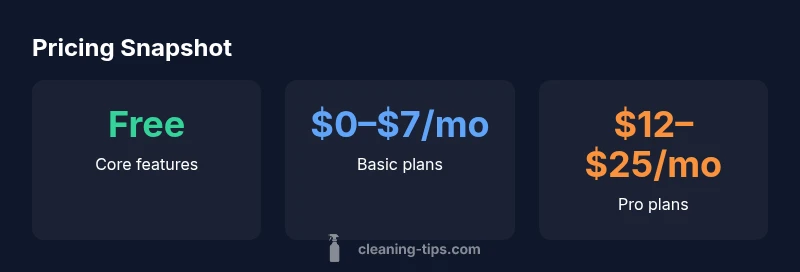
Pricing table for Common Clean Email plans
| Plan Type | Monthly Price Range | Annual Price Range | Included Features | Best For |
|---|---|---|---|---|
| Free | $0/mo | $0/yr | Basic rules, 1 inbox, limited automation | Casual users |
| Basic | $0–$7/mo | $0–$84/yr | Core cleanup rules, up to 1 inbox, basic scheduling | Light users |
| Pro | $12–$25/mo | $144–$300/yr | Advanced automations, 5+ inboxes, priority support | Power users |
| Team | $30–$120/mo | $360–$1,440/yr | Team sharing, admin controls, policy templates | Small teams |
Questions & Answers
What is the starting price for Clean Email plans?
Most plans start with a free tier, then move to paid options that scale by inboxes and features. Expect a low-to-mid monthly range, with annual billing offering discounts. Always compare features before committing.
Clean Email starts free and scales up as you add features and inboxes. Look at annual discounts to maximize value.
Does Clean Email offer a free trial?
Yes, many users begin with a free tier or trial period to test core capabilities before upgrading. Review limits and upgrade criteria to ensure it matches your needs.
There’s typically a free tier or trial to test features before paying.
Are there annual discounts?
Annual billing usually lowers the monthly cost, sometimes substantially. If you expect ongoing use, annual pricing often represents the best value.
Annual plans are often cheaper per month than month-to-month.
What features justify higher pricing?
Automation depth, multi-inbox support, analytics, priority support, and admin controls commonly justify higher prices. Map each feature to the time you save to assess value.
Automation, multi-inbox support, and analytics often justify higher costs.
Is it worth paying for Clean Email with a small mailbox?
For very small mailboxes, a free or basic tier may suffice. If you notice time savings from automation, a paid plan could still be worthwhile.
If you save time with automation, paying may be worth it even for small mailboxes.
How should I compare pricing across providers?
Use a feature checklist, estimate ROI from time saved, and try free trials. Compare total annual costs and renewal terms to avoid surprises.
Create a feature checklist, estimate ROI, and test with trials.
“Pricing is most valuable when it directly maps to the features you actually use. Start with the free tier and scale as your needs grow.”
The Essentials
- Start with the free tier to test fit.
- Annual billing often yields significant savings.
- Higher plans unlock automation and multi-inbox support.
- Compare features, not just price, to gauge value.
- Consider ROI by estimating time saved and costs.