How to Apply Cleaner in Canada: A Practical Guide 2026
Practical, step-by-step guidance for homeowners in Canada on selecting, using, storing, and disposing of cleaners safely. Learn regulatory basics, safety tips, and surface-specific advice.


You will learn how to apply cleaner in canada safely and effectively, from selecting the right product to ventilation, dilution, and storage. This quick guide covers regulatory basics, surface-specific tips, and common mistakes to avoid for a healthier home.
Understanding the Canadian cleaning landscape
Canada's homes vary from cramped urban apartments to sprawling houses across diverse climates. When you consider how to apply cleaner in canada, you must balance product type, surface compatibility, ventilation, and local guidance. The Cleaning Tips team emphasizes practical, safe methods that protect indoor air quality and reduce chemical exposure. In this guide, you will explore how to select appropriate cleaners, prepare spaces, and apply products without causing damage or harm. The phrase how to apply cleaner in canada anchors our discussion, helping readers connect product choices with real-world results. With diligent prep and clear steps, most cleaning tasks—from kitchens to bathrooms and living areas—become safer and more predictable. Cleaning Tips analysis highlights the value of following label directions and tailoring methods to Canadian homes and climates.
Regulatory basics for cleaners in Canada
Canada regulates household cleaners through a combination of federal guidance and provincial practices, underscoring the importance of reading labels and following safety data sheets (SDS) where provided. While rules vary by province, the core rule is universal: ensure proper ventilation, avoid mixing cleaners, and store products securely out of reach of children. Being aware of disposal instructions also protects local waterways and waste streams. The Cleaning Tips analysis notes that compliance with label information substantially improves safety outcomes, particularly for households with children or pets. This guidance applies across kitchens, bathrooms, and laundry areas, helping you reduce accidental exposures.
How to evaluate cleaners: ingredients, safety data, and eco-claims
Not all cleaners are created equal. When choosing products, focus on label clarity, ingredient lists, and third-party eco-labels that can indicate lower environmental impact. Seek cleaners with explicit hazard statements and accessible Safety Data Sheets (SDS). Be wary of ambiguous terms like “natural” or “green” without substantiation. In Canada, eco-claims are common, but it’s important to verify claims against recognized standards. The Cleaning Tips team recommends favoring products that disclose active ingredients, dilution guidelines, and surface compatibility. This approach helps you decide which cleaner is appropriate for your task—whether sanitizing a bathroom surface or removing kitchen grease—without compromising safety or indoor air quality. A practical tip is to compare similar products side-by-side on safety and performance.
How to apply cleaner in canada: pre-treatment, dilution, ventilation
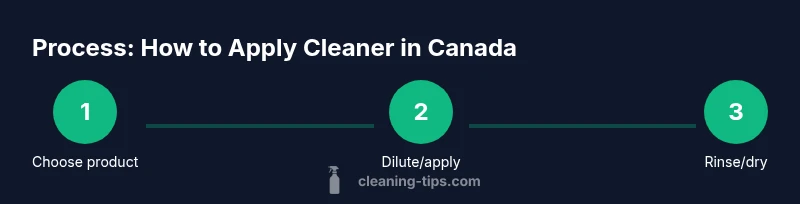
Applying cleaner properly starts with a quick assessment of the task and the surface. For many cleaning jobs, you’ll start with pre-treatment: blot stains, remove loose debris, and test a small, inconspicuous area. If dilution is required, measure precisely and never mix cleaners unless the label explicitly states it’s safe. Ensure good ventilation by opening windows or using a vent fan, especially in small or poorly ventilated spaces. When you apply cleaner in canada, apply evenly, allow dwell time per label directions, and avoid over-wetting. After treatment, rinse or wipe as directed and dry the surface. The goal is effective cleaning without residue or fumes that can irritate eyes or lungs. The step-by-step approach helps you control exposure and achieve consistent results in kitchens, bathrooms, and living areas.
Surface-specific guidance: kitchens, bathrooms, and fabrics
Different surfaces require tailored approaches when applying cleaner in canada. For kitchen countertops and stainless steel, use non-abrasive cleaners and dry thoroughly to prevent streaks. In bathrooms, choose products that inhibit soap scum and mold while using ventilation to manage fumes. For fabrics and textiles, test in an inconspicuous area and follow fabric care labels. Always spot-test cleaners on hidden areas before broader use. In all cases, label advisable products clearly after use and store away from children and pets. This section helps you adapt the general method of apply cleaner to common Canadian homes while preserving surfaces and indoor air quality.
Storage, disposal, and spill response
Proper storage is crucial when how to apply cleaner in canada. Keep cleaners in their original containers with intact labels, away from heat sources and food, and out of reach of children. Follow local disposal guidelines for empty containers and leftover product. For spills, isolate the area, ventilate, and clean up with the appropriate absorbent materials before washing with water if advised on the label. Remember not to mix products, as incompatible combinations can release harmful gases. This practice reduces risk and supports a safer home environment in Canada.
Cleaning schedule and maintenance plan
A regular cleaning routine makes it easier to maintain surfaces safely and efficiently while applying cleaner in canada. Establish a simple schedule that prioritizes high-touch areas (kitchen counters, light switches, bathroom fixtures) and assigns a weekly, biweekly, or monthly cadence. Keep a small log to note when you used which product and any surface observations. By aligning routines with label instructions and surface needs, you’ll reduce buildup, extend cleaning intervals, and improve indoor air quality over time. This proactive approach also helps you track product effectiveness and avoid unnecessary waste by consolidating tasks.
Common mistakes and troubleshooting when applying cleaner in canada
Common errors include skipping a test patch, over-wetting, or ignoring ventilation. When how to apply cleaner in canada, you should avoid mixing cleaners unless the label explicitly allows it; always follow dilution ratios and dwell times. If a surface becomes dull or sticky after cleaning, recheck the product’s compatibility with that material and rinse thoroughly. If fumes feel strong or trigger irritation, increase ventilation or switch to a milder formulation. By anticipating these issues and adjusting practice, you can achieve reliable results while protecting occupants and surfaces.
Tools & Materials
- Cleaning product(s) chosen for the task(Follow label directions; avoid mixing unless stated otherwise.)
- Nitrile gloves(Chemical-resistant, size appropriate.)
- Safety goggles(Wear if splashes may occur.)
- Microfiber cloths(Lint-free and color-coded by task.)
- Measuring cup or spray bottle for dilution(Use for accurate dilution if required.)
- Ventilation option(Open window or turn on exhaust fan.)
- Bucket and/or additional absorbent towels(For spills and pre-wash tasks.)
- Waste disposal bag(Seal after use; dispose per local guidelines.)
Steps
Estimated time: 30-45 minutes
- 1
Identify the cleaning task and product
Assess the surface and dirt level, then choose a cleaner compatible with that surface. Gather the necessary tools before you begin. This reduces trips to the cupboard and keeps the process efficient.
Tip: Double-check that the product is suitable for the surface to avoid damage. - 2
Read label directions
Carefully read the product label for dilution, dwell time, and any safety warnings. If dilution is required, measure precisely and avoid guessing. Do not mix cleaners unless the label specifically allows it.
Tip: Keep the label accessible in the workspace for quick reference. - 3
Prepare the workspace for ventilation
Open a window or switch on a vent to ensure good airflow. Move pets and people away if the product produces strong fumes. Lay down towels or mats to catch drips if needed.
Tip: Ventilation reduces inhalation exposure during cleaning. - 4
Apply cleaner to the surface
Apply the cleaner evenly using a spray bottle or cloth, following the recommended amount. Avoid over-wetting to prevent run-off or damage. Let the cleaner dwell as directed before proceeding.
Tip: Dwell time is critical for effective cleaning. - 5
Scrub or wipe as directed
Use a non-abrasive cloth or sponge to scrub in a gentle circular motion. For tougher grime, reapply and re-dwell if allowed by the label. Rinse with clean water if the label requires.
Tip: Test a small area first to ensure no surface damage. - 6
Rinse or wipe off residue
Rinse away cleaner residue with clean water or wipe with a damp cloth as instructed. Dry thoroughly to prevent streaks or water damage. Dispose of rinse water according to local guidelines if needed.
Tip: Drying prevents water staining and residue buildup. - 7
Store properly after use
Return products to their original containers and seal tightly. Store in a cool, dry place away from children and pets. Label containers clearly if you transfer cleaners to new bottles (not recommended).
Tip: Always store cleaners in their original labeled containers. - 8
Review and adjust for future tasks
Reflect on the task: Did the cleaner work as expected? Note any surface sensitivities or preference for a different product. Update your task checklist for next time.
Tip: Keeping notes helps refine your routine over time.
Questions & Answers
Do I need to follow provincial guidelines when applying cleaners in Canada?
Yes. Always follow label directions and consult local resources for any provincial or municipal requirements. Safety and disposal guidelines may vary by region, so check first.
Yes. Follow label directions and check your local rules for requirements and disposal.
Can I mix cleaners to save time?
Only if the label explicitly allows mixing. In general, avoid combining cleaners to prevent dangerous fumes.
Only mix if the label says it’s safe; otherwise don’t mix cleaners.
Are eco-friendly cleaners safe for septic systems in Canada?
Many eco-friendly cleaners are compatible with septic systems, but always verify with the product label and local regulations. Use sparingly and avoid harsh chemicals near septic components.
Eco-friendly cleaners are often septic-safe, but check the label and local guidance.
What should I do if cleaner gets in my eyes or on skin?
Rinse immediately with plenty of water for several minutes and seek medical advice if irritation persists. Follow the label for any specific first-aid instructions.
Rinse with water right away and seek care if irritation continues.
Is there a difference between household and professional cleaners?
Yes. Professional cleaners may have stronger formulations and require different handling. Always follow the label and consider ventilation and surface compatibility.
There are differences in strength and usage; follow the label and use caution.
Should I store cleaners with food or in the pantry?
Keep cleaners separate from food storage areas to avoid accidental exposure or contamination. Use a dedicated cleaning storage area with a secure lid.
Keep cleaners away from food and store in a dedicated area.
What is the best approach for disinfecting in Canada?
Choose a disinfectant appropriate for the surface and follow the dwell time and ventilation guidance on the label. Ensure compatibility with the surface material.
Use the right disinfectant and follow label guidelines for dwell time and ventilation.
Watch Video
The Essentials
- Follow label directions for every cleaner used.
- Ventilate spaces to protect indoor air quality.
- Test on hidden areas before full application.
- Store cleaners safely and separately from food.
- Document findings to improve future cleanups.