How to Clean a Solar Panel: A Practical Guide
Learn safe, effective steps to clean solar panels, protect wiring, and maximize efficiency with gentle tools and mild soap from Cleaning Tips. This guide covers preparation, technique, safety, and maintenance for homeowners.


To clean a solar panel, turn off the system, inspect for debris, and gently wash the panel with a soft brush and clean water, avoiding harsh chemicals. Clean panels maximize efficiency by removing dirt, dust, and bird droppings that block sunlight. Follow manufacturer guidelines for cleaning solutions and spacing, and schedule seasonal cleanings in dry conditions.
Why Cleaning Solar Panels Matters
Dirt, dust, pollen, and organic buildup on solar panels can reduce light absorption and lower energy production. In dry, dusty regions, a thin layer of grime can cut output noticeably even after a rain. According to Cleaning Tips, regular maintenance helps sustain efficiency and prolong panel life. While rain and weather help, relying on precipitation alone won't remove stubborn soils. Clean panels maximize sunlight capture, especially on south-facing roofs or installations with higher exposure. Environmental factors such as coastal salt spray or agricultural dust can accelerate grime, so homeowners should tailor cleaning frequency to their climate. Practically, plan a light cleaning at least once per year, and more often if you notice a drop in output, visible residue, or after pollen seasons. The goal is to maintain a clear, even surface that allows solar cells to convert sunlight to electricity effectively.
Safety and Preparation
Before you begin any cleaning, power down the system completely and disconnect the DC/AC feeds according to the manufacturer's instructions. Do not step on panels or climb onto a roof unless you are trained and equipped with proper fall protection. Wear gloves and eye protection, move any obstacles away, and place a towel or mat under the work area to catch drips. Cleaning Tips emphasizes that a safe, methodical approach protects both you and the panels, and recommends avoiding direct contact with junction boxes or exposed wiring. If you observe cracks, loose mounting hardware, or moisture intrusion, stop and consult a professional.
Materials and Cleaning Approach
Use a mild soap solution and soft cleaning tools to reduce the risk of micro-scratches. Avoid ammonia, bleach, or abrasive cleaners that can degrade anti-reflective coatings. A gentle rinse with clean water should precede any scrub, and a microfiber cloth or soft-bristle brush will remove grime without scratching the glass. For hard-to-reach panels, an extendable pole can help, but never use pressure washers or high-pressure sprays. Based on Cleaning Tips analysis, routine use of mild soap and careful rinsing preserves performance and extends the life of panel surfaces, mainly when cleaning in dry or pollen-heavy months.
Common Mistakes and Troubleshooting
Mistakes such as using hot water, scrubbing aggressively, or spraying water into electrical enclosures can cause damage or create streaks. Always test a small area first if you are unsure how a coating responds to soap. If streaking occurs, switch to a softer brush and a lighter rinse, and dry with a microfiber cloth. If you notice persistent residue after cleaning, consider a second, gentle rinse in a shaded area to avoid rapid drying that leaves spots.
Schedule and Maintenance Tips
Set a cleaning routine that aligns with your climate and local environment. In dusty or pollen-heavy areas, plan more frequent checks; after heavy rainfall or seasonal pollen, inspect and clean as needed. Store cleaning supplies in a cool, dry place and label containers to avoid mixing chemicals. The Cleaning Tips team recommends documenting each cleaning session and noting any changes in performance readings to track the effect of maintenance over time.
Tools & Materials
- Soft-bristle brush(Choose non-scratch bristles; long handle helps reach higher panels)
- Microfiber cloth(For drying and detailing without scratching)
- Mild soap solution(A few drops of mild dish soap in water; avoid ammonia)
- Water source(Clean, lukewarm water preferred; avoid hot water on glass)
- Extendable pole or squeegee(Useful for hard-to-reach panels; ensure secure attachment)
- Non-abrasive sponge(For stubborn dirt with soap, use gently)
- Safety gear (gloves, eye protection)(Prevents slips and protects eyes from splashes)
- Tarp or protective cloth(Catches drips and protects ground surfaces)
Steps
Estimated time: 20-40 minutes
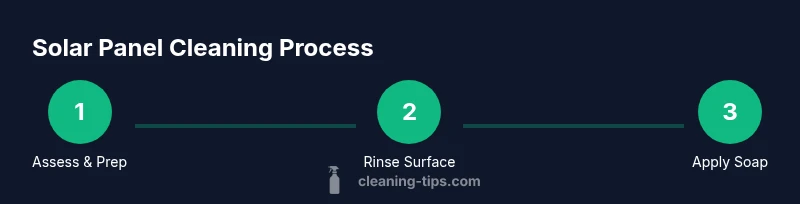
- 1
Power down and prep
Shut off the solar system at the disconnect and inverter. Verify there is no electrical current running to the panels before you start. Gather tools and place a protective mat or tarp beneath the work area.
Tip: Always confirm the system is de-energized with the appropriate meter before touching any components. - 2
Choose a safe cleaning method
Rinse panels with clean water to loosen dirt. Avoid high-pressure spray or strong cleaners that can damage coatings or seals. Plan cleaning for a shaded time window to prevent rapid drying and streaks.
Tip: Start with the top edge and work down to minimize drips on unclean areas. - 3
Rinse the surface
Gently rinse the entire panel surface using a low-pressure stream. Let the water carry away loose dust and debris without forcing it into seams or junctions.
Tip: Keep water flow gentle and continuous to avoid dislodging fasteners. - 4
Apply soap and scrub lightly
Dip the soft-bristle brush into the mild soap solution and scrub in circular motions. Focus on areas with visible grime, avoiding scrubbing across coatings with aggression.
Tip: Do not scrub over any damaged areas; stop and inspect if you see cracks or exposed wiring. - 5
Rinse away soap thoroughly
Rinse from top to bottom until all soap is removed. Residual soap can cause streaks and reduce optical clarity over time.
Tip: Inspect for streaks; if present, rinse again or pat dry with a microfiber cloth. - 6
Dry and inspect
Wipe panels dry with a clean microfiber cloth. Check for missed spots, cracks, or loose hardware. Take a final glance to ensure no water pools near electrical components.
Tip: Document any issues; early detection leads to easier maintenance.
Questions & Answers
How often should I clean solar panels?
Most installations benefit from an annual cleaning, with more frequent sessions in dusty or pollen-heavy environments. Always assess performance after cleaning and adapt frequency accordingly.
Most solar installations benefit from an annual cleaning, with more frequent sessions in dusty or pollen-heavy environments.
Can I use a garden hose to wash panels?
A gentle rinse with a garden hose at low pressure is acceptable, but avoid high-pressure sprays that can damage coatings or seals.
Use a gentle rinse with a low-pressure hose and avoid high-pressure sprays.
What cleaners are safe for solar panels?
Use a mild soap and water solution. Avoid ammonia, bleach, or abrasive cleaners that can degrade coatings.
Use mild soap and water; avoid harsh chemicals that can damage coatings.
Is it safe to clean panels on a roof?
Only if you have proper safety gear and training. Consider hiring a professional if you are uncomfortable working at height.
Only clean from a safe stance; if you're not comfortable on a roof, hire a pro.
What if I can't reach the panels?
Use a long-handled, non-abrasive tool and clean from ground level where possible. If not feasible, hire a professional.
If you can't reach safely, use a long tool or hire a pro.
Watch Video
The Essentials
- Power down before cleaning.
- Use mild soap and soft brushes only.
- Rinse and dry to avoid streaks.
- Clean annually or more often in dusty environments.