How to Clean Gear in Kingdom Come Deliverance: Practical Guide
Learn practical, step-by-step techniques to clean armor, weapons, and gear in Kingdom Come Deliverance. This guide covers tools, leather care, rust prevention, and storage to extend gear life and improve performance.


By following this guide, you’ll learn how to clean gear in Kingdom Come Deliverance efficiently, protecting swords, armor, and leather. Start with a quick inspection, then wipe away dust, treat leather, and dry thoroughly before storage. This quick answer highlights three core steps and essential precautions. It also covers tool selection and common mistakes to avoid.
Why Cleaning Gear in Kingdom Come Deliverance Matters
According to Cleaning Tips, gear in Kingdom Come Deliverance reflects your in-game discipline and affects performance in combat. Clean gear resists rust, maintains blade edge quality, preserves leather straps, and reduces noise from creaking plates during stealth. When you keep weapons and armor free of grime, you also avoid longer repair windows and the penalties that come with visibly worn gear. In practical terms, a well-maintained sword stays sharper, leather remains flexible, and chainmail remains supple, which translates to fewer interruptions in battle and more reliable protection during long campaigns. This section lays the foundation for a routine that respects both realism and game mechanics, while reminding players that consistent care pays off over time. You’ll learn how to balance in-game resources with real-world maintenance concepts that translate well to the game’s economy and crafting system.
General Rules for Gear Maintenance in Kingdom Come Deliverance
- Inspect each piece before use: look for loose rivets, scratches, or torn leather straps. Early detection prevents deterioration during travel or combat.
- Separate metal from leather when cleaning: metals need rust prevention while leather benefits from conditioning.
- Use gentle tools and mild cleaners: harsh chemicals can damage finishes and leather alike, which mirrors real-world care.
- Dry thoroughly after cleaning: moisture accelerates corrosion and mold in leather furrows, so air-drying is essential.
- Log maintenance in-game: keeping notes helps you track what’s been done and when a piece should be serviced again.
Pro-tip: Build a short 10-minute routine into your play sessions to keep your gear consistently in good shape. Prolonged neglect often leads to more expensive repairs and reduced performance later in the game.
Cleaning Weapons: Swords, Daggers, and Bows
Swords and daggers benefit from a light wipe to remove dust, followed by a quick inspection for rust or pitting. Use a soft-bristled brush to dislodge debris from fuller grooves and cross-guards. For blades, a very light coating of oil helps prevent rust between quests and after heavy combat sequences. Bows should be wiped down to removeChar dust from strings and limbs; avoid soaking wood as this can warp it. In-game, always reseal leather components on weapons where applicable and store blades sheathed to prevent accidental cuts during transport.
Tip: Never apply liquid cleaner directly to a blade—excess moisture can seep into rivets and wood handles, accelerating wear. Instead, use a barely damp cloth and a dry finish.
Cleaning Armor: Leather, Plate, and Chainmail
Leather components—shoulder straps, gauntlets, and belts—benefit from a light cleaning to remove oil and grime, followed by conditioning with a leather oil or equivalent. Plate armor surfaces should be wiped with a soft cloth to remove dust, then checked for dents and sharp edges that might snag clothing or the environment. Chainmail requires careful brushing to prevent tangles and rust; apply a thin layer of anti-corrosion oil if available. Always ensure joints and leather fastenings remain flexible after cleaning. Proper conditioning and gentle brushing extend the life ofMaterials and improve mobility in combat scenarios.
Rust and Corrosion: Prevention and In-Game Tips
Rust prevention hinges on removing moisture and applying light oil to metal surfaces after cleaning. If you see red or brown specks, treat the area immediately with a rust-preventive coating when available. Never scrub too aggressively with hard brushes, which could scratch the finish or wear down leather edges near joints. In Kingdom Come Deliverance, rust can reduce weapon effectiveness and armor integrity, so it’s worth a small effort to keep metal parts clean and oiled after major skirmishes or long rides in wet weather.
Pro-tip: Dry gear thoroughly in a well-ventilated area and store pieces separated to minimize moisture buildup in crevices.
Storage, Drying, and Long-Term Care to Extend Gear Life
After cleaning, lay gear flat or hang pieces in a dry, cool environment away from direct heat sources. Leather items should be dried slowly and conditioned periodically to maintain suppleness; metal parts should be wiped and oiled to prevent corrosion. Create a simple rotation in your inventory so you don’t leave worn items idle for too long, which can cause stiff joints or rust. In-game, maintaining a regular cleanup schedule mirrors real-world maintenance and helps your character stay prepared for unexpected encounters.
Tools & Materials
- Soft-bristled brush(Natural bristles or microfiber; gentle on metal and leather)
- Microfiber cloth(Lint-free for polishing and drying)
- Leather conditioner/oil(Use a conditioner appropriate for game leather if available)
- Mild cleaner or water-damp cloth(Use sparingly; avoid harsh solvents on leather)
- Rust-prevention oil (in-game or real-world substitute)(Apply sparingly to metal surfaces)
- Drying rack or hangers(Ensures proper air circulation during drying)
Steps
Estimated time: 45-60 minutes
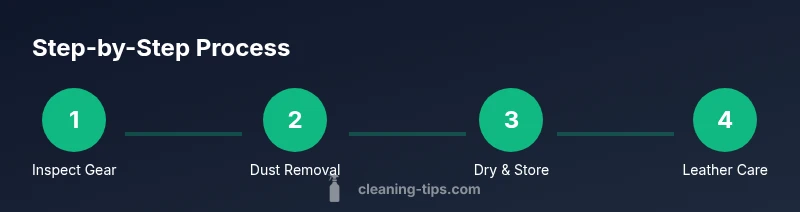
- 1
Inspect Gear
Begin with a thorough visual check for obvious damage, rust spots, torn leather, and loose rivets. Document any issues to decide if repair is needed before use. This helps prevent worsening conditions during combat or travel.
Tip: Note any suspected weak points so you can address them before a big quest. - 2
Dust and Debris Removal
Gently brush surfaces to remove dust, soil, and debris from blades, armor plates, and leather gaps. Avoid aggressive scrubbing that could scratch finishes or dislodge stitching.
Tip: Use short, light strokes along the grain for leather items. - 3
Wipe and Clean Surfaces
Wipe metal parts with a barely damp cloth, then dry with a separate cloth. For leather, wipe with a clean cloth and apply conditioner after cleaning if needed. Keep moisture minimal to prevent warping or cracking.
Tip: Always dry completely before storage to prevent mold. - 4
Treat Leather
Apply a small amount of leather conditioner to firm areas like straps and holster edges. Allow it to absorb fully, then buff lightly with a dry cloth. Conditioning maintains flexibility and reduces cracking risk.
Tip: Test conditioner on a hidden area first. - 5
Rust Prevention for Metal Parts
If rust shows, apply a thin layer of rust-prevention oil to affected areas and wipe away any excess. Avoid soaking metal components and ensure joints aren’t saturated.
Tip: Don’t apply oil to wooden handles in excess; excess moisture can warp wood. - 6
Dry and Store Properly
Air-dry all items in a well-ventilated space. Store weapons and armor separately in a dry place to avoid moisture buildup. Regular checks during storage help catch issues early.
Tip: Rotate gear so that not all items are stored at once. - 7
Maintenance Log
Record cleaning dates, the condition of items, and any repairs needed. A simple log helps you maintain a predictable care cycle and plan for replacements.
Tip: Set a reminder to recheck gear after major quests. - 8
Safety and Handling
Always handle blades with care; use sheaths when moving and avoid pointing metal edges toward skin. In-game, this also reflects realistic battlefield awareness.
Tip: Use gloves if you’re handling sharp edges during cleanup.
Questions & Answers
What counts as gear in Kingdom Come Deliverance?
Gear includes weapons, armor, and related equipment like belts and straps. Keeping these items clean helps maintain performance and reduces wear during quests.
Gear in Kingdom Come Deliverance means weapons, armor, and related equipment. Keeping them clean helps performance and reduces wear during quests.
Is cleaning mandatory in the game?
Cleaning isn’t mandatory, but it improves durability and reliability. Regular care prevents rust and leather cracking, which can affect combat readiness.
Cleaning isn’t mandatory, but it improves durability and reliability. Regular care prevents rust and leather cracking.
How often should I clean gear?
Clean gear after heavy use, battles, or long journeys, and perform a quick wipe after rain or snow. A light, regular routine is more effective than infrequent deep cleans.
Clean gear after heavy use and after weather exposure. A light regular routine beats rare deep cleans.
Can cleaning damage gear if done incorrectly?
Yes, using harsh cleaners or soaking leather can cause cracks and deformities. Use mild cleaners and small amounts of oil, and avoid excess moisture.
Harsh cleaners can damage gear; use mild cleaners and minimal moisture.
Are there in-game tools that substitute for cleaning supplies?
Yes, the game offers basic oils and cloth-like items you can use for maintenance. If unavailable, standard tools in your inventory can help you perform a basic wipe.
The game offers oils and cloths for maintenance; if not available, use basic inventory tools for a wipe.
How should I store cleaned gear between adventures?
Store gear in a dry, ventilated area, separated to prevent moisture buildup. Regularly inspect storage to catch signs of dampness or rust.
Keep gear in a dry, well-ventilated spot and check storage for dampness.
Watch Video
The Essentials
- Inspect gear before every cleaning session
- Use gentle tools and minimal moisture
- Condition leather to preserve flexibility
- Dry items thoroughly before storage
- Maintain a simple maintenance log