How to Clean Jewellery: Safe DIY Guide for All Gemstones
Learn safe, practical methods to clean jewellery at home. This guide covers gold, silver, pearls, and gemstones, with tips to protect settings and preserve sparkle for years.


Learn how to clean jewellery safely at home using gentle, common supplies. This guide covers gold, silver, gemstones, and setting care, with step-by-step methods, safety notes, and when to avoid home cleaning. By following these steps, you’ll restore sparkle without damaging clasps, stones, or finishes. It includes gemstone-specific cautions, and notes on tools and storage.
Why clean jewellery matters
Regular cleaning preserves metal luster, protects settings, and keeps gemstones looking vibrant. Over time oils, sweat, cosmetics, and air pollutants can dull metal and encourage tarnish. Cleaning Tips notes that routine care helps extend the life of pieces and can reveal loose stones or bent clasps before a serious problem develops. When you clean properly, you reduce the need for aggressive professional restoration and save money in the long run. Always test a small inconspicuous area first and use the mildest method that achieves the result.
Safety first: materials and gemstones
Different gemstones and metals react differently to cleaners. Gold and silver are relatively forgiving, but softer stones require gentler care. Pearls are organic and can be damaged by acids; opals and turquoise can craze if soaked. Always check for wear or loose stones before cleaning. For safety, work in a well-ventilated area and wear gloves when handling solutions. If a piece has a recent repair or a delicate setting, skip aggressive methods and seek professional guidance.
Everyday cleaning methods for metal and stones
For most everyday jewellery, a gentle approach works best. Prepare a bowl of warm water with a few drops of mild dish soap. Soak a few pieces briefly, then use a soft toothbrush to loosen grime with light, circular strokes. Rinse under lukewarm water and dry with a clean microfiber cloth. Drying completely prevents water spots and helps metals resist tarnish. For gemstones, ensure the setting is secure before cleaning and avoid scrubbing stones with soft facets.
Special cases: pearls, opals, and porous stones
Pearls require extra care: wipe with a damp cloth, then dry; never soak pearls in water or cleaners. Opals and turquoise are porous and may absorb cleaners, so avoid prolonged soaking. If a piece contains these stones, stick to wiping and a minimal rinse. Always finish by drying with a soft cloth and inspecting for any dull film or residue that needs a gentle wipe.
DIY cleaning solutions: what to use and what to avoid
Use mild soap and warm water for most metals and stones. Avoid household cleaners containing bleach, ammonia, or harsh acids on any jewellery. Never use abrasive pads or metal polishes on soft gemstones or plated pieces. Ultrasonic cleaners can loosen stones or calcify adhesives; pearls, opals, and aged gemstones are particularly at risk. When in doubt, test on a hidden area or consult a professional.
Quick at-home routines for different metals
Gold and platinum: a gentle soap bath, soft brush, and thorough rinse. Silver: after cleaning, dry completely; use a silver polishing cloth for light tarnish, avoiding etched areas. Gold vermeil and plated pieces: avoid aggressive cleaning; stick to soft cloths and mild soap to preserve plating. Always separate soft stones from harder ones to prevent scratching during cleaning.
Maintenance habits to keep jewellery sparkling
Store pieces separately in soft pouches or lined boxes to prevent scratches. Wear a clean, lint-free cloth to wipe down pieces after wearing, especially in hot weather or during workouts. Schedule a professional inspection every 1–2 years to check settings and gemstones. Promptly address any loose stones, bent clasps, or dull finishes to avert bigger problems later.
How to store and dry jewellery properly
Dry pieces completely before storing to prevent moisture-related tarnish. Use anti-tarnish bags for silver, and keep pieces away from direct sunlight. For travel, pack each item individually to avoid tangling or rubbing. Consider a small jewelry box with compartments and a soft lining for best protection.
Troubleshooting common issues and red flags
If cleaning leaves stones dull or dislodges stones, stop and inspect the setting. Residual cleaning solution can leave a film; re-rinse and dry thoroughly. If you notice cracks, chips, or loose stones after cleaning, take the piece to a professional jeweller for evaluation before wearing.
Tools & Materials
- Mild dish soap(Add a few drops to warm water in a small bowl.)
- Warm water(Avoid hot water which can shock metals or setting adhesives.)
- Soft toothbrush(Use a new or very clean brush; gentle, not scrubbing.)
- Microfiber cloth(For drying and light polishing without scratching.)
- Small bowl(One for soapy water, one for rinsing if needed.)
- Polishing cloth for silver (optional)(For minimal tarnish on silver pieces.)
- Cotton swabs or toothpicks (optional)(Use gently to work in settings; avoid forcing stones.)
Steps
Estimated time: 25-40 minutes
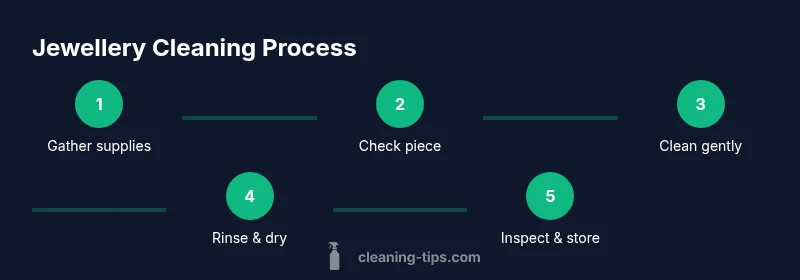
- 1
Gather and prepare your supplies
Collect the tools listed and lay them out in a clean workspace. Make sure each piece you plan to clean is separated to prevent scratching. This upfront organization saves time and reduces the risk of mixing pieces incorrectly.
Tip: Keep a dedicated cleaning area away from food prep surfaces. - 2
Check each piece for damage
Inspect for loose stones, bent clasps, or worn settings before cleaning. If you notice any damage, stop and seek professional help rather than attempting home cleaning. Cleaning won’t fix structural issues and could cause further harm.
Tip: If unsure, photograph suspicious areas for a jeweller to review. - 3
Prepare a mild cleaning solution
Fill a bowl with warm water and a few drops of mild dish soap. Avoid hot water or strong solvents. Soaking is fine for sturdy pieces, but always check care guidelines for delicate stones.
Tip: Test a hidden area first to ensure the solution won’t affect plating or finishes. - 4
Clean gently with a soft brush
Dip the brush in the solution and brush in small, circular motions. Focus on joints, settings, and back of stones where grime tends to accumulate. Rinse the piece under lukewarm water to remove all soap.
Tip: Be careful not to scrub too hard near prongs or fragile settings. - 5
Rinse and dry thoroughly
Rinse each piece with clean water to remove all soap residue. Dry with a microfiber cloth, then let air-dry completely before storing. Moisture left on metal can cause water spots or tarnish.
Tip: Dry in a clean, dust-free area to avoid recontamination. - 6
Polish and inspect
If using a silver cloth, gently polish tarnish in a bright, sweeping motion. Inspect settings again to ensure stones are secure and there’s no soap residue. A magnifier helps catch small issues early.
Tip: Do not use abrasive polishes on gemstones with facets. - 7
Store properly after cleaning
Place pieces in separate, soft compartments or pouches to prevent scratching. Avoid stacking, which can induce friction and wear. Regularly rotate storage to minimize exposure to air and moisture.
Tip: Consider anti-tarnish storage for silver pieces. - 8
Know when to seek professional help
If a piece has loose stones, damaged settings, or has known repairs pending, consult a jeweller rather than attempting risky DIY fixes. Professional care protects your investment and ensures safety.
Tip: Set a reminder for annual professional inspections.
Questions & Answers
How often should you clean jewellery?
Cleaning frequency depends on wear. Pieces worn daily may benefit from weekly or biweekly quick cleans, while rarely worn items can be cleaned every few months. Always assess for grime buildup and dullness.
Clean pieces as needed based on wear; look for dull shine and grime as signs.
Can I use an ultrasonic cleaner?
Ultrasonic cleaners can damage settings and certain stones. Pearls, opals, emeralds with fractures, and antique pieces are especially at risk. If in doubt, avoid ultrasonic cleaning and stick to gentle hand cleaning.
Be cautious with ultrasonic cleaners; they can harm delicate stones and settings.
Is baking soda safe for cleaning jewellery?
Baking soda paste can be safe for gold and silver with caution, but it can be abrasive and may harm stones or plating. Always test first and avoid it on porous or treated stones.
Use baking soda sparingly and only after testing a hidden spot.
Should pearls be cleaned differently?
Yes. Wipe pearls with a damp cloth and avoid soaking or detergents. Pearls are soft and can be scratched easily, so handle gently and store separately.
Pearls need gentle care—no soaking, no harsh cleaners.
What should I do if stones look dull after cleaning?
If stones look dull, remove any film with a second rinse and dry completely. Check for soap residue or smudges. If dullness persists, seek professional advice.
Dullness may be soap residue or a setting issue—rinse again, then consult a pro if needed.
How do I check for loose stones safely?
Use a jeweller’s loupe or flashlight to inspect prongs and settings. Gently wiggle each stone with light pressure. If any movement is detected, stop wearing the piece and have it fixed by a professional.
Inspect closely for looseness; don’t force stones back into place.
The Essentials
- Test methods on hidden areas first.
- Use mild soap and a soft brush—gentle beats harsh chemicals.
- Pearls and porous stones require special care.
- Store and dry jewellery properly to maintain shine.