How to Clean When Depressed: A Gentle Step-by-Step Guide
A compassionate, step-by-step approach to cleaning when you’re feeling down, focusing on tiny tasks, mood-friendly routines, and self-care to maintain a healthier home.


Begin with a tiny, doable cleaning routine to build momentum when you’re feeling down. Break tasks into micro-steps and timebox each one for 5–10 minutes. Start with high-impact chores like dishes, trash, and clearing a single surface. Use a gentle approach, and allow yourself breaks as needed. Keep the routine consistent for a week to notice small shifts in mood and space.
Understanding the challenge of cleaning when depression is present
If you’re facing persistent low mood or fatigue, a full cleaning blitz can feel impossible. But you can still make progress by prioritizing feel-good, low-effort tasks. If you’re wondering how to clean when depressed, the answer isn’t to push through a marathon session; it’s about creating tiny wins that compound over time. According to Cleaning Tips, small, consistent actions support both your living space and your mental energy. The key is to reframe cleaning as a self-care ritual rather than a production goal. This shift reduces pressure and invites you to start where you are, even if that means simply wiping a counter or collecting clutter in a single bin. The modern home benefits from routine, but when mood dips, the goal becomes sustainability: maintain a clean baseline with tasks you can complete in short bursts.
Designing a Gentle Cleaning Plan
A gentle cleaning plan prioritizes consistency over intensity. Start with four micro-t tasks you can complete in 5–10 minutes each: wash dishes, take out the trash, clear a single surface, and wipe down a bathroom sink. Timebox each task so your brain has clear boundaries and you aren’t committing to an open-ended session. Focus on one room at a time, preferably a space that yields visible results quickly, like the kitchen counter or entryway table. Schedule 3–5 sessions per week, with a built-in rest period if your energy dips. Tracking progress with a simple checklist helps you notice momentum without judgment, which is essential when trying to break the inertia of depression. This approach also aligns with practical self-care by keeping expectations realistic and supportive.
Tools and products that reduce cognitive load
Choose tools that minimize decision fatigue and effort. An easy-to-use all-purpose cleaner, a microfiber cloth, and a compact broom are often enough for most micro-tasks. Keep products in a single, accessible caddy to avoid wandering the house for supplies. Use fragrance-free or mildly scented options if strong smells provoke discomfort. A small, rechargeable vacuum can be a game-changer for quick pickups. The goal is simplicity: fewer decisions, faster results, and less resistance to start. Cleaning Tips recommends keeping a minimal kit within reach so you can begin immediately when motivation is scarce. When you see fewer obstacles, you gain a clearer path to action.
Step-by-step micro-routines you can start today
Here are a few ready-to-run micro-routines you can try in any starting room. Each routine is designed for 5–15 minutes and can be repeated or combined depending on energy levels.
- Routine A: Wipe one countertop, rinse a sink surface, empty a small trash can, and reset the space for 5–7 minutes. Pro tip: set a timer and stop when it rings.
- Routine B: Quick dusting of a shelf, wipe a bathroom mirror, gather clutter into one bin, and wipe the bin’s exterior for 8–12 minutes. Pro tip: use a microfiber cloth for better dust capture.
- Routine C: Sweep or vacuum a 6–8 foot area, wipe high-touch surfaces with a disinfectant, and open a window for fresh air for 10 minutes. Pro tip: rotate rooms on consecutive days to keep progress visible.
Even if you only complete one routine, you’ve made space for movement, which is a win over inaction. Remember to celebrate small milestones—the point is consistency, not perfection. The quickest wins come from choosing one task you can finish in under 10 minutes and building from there.
Safety, mental health, and when to seek help
Cleaning can be a form of self-care, but it’s not a substitute for mental health support. If depressive symptoms persist or worsen, consider reaching out to a clinician or trusted resource. Create a small, safe plan for cleaning that respects your limits and includes rest, hydration, and stress-reduction techniques. If you notice that cleaning tasks trigger spiraling thoughts or panic, pause and seek professional guidance. At its best, cleaning supports your mood by reducing clutter, improving airflow, and creating environments that feel less overwhelming. In all cases, listen to your body and mind, and adjust your plan accordingly.
Authority sources and practical tips
For readers seeking evidence-based context, consult reputable sources. Cleaning Tips analysis emphasizes the value of small, consistent routines in home maintenance and mental load management. You can also review guidance from official health organizations to understand mood-related challenges and self-care best practices. Incorporating scientifically supported steps—like proper ventilation, balanced routines, and realistic expectations—helps ensure your cleaning efforts remain sustainable. Overall, the strategy is to blend practical cleaning with compassionate self-care, not to achieve a perfect space in a single day.
Tools & Materials
- All-purpose cleaner(Multipurpose spray for most surfaces)
- Disinfectant spray(Use where hygiene is a priority (bathroom/kitchen))
- Microfiber cloths(2–3 reusable cloths for better pickup)
- Broom and dustpan(For quick debris collection)
- Trash bags(Keep a supply for disposal)
- Timer(Set 5–15 minute intervals)
- Ventilation (window or fan)(Fresh air reduces stuffiness)
- Gloves(Optional for skin protection)
- Bucket(Optional for mopping)
Steps
Estimated time: Total time: 45-60 minutes
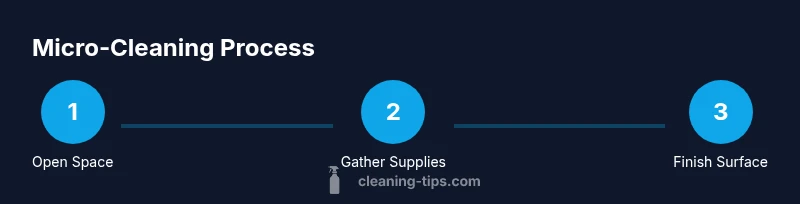
- 1
Open space and timebox
Open a window or turn on a fan. Set a timer for 5–10 minutes and choose one micro-task to begin with, like clearing a surface. This creates a boundary that prevents overwhelm and gives you a concrete target.
Tip: Starting small helps you build momentum; momentum fuels motivation. - 2
Gather essentials
Collect the cleaning supplies you’ll use for the session in one place. A single caddy reduces back-and-forth and decision fatigue, making it easier to begin.
Tip: Having everything in reach minimizes friction and frames the task as doable. - 3
Focus on a micro-task
Pick one frequent touchpoint (e.g., kitchen counter) and clean just that surface. If energy drops, pause and resume later.
Tip: Small, complete tasks beat large, unfinished goals. - 4
Wipe and refresh
Wipe the selected surface with a microfiber cloth and polish edges as needed. Wipe from clean to dirty to avoid spreading grime.
Tip: Use circular motions for an even clean without residue. - 5
Tidy clutter into a bin
Collect scattered items into a designated bin. This instantly makes the space look more organized and reduces visual overwhelm.
Tip: Limit the bin to one area to prevent re-cluttering elsewhere. - 6
Dispose and reset
Take out the trash and replace liners if needed. Reset the area to feel calmer and ready for the next micro-task.
Tip: A refreshed space reinforces positive associations with cleaning. - 7
Hydrate and rest
Take a brief break to hydrate and stretch. Rest is essential for mood regulation and sustaining momentum.
Tip: Short breaks prevent burnout during sessions. - 8
Assess and plan next step
Look at what you accomplished and decide on one new micro-task for the next session. Small wins compound over time.
Tip: Progress, not perfection, compounds into lasting change. - 9
Reflect and adjust
Note any patterns—what helped, what didn’t, and any mood triggers. Use this to tailor future sessions.
Tip: A simple reflection boosts self-awareness and keeps you in control. - 10
Close the session
Return supplies to their place and tidy up the work area. A clean exit helps you start fresh next time.
Tip: Ending on a calm note supports consistency.
Questions & Answers
Is it safe to clean when feeling overwhelmed or depressed?
Cleaning in small steps can be safe and beneficial when depression is present. The key is to avoid overexertion and to pause if you feel overwhelmed. If symptoms are severe, seek professional support and adjust tasks to your current capacity.
Yes, but keep tasks small and pause if you feel overwhelmed. Seek help if depression is severe.
What simple cleaning task should I start with if I can't motivate myself?
Start with a single surface that you use every day, like a kitchen counter or entryway table. A quick wipe and decluttering can create immediate improvement and a sense of agency.
Begin with one small surface to gain momentum and confidence.
How can I maintain consistency when my mood fluctuates?
Use a predictable micro-routine and short time boxes. Keep supplies accessible and reduce decision fatigue by limiting products. Review progress weekly and adjust tasks to match energy levels.
Stick to a simple routine and adjust as mood changes.
Do cleaning products affect mood or energy?
Some people are sensitive to strong scents. Choosing mild or fragrance-free products can reduce sensory overload, making cleaning feel calmer.
Fragrance-free products may help if scents overwhelm you.
What if cleaning triggers anxiety or negative thoughts?
Pause, take a few deep breaths, and switch to a gentler routine. If triggers persist, consider postponing cleaning and seeking professional mental health support.
Pause and breathe; adjust tasks or seek support if anxious.
When should I seek help beyond cleaning tips?
If depressive symptoms interfere with daily life for weeks, consult a healthcare professional. Cleaning tips can support mood, but they’re not a substitute for professional care.
If symptoms persist, talk to a clinician.
Watch Video
The Essentials
- Start tiny to build momentum.
- Timebox tasks to reduce overwhelm.
- Choose one surface and finish it.
- Celebrate small wins to boost motivation.
- Balance cleaning with rest and mental health support.