How to Get Clean: A Practical Home Cleaning Guide
Learn a practical, step-by-step approach to getting your home clean and keeping it that way with eco-friendly tips, routines, and safety best practices from Cleaning Tips.


Get clean by building a repeatable routine: define zones, stock the essentials, and follow a clear step-by-step plan. For the complete, time-stamped instructions and room-by-room guidance, read the full guide.
What does it mean to get clean at home?
Clean means more than wiping away visible dirt. It’s a consistent state where surfaces are free of grime, odors are minimized, and clutter is controlled enough that you can move through spaces with ease. In practical terms, getting clean at home involves three core outcomes: lower levels of dust and germs, fewer irritants that trigger allergies, and an environment that supports your daily routines. In concrete terms, getting clean means establishing measurable targets for each room—surfaces free of grime, air that smells fresh, and spaces that are easy to navigate. According to Cleaning Tips, defining clean in concrete terms is the first step to building an effective plan. Start by listing the rooms that matter most—kitchens where food is prepared, bathrooms where moisture invites mildew, and living spaces where you spend time with family—and then decide what “clean” looks like in each area. This is not about chasing perfection; it’s about reducing friction so chores don’t pile up and become overwhelming. By focusing on achievable targets, you’ll notice improvements in air quality, comfort, and overall well-being. The Cleaning Tips team emphasizes sustainable cleanliness as part of a healthy home.
Build a simple, repeatable cleaning routine
A reusable cleaning routine is the backbone of getting clean without burning out. Start by dividing your home into zones based on function and traffic: kitchen, bathrooms, living areas, bedrooms, and entryways. For each zone, decide what needs to be done daily, weekly, and monthly. A simple framework works best: daily quick wipe-downs, a 20–30 minute weekly sweep, and a monthly deep-clean session in each zone. The key is consistency, not intensity. With a predictable cadence, you’ll prevent the pileups that create overwhelming weekends. When you design your routine, make it realistic for real life: if you work mornings, schedule tasks for evenings or weekends; if you have kids, plan simple tasks that involve the whole family. To stay motivated, attach micro-goals you can check off on a calendar or in a cleaning app. Finally, keep your supplies organized in a portable caddy. This minimizes trips to the cupboard and helps you stay focused on the task rather than hunting for tools. The result is a calm, clean home that you can actually maintain.
Daily tasks you can do in under 15 minutes
Small, quick actions every day compound into a noticeably cleaner home. Focus on three categories: surfaces, floors, and clutter. In about 15 minutes, you can perform the following routine: wipe kitchen counters, stove, and dining surfaces; quick bathroom wipe: sink, faucet, mirror, and toilet rim if needed; clear 1–2 high-traffic surfaces of clutter; sweep or vacuum high-traffic zones and mop if floors are sticky; do a load of laundry or run the dishwasher; empty trash in one area to prevent odors; and a 60-second tidy: straighten cushions and blankets. Consistency matters more than intensity. If you miss a day, resume the next. Use a timer to stay within the 15-minute limit and avoid overdoing it. Small, repeatable tasks create momentum and keep you in control of your space. The Cleaning Tips team notes that this approach makes getting clean routine-friendly and sustainable.
Deep-clean plan by room
Deep cleaning requires focused, room-by-room attention, treating each area with a tailored plan. In the kitchen, target appliances, sink, and high-traffic surfaces; in bathrooms, scrub grout, clean shower doors, and wipe fixtures; in living areas, dust, wipe panels, and vacuum upholstery; in bedrooms, rotate mattresses, wipe shelves, and refresh linens. For each room, set a date and time window, then break the process into tasks: declutter, dust, wipe, and sanitize as needed. Remember to tackle corners, baseboards, and behind furniture where dust hides. A practical approach is to schedule one deep-clean per room every 4–6 weeks, adjusting frequency to your life rhythm. If you’re short on time, combine quick-dip deep-clean tasks with daily routines, so none of the rooms become neglected. This phased method minimizes disruption while delivering thorough results over time.
Sanitizing and safety practices
Sanitizing high-touch surfaces is essential for a healthier home, especially in kitchens and bathrooms. Use an appropriate cleaner for each surface and follow label instructions for contact time. Basic safety rules include wearing gloves if you have sensitive skin, never mixing cleaners with ammonia or bleach, and keeping cleaners out of reach of children. Ventilate spaces during cleaning, particularly when using stronger products, and store chemicals upright in a cool, dry place. For households with pets or children, choose milder formulas and consider disposable gloves or microfiber cloths dedicated to certain areas to prevent cross-contamination. Sanitation isn’t just about products—it’s about establishing habits that keep surfaces consistently safe and hygienic.
Eco-friendly cleaning options
Eco-friendly cleaning minimizes chemical exposure and supports a healthier home environment. Start with basic, non-toxic staples: baking soda for gentle abrasive cleaning, white vinegar for deodorizing, and hot water for dissolving grime. Use microfiber cloths to reduce the need for chemical sprays, and opt for concentrated cleaners that reduce plastic waste by diluting them at home. When choosing products, look for certifications or straightforward ingredient lists, and avoid fragrances that mask odors with irritants. You can also DIY simple cleaners using common kitchen ingredients, but test on inconspicuous areas first to avoid damage. The goal is effective cleanliness without compromising indoor air quality or family health.
Time-saving tips and hacks
Maximize efficiency with these proven hacks: keep a color-coded cloth set to prevent cross-contamination; work from top to bottom and from clean to dirty to avoid re-soiling; use a timer to maintain momentum during 20–30 minute sessions; store a portable cleaning caddy with essentials for quick access; and consider a brief mid-week touch-up to prevent weekend overload. If you live in a multi-story home, tackle one floor at a time to reduce backtracking. Small changes, like placing a wipe-and-go cloth by the sink and a trash bag in the entryway, can cut down the time spent looking for supplies. With practice, these tricks become second nature.
Common mistakes to avoid and how to recover quickly
Common errors include trying to clean too much in one go, using the wrong cleaners on certain surfaces, and neglecting high-traffic areas. Another pitfall is skipping decluttering, which makes actual cleaning harder. If you realize you’ve misused a cleaner, rinse and switch to an appropriate product or revert to a milder solution. Recovery is simple: reassess zones, adjust the schedule, and re-allocate tools so each surface receives appropriate care. Remember, getting clean is a process, not a single heroic effort.
How to maintain cleanliness long-term
To sustain a clean home, embed routines into daily life and adjust as your schedule changes. Schedule recurring 10–15 minute sessions, rotate deep-clean tasks to maintain progress, and routinely purge items that contribute to clutter. Regularly refresh textiles, vacuum with appropriate attachments, and re-evaluate your cleaners for safety and effectiveness. Tracking progress with a simple checklist helps you stay accountable and motivated. The payoff is a consistently healthier, calmer home that requires less last-minute scrubbing.
Tools & Materials
- microfiber cloths(lint-free, 12x12 inches; assign color coding by room)
- all-purpose cleaner(dilute per label; versatile for most surfaces)
- vacuum cleaner(with attachments for corners and upholstery)
- broom and dustpan(soft-bristle broom for dusting)
- mop and bucket(microfiber head; wring well)
- gloves(protect hands; disposable or reusable)
- trash bags(various sizes; replace daily)
- glass cleaner(optional for mirrors and glass surfaces)
- scrub brush(non-scratch for tiles and grout)
- baking soda(eco-friendly scrub boost)
- white vinegar(deodorizing and mild disinfectant)
- spray bottle(for diluted cleaners)
Steps
Estimated time: 90-120 minutes
- 1
Define zones and priorities
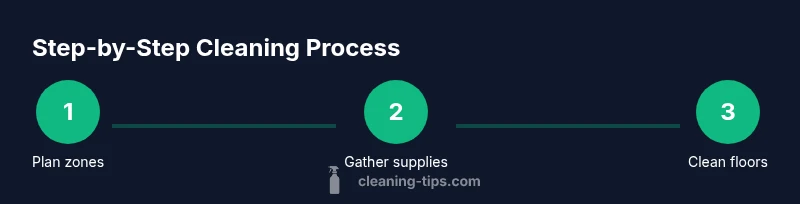
Identify rooms and surfaces that matter most and assign a cleaning priority for daily, weekly, and monthly tasks. Clarify what 'clean' means for each zone and write it down to guide your routine.
Tip: Start with high-traffic areas (kitchen, entryway) to build momentum. - 2
Gather tools and supplies
Assemble your portable cleaning caddy with microfiber cloths, all-purpose cleaner, and a spray bottle. Having everything ready minimizes trips and interruptions.
Tip: Use color-coded cloths to prevent cross-contamination between zones. - 3
Declutter surfaces
Clear off counters, tables, and shelves before cleaning. Put items back in their places to make the actual cleaning easier and more effective.
Tip: Declutter first to avoid moving items multiple times. - 4
Dust and wipe upper surfaces
Dust from top to bottom, including shelves and light fixtures. Wipe surfaces with the appropriate cleaner, using microfiber cloths to trap dust.
Tip: Dust light fixtures before furniture to prevent settling on newly cleaned areas. - 5
Clean surfaces with appropriate cleaners
Use all-purpose cleaner on counters, tables, and appliances; switch to a glass cleaner for mirrors and glass surfaces. Rinse and dry as needed to avoid streaks.
Tip: Test cleaners on a hidden spot first if unsure about surface compatibility. - 6
Vacuum and mop floors
Vacuum carpets and upholstery first; mop hard floors after, working in sections to ensure full coverage. Allow floors to dry before use.
Tip: Edge attachments help reach corners and under furniture. - 7
Disinfect high-touch areas
Pay special attention to doorknobs, light switches, and faucet handles. Follow label directions for contact time to maximize sanitization.
Tip: Rotate cleaning products by zone to avoid residue buildup. - 8
Tidy up and finalize
Return items to storage, empty trash, and do a final walk-through to spot missed spots. Take out trash to prevent odors.
Tip: Do a quick 5-minute scan of each room before finishing. - 9
Review plan and schedule next cleaning
Assess what worked, what didn’t, and adjust zones or frequency as needed. Schedule the next deep-clean session.
Tip: Mark the next cleaning date on a calendar or app.
Questions & Answers
What is the quickest way to get my home clean?
Start with a 15-minute daily routine focusing on surfaces and clutter. Move room by room and avoid overdoing any single task.
Begin with a quick 15-minute daily routine focusing on surfaces and clutter. Then tackle rooms one by one to stay efficient.
How often should I deep clean the kitchen and bathrooms?
Aim for a weekly wipe-down and a monthly deeper clean for kitchens and bathrooms, adjusting based on usage and household needs.
Wipe down weekly and do a deeper monthly clean, adjusting to how busy your home gets.
Can I use natural cleaners instead of commercial products?
Yes. Many natural cleaners work well for everyday cleaning. Test on surfaces first and balance effectiveness with safety.
Yes, natural cleaners can work well; test on surfaces first and choose safe options.
What is the best order to clean a room?
Start with decluttering, then dust, wipe from top to bottom, clean high-touch areas, and finish with floors last.
Declutter first, dust, wipe from top down, sanitize high-touch areas, then finish with the floors.
I don’t have much time. What can I do?
Do a quick 10–15 minute daily tidy, focus on high-traffic zones, and schedule a longer deep-clean when possible.
If you’re short on time, tidy for 10–15 minutes daily and target high-traffic zones.
How can I maintain cleanliness for longer?
Establish a simple routine, declutter regularly, and re-evaluate products and processes every few weeks.
Keep a simple routine, declutter, and re-evaluate every few weeks to stay clean long-term.
The Essentials
- Define zones to target first.
- Build a simple, repeatable routine.
- Tackle daily tasks before deep cleans.
- Prioritize safety and eco-friendly options.