How to Get Rid of Cleanup Ads: A Practical Guide for Browsers
Learn proven steps to remove cleanup ads from browsers and devices, identify adware sources, and prevent recurrence with safe, household-friendly techniques.


You will learn how to identify and safely remove cleanup ads from browsers and devices, including common sources like adware, intrusive extensions, and potentially unwanted programs. This quick answer outlines the key steps, safety considerations, and prevention tactics to keep your computing environment clean and ad-free. Across browsers, devices, and networks.
Understanding why cleanup ads appear
If you're wondering how to get rid of clean up ads, start with understanding how these notifications show up. Most often, cleanup ads stem from adware bundles installed with free software, deceptive browser extensions, or malicious scripts on compromised websites. The Cleaning Tips team found that many users encounter cleanup ads after clicking dubious pop-ups or downloading software from unofficial sources. These prompts can masquerade as system optimizers or safety alerts, but they often track your activity or push you toward paid software. The goal of this section is to help you recognize the early warning signs and differentiate legitimate alerts from harmful prompts. With this knowledge, you can approach cleanup with calm, methodical steps rather than reactive panic. Remember: staying informed is the first defense against intrusive ads that disrupt your work and undermine privacy.
Common sources of cleanup ads
Cleanup ads rarely appear from a single cause. They most often originate from adware bundles attached to free programs, potentially unwanted programs (PUPs), or malicious browser extensions that override search results and redirect to sponsored pages. In some cases, even reputable sites use aggressive advertising networks that trigger autoplay promos on unstable connections. DNS hijacking or compromised router settings can also inject ads at the network level, affecting all devices on the same network. The Cleaning Tips analysis shows that most cleanup ads can be traced to three areas: (a) bad software installs, (b) suspicious browser extensions, and (c) compromised websites. Understanding the source helps tailor the removal approach and reduce the chance of recurrence.
Quick checks you can do before deep cleaning
Before diving into removal steps, run a quick triage. Check your installed programs for anything unfamiliar and uninstall it. Review every browser extension and disable or remove those you didn’t install yourself. Run a full device scan with reputable anti-malware software and update your operating system and browsers to the latest versions. Clear browser caches and cookies, and reset browser settings if ads persist after basic cleanup. If you can, perform a backup of important data to ensure you can recover if something goes wrong during cleanup. These checks save time and prevent unnecessary resets or data loss.
How the cleanup process works: a practical plan
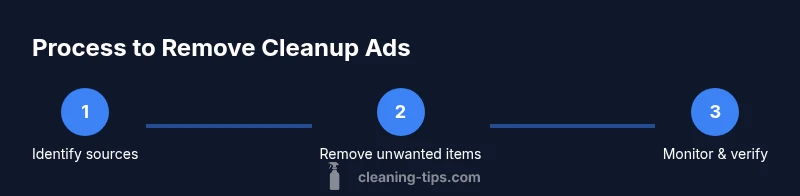
A solid plan balances thorough removal with safety. Start by identifying sources (extensions, apps, and sites with aggressive ads), then remove unwanted items, followed by a comprehensive scan for malware and adware traces. After cleaning, reset affected browsers to eliminate residual configurations and recheck the system for any leftover startup programs. Finally, establish ongoing protection—automatic updates, a reputable antivirus, and cautious software installation practices. If you’re tackling how to get rid of clean up ads again after a cleanup, these steps help ensure a durable fix rather than a temporary clearance. The plan is designed to be repeatable, so you can reproduce it if new ads appear.
How to prevent future cleanup ads
Prevention is far more effective than repeated cleanup. Limit installs to trusted sources, opt for custom installation to avoid bundled adware, and regularly review active extensions. Enable automatic security updates for your OS and browsers, and use a reputable ad blocker or privacy-focused extensions with caution. Regularly back up data and maintain a clean restore point so you can roll back changes if something goes wrong. Practicing safe browsing habits dramatically reduces the odds of encountering cleanup ads in the first place.
When to seek professional help
If cleanup ads persist despite your best efforts, or if you notice performance degradation, consider professional help. Advanced malware and rootkit infections may require expert cleanup and system restoration. A qualified technician can perform a deeper analysis, verify system integrity, and ensure there are no lingering traces that could reintroduce ads. Remember, timely support can prevent data loss and downtime, especially on devices used for work or sensitive information.
Tools & Materials
- Updated antivirus/anti-malware software(Choose reputable software with real-time protection and anti-adware features)
- Adware/anti-malware removal tool(Standalone tool for deeper cleanups (free/paid options))
- Browser extension manager(Review and disable/remove unknown extensions across all browsers)
- Backups (cloud or local)(Backup important data before major resets)
- System restore point or backup image(Create a restore point before major changes)
- Administrative access to the device(Needed to uninstall programs and run scans)
- Patched OS and browser updates(Ensure latest security updates are installed)
- Tamper-evident disk/USB for offline install(Optional for isolated machines)
Steps
Estimated time: 45-60 minutes
- 1
Identify sources of ads
Scan for unfamiliar extensions, recently installed programs, and odd browser configurations. Document any suspicious behavior, such as new search engines or redirected pages. This helps you target the cleanup effort and prevents unnecessary removals.
Tip: Use your system's task manager or Activity Monitor to spot unusual processes linked to ad activity. - 2
Remove suspicious extensions and programs
Disable and uninstall extensions you don’t recognize. Uninstall any software recently installed that could be bundled with ads. Restart the browser after removals to ensure changes take effect.
Tip: Always restart the browser after removing extensions to apply new settings. - 3
Run a full malware/anti-adware scan
Run a trusted malware scan and follow its prompts to remove detected threats. If the tool finds PUPs, quarantine or remove them, then re-run the scan to confirm clean results.
Tip: If the scan flags a false positive, review items carefully before removal. - 4
Clear browser data and reset settings
Clear caches, cookies, and history. Reset browser settings to default if ads persist. Reinstall the browser if necessary to ensure a clean slate.
Tip: Export bookmarks first to avoid losing important links. - 5
Update and patch all software
Install the latest OS and browser updates. Enable automatic updates where possible to reduce future exposure to adware.
Tip: Turn on security features like 'block pop-ups' and 'block dangerous sites' in browser settings. - 6
Monitor and re-check
Perform a final check after updates and re-enable protections. Monitor for new ads over the next week and bookmark reliable cleanup practices.
Tip: Set up a scheduled scan to catch recurrences early.
Questions & Answers
What are cleanup ads and how do they differ from regular ads?
Cleanup ads are intrusive prompts that push you to install a cleaning or optimization tool. They often come from adware or compromised sites and can appear as system alerts or safety warnings. They’re designed to scare or persuade you, not to help.
Cleanup ads are scary, pushy prompts from unwanted software. They’re not genuine system alerts and should be avoided.
Will removing ads also remove the malware or adware?
Yes, a thorough cleanup that targets adware/PUButtails along with malware removal will typically eliminate the unwanted ads. Be sure to run a full scan after removal and restart the device.
A full cleanup often removes both the ads and the underlying malware if you complete all steps.
Can free cleaning tools be trusted to remove cleanup ads?
Free tools can help, but they may not detect all adware or could come with bundled software. Use reputable, well-reviewed tools and verify sources before downloading.
Free tools can help but choose trusted options and beware bundled software.
Should I reset my browser if ads persist after cleanup?
Yes. Persisting ads after removal often indicate residual settings or hijacked configurations. Resetting the browser to default and clearing caches typically resolves this.
If ads keep coming back, resetting the browser often fixes the issue.
Will antivirus software alone fix cleanup ads?
Antivirus tools are essential but may not catch all adware. Pair antivirus scans with manual checks of extensions and recently installed programs for best results.
Antivirus helps, but don’t rely on it alone; combine with manual checks.
Watch Video
The Essentials
- Identify sources before removal to target the cleanup.
- Back up data and create a restore point before changes.
- Use reputable tools and update software to prevent recurrence.
- Reset browsers and monitor for new ads after cleanup.
- The Cleaning Tips team recommends proactive protection and mindful installs.