How to Make Clean in Infinite Craft
Step-by-step techniques for keeping Infinite Craft builds clean, using eco-friendly cleaners and a simple routine that works in-game and in real-life cleaning habits.


You’ll learn a repeatable cleaning routine for Infinite Craft that keeps builds pristine. Before you start, gather mild cleaners, microfiber cloths, a bucket, and clean water. Then follow the steps to remove grime, prevent streaks, and maintain a tidy crafting space. This approach scales from small surfaces to larger projects.
Why cleanliness matters in Infinite Craft
In Infinite Craft, a clean workspace isn’t just cosmetic—it’s a practical habit that can improve focus, reduce mistakes, and speed up your workflow. According to Cleaning Tips, maintaining a tidy crafting space helps you locate components faster and plan builds more efficiently. The Cleaning Tips team found that players who adopt a simple decluttering routine experience fewer misclicks and smoother progression, especially during longer build sessions. A clean environment also minimizes the risk of transferring dirt or residue between projects, which can cause texture mismatches or misaligned blocks in-game. Start with a quick audit: clear away tools you’re not using, align your work area, and set up a dedicated cleaning kit. This upfront discipline lays the foundation for consistent results and a more enjoyable Infinite Craft experience.
Understanding the cleaning toolkit for Infinite Craft
The right toolkit makes cleaning in Infinite Craft predictable and safe. Before you start, assemble a simple set of supplies: microfiber cloths (lint-free, blue is common), a soft brush, a small bucket or bowl, water, and a mild cleaner suitable for sensitive surfaces. In-game, you may encounter varied textures—wood, stone, glass, metal—each responding to cleaners a bit differently. Use a spray bottle for light misting on larger surfaces, and apply cleaner sparingly to avoid saturating textures. A non-abrasive sponge helps lift grime without scratching. Label a dedicated stash for your kit so you don’t mix up components between builds. Remember to keep cleaners away from screens or interfaces in real-world setups if you’re cleaning physical peripherals used with Infinite Craft. That careful prep reduces mess and makes every cleaning step more effective.
Surface-by-surface cleaning routines in Infinite Craft
Different surfaces require slightly different approaches. For smooth plastic and glass surfaces, use a gentle mist of cleaner and a microfiber cloth, working in circular motions to avoid streaks. For wooden textures, apply cleaner lightly and avoid soaking the surface; a damp cloth followed by a dry microfiber wipe preserves the finish. Metal components often benefit from a light wipe with a damp cloth, then a dry buff with a clean towel to remove fingerprints and smudges. For intricate gaps or seams, use a soft brush to loosen grime before wiping. Always work from top to bottom, and from the outer edges toward the center to prevent recontamination. In all cases, finish with a short dry pass to speed up drying and prevent water marks. This routine keeps your builds looking crisp and ready for the next phase of Infinite Craft.
Handling tricky materials and surfaces in Infinite Craft
Some textures resist cleaners or react to moisture, so adjust your approach. For resin-like surfaces or dark coatings, test cleaner on a small, inconspicuous area first to check for discoloration. If residue remains after the first pass, repeat with a softer cloth and a lighter cleaning solution. For sticky spills, let a small amount of cleaner sit for 30 seconds before scrubbing gently; avoid aggressive scrubbing that could wear away details. Avoid abrasive tools on delicate surfaces, which can dull texture or create micro-scratches. When dealing with multi-material builds, clean each material separately to prevent cross-contamination of residues. If you’re unsure, err on the side of less moisture and more dry wiping to protect the finish while still removing grime.
Sustaining cleanliness: maintenance routines in Infinite Craft
Make cleaning a routine, not a one-off task. Schedule a quick five-minute wipe-down after every major build session to deter grime buildup. Set a weekly deep-clean timer for broader maintenance: clean tools, organize components, and inspect surfaces for wear. Store your cleaner and cloths in a cool, dry place to extend their life and prevent chemical smells from lingering in your workspace. When you’re cleaning with others in the same virtual space, establish clear roles, so everyone follows the same standard. Document any issues you observe—stains, dull finishes, or texture anomalies—so you can refine your routine over time. A sustainable approach to cleanliness reduces long-term maintenance and keeps Infinite Craft projects moving forward smoothly.
Common mistakes and how to avoid them in Infinite Craft
Avoid common pitfalls that undermine cleaning efforts. Don’t overload surfaces with cleaner; use a light mist and wipe with a microfiber cloth. Don’t skip drying; moisture can create streaks or encourage residue build-up on textures. Don’t use abrasive tools on delicate textures, which can cause micro-scratches. Don’t mix cleaners unless you know the ingredients are safe for the surface; always test first. Finally, don’t neglect the tools themselves—dirty cloths transfer grime back onto surfaces. By observing these cautions, you’ll maintain a pristine, durable finish across your Infinite Craft builds.
Tools & Materials
- Microfiber cloths (lint-free)(Blue or gray preferred; suitable for screens if cleaning peripherals)
- Soft brush(Small paintbrush or detail brush for seams)
- Bucket or bowl(For mixing water or cleaning solution)
- Mild dish soap(Dilute solution for gentle cleaning)
- Water (clean)(Warm or room temperature)
- Spray bottle(For light mist on large surfaces)
- Non-abrasive sponge(Optional for stubborn grime)
- Gloves(Protect hands if using cleaners)
Steps
Estimated time: 25-40 minutes
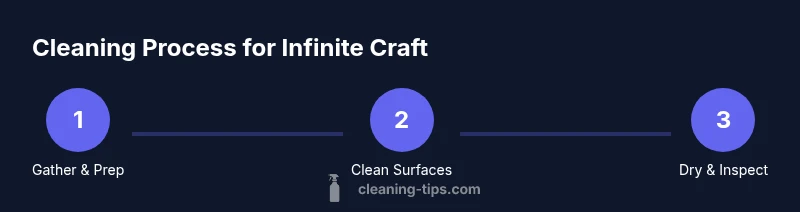
- 1
Gather supplies and prep area
Collect all cleaning tools and place them within arm’s reach. Clear the workspace of nonessential items and set up a dedicated cleaning zone to prevent cross-contamination. This upfront step saves time later and keeps distractions at bay.
Tip: Pro tip: arrange items by frequency of use so you don’t fumble mid-clean. - 2
Protect surfaces and test cleaner
Put on gloves if desired and test cleaner on a hidden corner of the surface. This confirms compatibility and helps avoid sudden discoloration or texture damage. If safe, proceed to apply a light amount of cleaner using a spray bottle.
Tip: Pro tip: start with a small amount and build up if needed. - 3
Clean from top to bottom
Work in sections from highest to lowest to prevent recontamination. Use circular motions with a microfiber cloth on smooth surfaces and a gentle scrub on textures that hold grime. Wipe away residue with a dry cloth after each pass.
Tip: Pro tip: do a quick pass with a dry cloth between sections to speed drying. - 4
Rinse and inspect for missed spots
Dust and grime can hide in seams; inspect under lighting and re-wipe any stubborn areas. For tough spots, repeat the cleaning pass with a softer cloth and lighter cleaner to avoid gloss loss.
Tip: Pro tip: check edges and corners where grime often accumulates. - 5
Dry thoroughly and air out
Dry surfaces completely to prevent streaks or moisture damage. If possible, use a fan or allow normal air-drying to finish the process. Moisture left behind can promote streaks on glossy textures.
Tip: Pro tip: microfiber dries faster when wrung out well. - 6
Store tools and document results
Return cleaning materials to their designated spots and note any issues for future improvement. Logging results helps you refine your routine for different build types and surfaces.
Tip: Pro tip: keep a short notes sheet with common problems and fixes.
Questions & Answers
What is Infinite Craft and why should I clean in it?
Infinite Craft is a sandbox-style crafting environment where organization and cleanliness help you track components, prevent mistakes, and speed up builds. Maintaining a clean workspace reduces clutter and can improve focus during long sessions.
Infinite Craft is a creative crafting space where cleanliness helps you work faster and avoid mistakes. Keep your area tidy to stay on top of your builds.
Which cleaners are safe to use on different Infinite Craft surfaces?
Use mild, non-abrasive cleaners and test on hidden areas before applying widely. For glass and plastic, gentler cleansers work best; for wood and metal, avoid excessive moisture and harsh scrubbing.
Stick with mild cleaners and test first. Different materials react differently, so start small and wipe gently.
Can I use vinegar or baking soda in Infinite Craft cleaning routines?
Vinegar and baking soda can be effective in real-life cleaning but should be used cautiously on sensitive or decorative game textures. Always test and avoid mixing with incompatible cleaners.
Vinegar and baking soda can work, but test first and avoid mixing cleaners.
How often should I clean during a session?
Do a quick five-minute wipe-down after major build sessions and a deeper weekly clean to maintain surfaces and tools. Regular maintenance prevents grime buildup.
Do a quick wipe after each session and a deeper weekly clean to stay on top of grime.
What should I do if a surface shows residue after cleaning?
If residue remains, re-clean with a softer cloth and lighter solution. Avoid scrubbing hard on delicate textures to prevent damage.
If there's residue, re-clean gently and avoid harsh scrubbing on delicate textures.
Is it okay to skip drying and air-dry instead?
Drying is important to prevent streaks and moisture damage. If you can’t dry immediately, use a quick pass with a dry cloth and ensure air-drying finishes the job.
Drying matters to prevent streaks—finish with a dry wipe if immediate drying isn’t possible.
Watch Video
The Essentials
- Establish a repeatable cleaning routine.
- Choose appropriate tools and cleaners for each surface.
- Clean top-to-bottom, then dry thoroughly.
- Test cleaners before using them widely.
- Document outcomes to refine your process.