How to Tell If Cleaner Is Enzymatic
Learn how to tell if a cleaner is enzymatic, what enzymes do, how to read labels, quick tests, and safe usage tips for a healthier home.


To tell if a cleaner is enzymatic, start with the label: look for enzymes such as protease, amylase, or lipase, and phrases like enzymatic stain removal or bioenzyme. Check the ingredient list and any usage notes. If still unsure, contact the manufacturer or choose products explicitly labeled enzymatic.
What enzymatic cleaners are and how they work
Enzymatic cleaners rely on enzymes to break down soils at a molecular level. Enzymes are proteins that catalyze chemical reactions, turning organic soils into smaller, water-soluble molecules that are easier to wipe away. Common enzymes include proteases (protein soils like blood or gravy), amylases (starches), and lipases (fats and oils). These cleaners excel on organic stains but work best under specific conditions: moist surfaces, appropriate temperature, and time. They are widely used in laundry detergents, dishwasher boosters, kitchen degreasers, and pet-stain removers. While enzymatic cleaners are effective, they are not universal sanitizers and may be less potent on mineral-based or synthetic soils.
How to read labels for enzymatic cleaners
Label literacy matters. Look for explicit enzyme-related terms: protease, amylase, lipase, cellulase, or generic phrases such as ‘enzymatic cleaner’ or ‘bioenzyme.’ Check the ingredient list for enzyme names and note if the product is designed for specific stains (protein-based, carbohydrate-based, fat-based). Also review usage notes: recommended surfaces, dwell time, and whether heat or moisture is required. Some brands list pH range, storage conditions, and safety warnings. If the label is vague, search the brand’s website for a product data sheet or contact customer support for confirmation.
Quick at-home checks to confirm enzymatic content
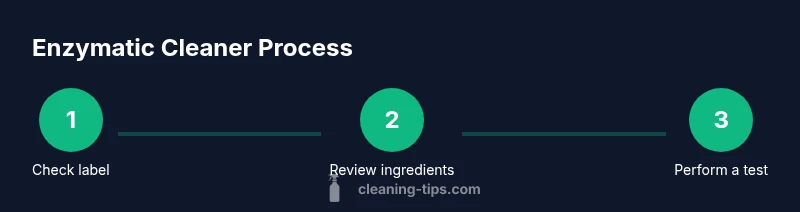
A practical quick check involves three simple steps. First, read the product label carefully for enzyme names (protease, amylase, lipase) or explicit ‘enzymatic’ claims. Second, review the ingredient list and any data sheets available on the brand’s site. Third, perform a small patch test on an inconspicuous area: apply the cleaner, wait the recommended dwell time, then rinse and observe whether the stain lightens more than with a non-enzymatic product. If you detect improved stain removal with an enzyme-based product and no surface damage, you’re likely dealing with an enzymatic cleaner.
Enzymatic vs non-enzymatic cleaners: key differences
Enzymatic cleaners target organic soils by breaking down proteins, starches, and fats, which can lead to more complete stain removal and odor control. They often require moisture and a dwell time to activate enzymes, and they are not typically sanitizers. Non-enzymatic cleaners rely on chemistry like solvents, surfactants, or acids/bases to lift soils and may work instantly but less effectively on complex organic stains. Environmental impact varies by formula, with enzymatic cleaners often marketed as biodegradable when used as intended. The best choice depends on stain type, surface, and whether sanitization is required.
Safe usage and storage considerations
Always wear gloves when handling concentrated cleaners and work in a well-ventilated area. Do not mix enzymatic cleaners with bleach, ammonia, or other cleaners, as dangerous gases can form. Store products in a cool, dry place away from direct sunlight and out of reach of children and pets. Follow the manufacturer’s dwell time recommendations and rinse surfaces as directed to avoid residue buildup. If you’re cleaning delicate fabrics, test first on a hidden corner to prevent damage.
Real-world testing: a simple stain test
Choose a small, inconspicuous patch of fabric or a carpet fiber to test. Apply the enzymatic cleaner according to label directions, keeping the area moist for the recommended dwell time. Rinse or blot as specified and compare with a control area treated with a non-enzymatic cleaner. Note the difference in stain fading, odor control, and fabric integrity. Photograph results for future reference. Positive results (improved stain removal with no damage) indicate an effective enzymatic cleaner for that substrate.
Common myths and FAQs about enzymatic cleaners
Myth: Enzymatic cleaners sanitize surfaces. Reality: Most enzymatic cleaners focus on stain and odor removal, not disinfection. Myth: Enzymes work instantly. Reality: Enzyme action requires time and moisture; results improve with proper dwell time. Myth: Enzymes damage surfaces. Reality: When used as directed, most enzymes are safe on common household surfaces; always patch test first. These cleaners are best chosen for organic soils and odor control, not as a sole sanitizing solution.
Tools & Materials
- Disposable nitrile gloves(Size depending on hand; protect skin from cleaners)
- Microfiber cloths(Lint-free for blotting and rinsing)
- Test spot on fabric or surface(Choose an inconspicuous area to patch test)
- Water spray bottle(For moistening and rinsing surfaces)
- Marker or label(Document results of the test)
- Safety goggles(Optional but recommended for strong cleaners)
- Product data sheet or manufacturer contact info(Helpful for confirming enzyme content)
Steps
Estimated time: 25-35 minutes
- 1
Check the product label
Read the front and back labels for any explicit enzyme claims or enzyme names such as protease, lipase, or amylase. If enzymes are listed, note the exact words.
Tip: Take a photo of the label for reference. - 2
Review the ingredient list
Locate the ingredients section and look for enzyme names. Some products list these under ‘Active ingredients’ or ‘Enzymes.’
Tip: If unsure, search the brand’s data sheet online. - 3
Seek manufacturer confirmation
If label or ingredients are unclear, contact the manufacturer or check the product data sheet for enzyme content and activity.
Tip: Ask for a certificate of analysis if available. - 4
Set up a test area
Choose a hidden spot on fabric, carpet, or surface. Apply the cleaner, follow dwell time, and keep the area moist.
Tip: Do not test on delicate surfaces without a patch test. - 5
Run a controlled stain test
Apply cleaner and compare to a non-enzymatic cleaner on a similar stain. Note changes after the recommended dwell time.
Tip: Record observations with photos. - 6
Evaluate results and choose
If the stain lightens more with the enzymatic cleaner and the surface is unaffected, it’s likely enzymatic.
Tip: Document findings to inform future purchases.
Questions & Answers
What is an enzymatic cleaner?
An enzymatic cleaner uses enzymes to break down organic soils (proteins, starches, fats). It’s great for stains and odors but not a sanitizer. Read the label to confirm enzyme content.
Enzymatic cleaners use enzymes to break down stains, not to sanitize surfaces.
Can enzymatic cleaners sanitize surfaces?
Most enzymatic cleaners are designed for stain and odor removal, not disinfection. For sanitizing, use products labeled as disinfectants and follow label directions.
They’re meant for stain removal, not disinfection.
Are enzymatic cleaners safe for pets and kids?
Most household enzymatic cleaners are formulated to be safe when used as directed, but always ventilate, avoid ingestion, and supervise children and pets during use.
Use as directed and keep away from children and pets during application.
How long do enzymes stay active after application?
Enzymes remain active only while the cleaner is present and the surface stays moist. Once dry, activity ends and residues are inert.
Enzymes stay active while the surface is moist, then stop once it dries.
What surfaces should I avoid with enzymatic cleaners?
Avoid porous finishes that could absorb enzymes too deeply and delicate fabrics unless tested. Check the label for surface-specific guidance.
Test on a hidden spot and follow surface-specific directions.
Watch Video
The Essentials
- Check labels for enzyme names
- Read ingredients for protease/amylase/lipase
- Test on hidden spots before full use
- Do not mix with bleach
- Choose products explicitly labeled enzymatic