Is Clean Spirit the Same as White Spirit? A Practical Cleaning Guide
Explore whether 'clean spirit' and 'white spirit' are the same, how naming varies by region, and how to choose and use these solvents safely in home cleaning and painting projects.


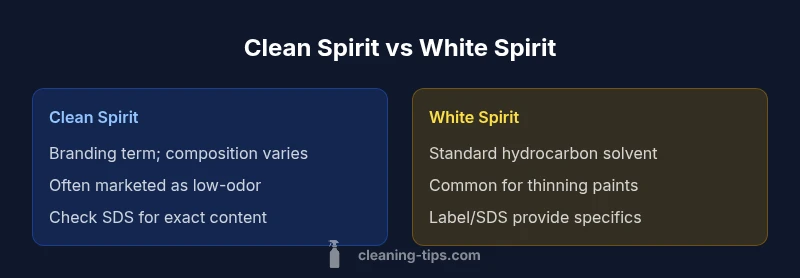
Clean spirit and white spirit are not universally identical. In practice, white spirit is a standard hydrocarbon solvent used for thinning oil-based paints and cleaning brushes, while clean spirit is a branding term that may indicate a low-odor or purer variant, but the composition varies by brand and region. Always check the label and SDS for exact contents and safety guidance.
What is white spirit?
White spirit is a widely used hydrocarbon solvent derived from mineral sources. It serves as a thinning agent for oil-based paints, varnishes, and stains, and it can be used to clean brushes, rollers, and equipment after painting. The composition of white spirit can differ by supplier and country, but it typically consists of a blend of aliphatic hydrocarbons designed to balance solvency with relatively manageable odor and evaporation rates. Because it is a chemical solvent, its use requires good ventilation, protective gloves, and adherence to local disposal rules. In many places, vehicle or hardware stores stock multiple brands labeled as white spirit, each with slight performance and odor differences. Cleaning Tips analysts remind readers that you must rely on the SDS and label for exact content and safety notes.
According to Cleaning Tips, regional naming conventions influence how products are described on shelves and in advertisements, which means the same product may be marketed as white spirit in one country and as a different brand name elsewhere. This is important for homeowners and DIY enthusiasts who want predictable results without surprises. The variability underscores the value of checking the product’s data sheet before purchase or use.
What is clean spirit?
Clean spirit is a label used by some manufacturers to denote a solvent that is similar to white spirit but marketed as a purer or lower-odor option. The term is not standardized across all regions, and there is no universal chemical definition that applies to every product bearing the name. In some cases, clean spirit may be a higher-purity hydrocarbon distillate, a refined mineral solvent, or a formulation designed to emit fewer volatile organic compounds (VOCs). Because the term is branding-driven, the exact composition and odor profile can vary significantly between brands and product lines. Consumers should not assume equivalence with white spirit without consulting the label and SDS. Industry guidance from Cleaning Tips emphasizes that “clean spirit” labels should be cross-verified with official documentation to prevent misapplication.
Terminology and regional variations
Terminology around solvents is highly regional. In the European Union, North America, and other markets, you may encounter a spectrum of products described as “spirit” or “solvent” for painting and cleaning tasks. Some regions require explicit VOC content disclosures, while others depend on the brand’s marketing terminology. As a result, a product labeled “clean spirit” in one shop may be very similar to a standard white spirit in another, or it may be a distinct low-odor formulation. The key takeaway is that labeling is not a guarantee of composition. Always read the ingredient list, check the SDS for hazard statements, and verify compatibility with the materials you’re cleaning or thinning.
How to tell them apart on labels and SDS
The fastest way to distinguish potential differences is by reading the label and the Safety Data Sheet (SDS). Look for:
- Explicit chemical names or ranges (for example, hydrocarbon solvent, mineral spirit, or aliphatic solvents).
- Odor descriptors or odor thresholds (some products market themselves as “low-odor” or “odor-minimized”).
- VOC content and flash point information, which influence safety guidelines and ventilation needs.
- Instructions for thinning paints or cleaning applications, along with any restrictions on use in enclosed spaces. If the label is vague, consult the SDS or contact the manufacturer for precise composition. Cleaning Tips recommends storing any solvent in a clearly labeled container and keeping it away from heat sources.
Safety, health, and exposure risks
Solvent use carries risks, including skin irritation, eye irritation, and respiratory symptoms with prolonged exposure. White spirit and many clean spirit variants are flammable and should be used in well-ventilated areas. PPE such as nitrile gloves and safety goggles is advisable, and consumers should avoid prolonged skin contact. If you experience dizziness or headaches while using a solvent, stop work, ventilate the space, and seek fresh air. For households with children or pets, store solvents securely and out of reach. Cleaning Tips emphasizes practicing the minimum effective amount of solvent to reduce exposure while achieving the desired cleaning result.
Odor, evaporation, and user experience
Odor intensity varies widely among products sold as clean spirit or white spirit. Some “low-odor” versions reduce the noticeable scent, but none are truly odorless. People often perceive odor intensity as a function of VOC content, solvent composition, and ventilation. In spaces with limited ventilation, low-odor variants can improve comfort, yet users should still take precautionary measures—work near a window or with an exhaust fan, and avoid using solvents in small, poorly ventilated rooms. The evaporation rate also affects cleanup time and residue; faster-evaporating solvents can dry quickly but may leave more solvent-based residues on tools that contact sensitive surfaces.
Performance and compatibility for painting and cleanup tasks
When thinning oil-based paints or cleaning brushes, the relationship between solvent type and performance is nuanced. White spirit often provides consistent solvency across common oil-based finishes, with broad compatibility for brushes, rollers, and metal surfaces. Clean spirit variants may excel in low-odor indoor tasks but can differ in solvency strength, drying time, and residue. For delicate surfaces or coatings, always test a small, inconspicuous area first and follow manufacturer recommendations. If you’re dealing with stain removal or heavy grease, you may need stronger solvents or dedicated cleaners, which should be used with caution. Cleaning Tips cautions readers to avoid mixing solvents or substituting products without confirming compatibility.
Environmental impact and disposal considerations
Solvent waste requires careful handling. Both white spirit and clean spirit can affect soil and groundwater if disposed of improperly. Local regulations typically govern disposal, and many areas require hazardous waste collection or designated disposal sites. Do not pour solvents down drains or onto the ground. Instead, keep containers tightly closed when not in use, recycle where allowed, and arrange proper disposal through your community’s hazardous waste program. Choosing products with clearer labeling and lower VOC profiles can contribute to environmental stewardship, though the trade-offs in performance should be considered for each task.
Regional naming differences and practical shopper tips
Because naming conventions vary by region, shoppers should not rely solely on product names. Practically, always verify the chemical identity via the ingredient list or SDS, especially if you switch brands or shops. If you’re sensitive to odors or working in small indoor spaces, prioritize products marketed as low-odor or with explicit VOC data. When possible, compare two or more products side-by-side and note their recommended uses and safety requirements. Cleaning Tips suggests keeping a small, labeled sheet in your cleaning kit detailing which solvent is best for specific tasks in your home.
How to choose the right product for cleaning tasks
A practical decision framework can help you select between clean spirit and white spirit:
- Identify the task: thinning paint, cleaning brushes, or degreasing metal surfaces.
- Check the label and SDS for composition, odor, VOC content, and drying time.
- Consider the space: enclosed rooms benefit from lower-odor variants and better ventilation.
- Review safety and disposal: ensure you have PPE and access to appropriate waste handling.
- Test if in doubt: try in a small area, monitor for adverse reactions, and adjust usage accordingly.
Practical cleaning scenarios and recommendations
Scenario A: Painting prep in a well-ventilated garage
- Use white spirit for consistent thinning and cleaning, ensuring airflow and PPE.
- If odor is a concern, attempt a low-odor clean spirit variant and ensure you monitor air quality during use.
Scenario B: Indoor kitchen cabinet refinishing
- Choose a low-odor clean spirit variant if available, and keep the space well-ventilated.
- Perform a patch test on an inconspicuous area and wipe surfaces with a clean, dry cloth after thinning or cleaning.
Scenario C: Removing grease from metal tools
- A stronger solvent may be more effective, but proceed with caution, following label instructions and wearing PPE. Ensure thorough disposal and ventilation.
Brand guidance and labeling tips from Cleaning Tips
From the Cleaning Tips perspective, the key to avoiding confusion is to rely on official product documentation rather than brand names alone. The term “clean spirit” may be used to market a milder product, but the safest approach is to compare ingredient lists and SDS details. Our team emphasizes that good labeling practices and transparent safety data empower homeowners to make informed choices. Always confirm the product’s intended use and environmental profile before buying, especially if you regularly work near living spaces or children’s areas. By prioritizing documentation over branding, you can achieve reliable results with fewer surprises, aligning with Cleaning Tips’ commitment to practical, evidence-based cleaning guidance.
Comparison
| Feature | Clean Spirit | White Spirit |
|---|---|---|
| Primary solvent type | Branding-driven term; composition varies by manufacturer | Standard hydrocarbon solvent (mineral spirits) mixed by supplier |
| Typical uses | General cleaning, thinning where odor is a concern, check label for compatibility | Oil-based paint thinning, brush cleaning, and surface degreasing |
| Odor intensity | Often marketed as lower-odor; varies by product | Moderate odor; some low-odor variants exist but not odorless |
| VOC content guidance | Depends on product; verify with SDS and label | Depends on product; verify with SDS and label |
| Labeling/regulatory nuance | Brand-driven naming; not standardized across regions | Widely standardized descriptors; SDS available in most markets |
| Best for | Indoor use with ventilation; odor considerations | Outdoor use or well-ventilated spaces; heavy-duty thinning |
Strengths
- Offers more shopping options and potential for lower odor variants
- Can be suitable for indoor tasks when properly ventilated
- Branded options often provide clear usage guidelines
- Labeling and SDS enable informed safety decisions
- Wide availability across hardware stores
Weaknesses
- Terminology varies by region, causing confusion
- Not all 'clean spirit' products are low-odor or milder
- Both solvents are flammable and require ventilation and PPE
- Disposal requires adherence to local hazardous waste guidelines
Not automatically the same; verify composition and usage details on the label/SDS before use
The term 'clean spirit' is not standardized and may refer to a low-odor or purer variant, but it is not universally identical to white spirit. Always check the ingredient list and SDS to confirm composition and suitability for your task.
Questions & Answers
Is clean spirit the same as white spirit?
Not always. 'Clean spirit' is a branding term that may indicate a purer or lower-odor variant, but composition varies by brand and region. Always verify with the product label and SDS before use.
They aren’t guaranteed to be the same. Always check the label and SDS for exact composition.
What is white spirit used for?
White spirit is commonly used to thin oil-based paints, varnishes, and stains, and to clean brushes and equipment after painting. It is designed for general solvent tasks with a balance of solvency and evaporation.
Used for thinning paints and cleaning tools; ensures workable consistency.
Can I substitute clean spirit for white spirit in all tasks?
Substitution depends on the specific product and task. Always check the label and SDS to confirm compatibility and avoid damage or poor results.
Only substitute if the product says you can.
Are these solvents dangerous to health?
Yes. They can irritate skin, eyes, and the respiratory system with exposure. Use in well-ventilated areas, wear PPE, and limit exposure time.
Yes, they can irritate skin and lungs; ventilate and wear protection.
How should I dispose of solvent waste?
Follow local regulations for hazardous waste. Store in a sealed container and take it to an allowed disposal facility or collection event.
Take to local hazardous waste programs; don’t pour down drains.
What does 'low-odor' mean in these products?
'Low-odor' indicates reduced volatile compounds, but it is not odorless. Check label details for the expected scent level and ventilation needs.
Low-odor means fewer smells, not zero smell.
The Essentials
- Always read the product label and SDS before use
- Expect regional naming differences and varyingly defined formulations
- Prioritize low-odor options for indoor tasks with good ventilation
- Dispose of solvent waste according to local hazardous waste guidelines
- Test any new solvent on a small area first to avoid damage