Is Cleanup Better or Facial? A Practical Comparison Guide
Compare at-home cleanup methods with facial skincare, offering practical guidance on routines, costs, time, and how to blend both for a healthier home and healthier skin.


TL;DR: For most households, a strong cleanup routine delivers the fastest, most tangible benefits—removing dirt, germs, and allergens. A facial routine addresses skin health and appearance. The smart choice is to blend both: rigorous, practical cleaning at home, plus a focused skincare step to protect and rejuvenate skin between cleanups. Consider cost and time tradeoffs, and tailor to your priorities.
Is cleanup better or facial: Framing the question
According to Cleaning Tips, the debate between cleanup and facial care often comes down to two distinct goals: removing contaminants in living spaces and maintaining skin health. The phrase is used here as a shorthand for a broader question: is cleanup better or facial when you consider daily routines, time, and budget? In practical terms, cleanup refers to a disciplined regime of dusting, mopping, sanitizing surfaces, and air-quality improvement, while facial refers to skincare steps: cleansing, toning, exfoliating, moisturizing, and sun protection. The decision is rarely binary; most households benefit from a combined approach that prioritizes a clean environment but doesn't neglect personal hygiene. A clean home reduces exposure to allergens, microbes, and irritants that can affect respiratory health and comfort, while facial skincare supports protective barriers and confidence. For families with young children or allergy-prone residents, prioritizing cleanup can yield immediate, measurable outcomes—fewer sneezes, cleaner surfaces, and a calmer living space. Still, skincare matters when people spend time indoors; skin is the body's largest organ and responds to indoor air quality, humidity, and routine. This phrase—"is clean up better or facial"—captures the essence of the decision.
Core objectives: what each practice aims to achieve
Cleanup and facial care are driven by different core objectives. Household cleanup focuses on reducing dirt load, germs, mold spores, dust, and volatile compounds that degrade indoor air quality. The aim is a safer, more comfortable environment, fewer triggers for allergies, and improved sanitation for surfaces, fabrics, and frequent touchpoints. Facial care, by contrast, targets the skin’s barrier function, hydration, and resilience against environmental stressors. A well-rounded routine supports moisture retention, protects against UV exposure, and helps manage concerns like dryness, redness, or uneven texture. When you map these goals side by side, it becomes easier to see how the two domains complement one another rather than compete. The Cleaning Tips team emphasizes that a healthier home begins with a clean, well-ventilated space, which in turn supports skin health by reducing irritants and humidity fluctuations that can affect complexion. In practical terms, you’ll want to design routines that honor both objectives without overwhelming your schedule or budget.
What counts as 'effective' in each domain
What counts as effective depends on your metrics. For cleanup, effectiveness is often measured by visible cleanliness, reduced allergen exposure, and a calmer household climate. You’ll notice fewer dust bunnies, a more comfortable humidity level, and surfaces that are easier to sanitize on a routine basis. For facial care, effectiveness is usually evaluated by skin hydration, barrier integrity, and patient-reported comfort. Visible improvements—like smoother texture, less dullness, and reduced irritation—are common indicators, but efficacy also hinges on how well products suit your skin type and climate. A practical rule from Cleaning Tips is to validate outcomes over a few weeks: ask household members if air quality feels improved and whether skin feels nourished after a consistent skincare routine. Remember that both domains can influence each other; cleaner air reduces skin irritation, and well-kept surfaces prevent grime buildup that can exacerbate skin dryness near the nose or cheeks.
The role of frequency, timing, and context
Frequency and timing matter as much as methods. Daily cleaning tasks—dishes, wiping high-touch surfaces, quick vacuuming—keep buildup under control and support ongoing air quality. Periodic deep cleans—seasonal scrubs of bathrooms and kitchens, wash of curtains and upholstery—address unseen contaminants that accumulate over time. Facial routines typically follow a daily cadence with optional deeper treatments a few times per week, depending on skin type. The context matters too: homes with pets or allergy-prone residents benefit from more frequent surface sanitization and targeted skincare to counteract environmental triggers. Conversely, households with limited time may focus on a core cleaning ritual that preserves air quality and a simplified skincare routine that covers essential hydration and sun protection. A balanced plan minimizes fatigue while maximizing long-term benefits for both spaces and skin.
Practical routines: example weekly schedules
A practical weekly plan blends both domains without becoming overwhelming. Example schedule A emphasizes maintenance: daily quick cleanup (10–15 minutes), midweek surface sanitation, a deeper cleaning on weekend days, and a simple skincare routine applied morning and night. Schedule B prioritizes skincare on busier days with small, frequent cleanup boosts: five-minute touch-ups, rapid room quick cleans, and a weekly deep clean. In both schedules, designate a specific day for more intensive tasks—like mopping, bathroom deep cleaning, and air-ding-based routines. The skincare component should include cleanser, moisturizer, and sunscreen in the morning, with a targeted treatment (exfoliant or serum) a few times per week if your skin tolerates it. The key is consistency; even compact routines can yield noticeable improvements in both home cleanliness and skin comfort when performed regularly. Use a timer or habit-tracking app to stay accountable, and adjust routines as your schedule or climate changes.
Materials, products, and safety considerations
Choosing the right materials and products is crucial. For cleanup, select non-toxic, fragrance-free cleaners if possible, and verify that products are appropriate for your surfaces. A basic toolkit includes a multi-surface cleaner, a bathroom cleaner, microfiber cloths, a mop, a vacuum with a good filtration system, and an air purifier or good ventilation. Skin care should optimize barrier protection: a gentle cleanser, a lightweight moisturizer, and sunscreen. If you have sensitive skin, patch-test new products and avoid over-cleansing, which can strip natural oils and worsen irritation. Safety considerations include proper storage of cleaners away from children and pets, wearing gloves for harsh products, and following label directions. When in doubt, opt for milder formulations and seasonal adjustments to your routines. This approach reduces exposure to potential irritants in both domains and supports a healthier daily environment.
Cost, time, and accessibility considerations
Cost and accessibility influence decision making. Household cleanup has a broad cost spectrum: basic cleaners and tools can be affordable, while premium products or professional cleaning services add to the budget. In skincare, costs vary widely, from drugstore basics to mid-range or premium serums and moisturizers; professional facials carry a larger one-time price but can be spaced further apart. Time concerns are real; many households justify shorter, efficient routines, while skincare can be added as a daily habit that also saves mental energy by reducing decision fatigue. Accessibility matters too: in some regions, access to high-quality cleaning supplies or dermatology-grade skincare may be limited. The practical takeaway is to start with a core, affordable kit for cleaning and a simple, compatible skincare routine, then expand selectively as needs and budget allow. This staged approach helps you maintain consistency without sacrificing quality.
How to measure impact and adjust
Measuring impact requires simple, repeatable checks. For cleanup, track perceived air freshness, visible dust levels, and surface cleanliness. For skincare, monitor skin hydration, texture, redness, and comfort after introducing a routine. Use a weekly log to note changes in comfort, allergy symptoms, or skin reactions. If air quality seems better but skin concerns persist, reassess products or routine frequency; if skin improves but the environment remains dusty, adjust cleaning frequency or product choices. The aim is to converge on a balanced plan tailored to your home and skin type. Regularly revisit goals, celebrate small wins, and avoid overdoing either domain—consistency trumps intensity over time.
Integrating both approaches for holistic wellbeing
The most effective path blends both cleanup and facial care into a cohesive lifestyle. Begin with a reliable cleaning plan to reduce indoor pollutants and allergens, then layer in a skincare routine that protects and nourishes the skin amidst that environment. A simple rule of thumb: treat cleaning as the base layer and skincare as the top layer of daily wellness. For families, this integrated approach can reduce instances of allergy flare-ups and skin irritation, while improving overall comfort and confidence in the home. The Cleaning Tips team recommends building a routine that fits your schedule and budget, then iterating based on feedback from household members and skin responses.
Authority sources and evidence review
To ground this comparison in evidence, we reference a range of authoritative sources focused on indoor air quality, dermatology basics, and consumer cleaning guidelines. For indoor air quality and allergen management, consider guidance from the U.S. Environmental Protection Agency (EPA) and national hygiene associations. Dermatology resources provide general skincare principles, daily routine frameworks, and sunscreen guidance. Educational materials from reputable institutions can help homeowners distinguish between cleaning practices that reduce exposure to irritants and skincare steps that support barrier function. While individual products vary, the overall message is consistent: consistent routines tailored to your environment and skin type yield better long-term outcomes than sporadic, maximal efforts. If you want the latest research citations, see the Authority Sources section below for direct links.
Comparison
| Feature | Household Cleanup | Facial Skincare |
|---|---|---|
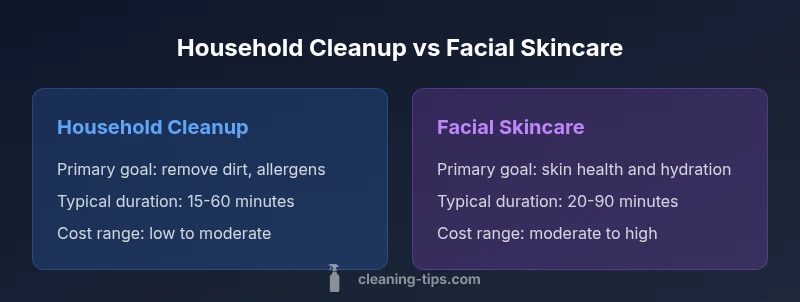
| Primary goal | Remove dirt, germs, allergens; improve indoor air quality | Protect and improve skin health, hydration, and appearance |
| Typical duration | 15-60 minutes for quick tasks; deeper cleans as needed | 20-90 minutes per session (at-home or salon-based) |
| Cost range | $20-$60 for basic supplies; $60-$150 for mid-range kits | $15-$40 for basics; $40-$100 per product; optional facials |
| Best for | Reducing indoor pollutants and grime for everyday health | Skin health, hydration, and appearance enhancements |
| Risks of neglect | Allergen buildup, higher dust, potential respiratory irritation | Dry skin, irritation, and signs of aging with poor care |
Strengths
- Clear, actionable benefits for home health
- Reduces allergen exposure and improves air quality
- Supports skin health with regular care
- Cost-effective routines can scale with budget
Weaknesses
- Requires ongoing time and consistency
- Skincare costs can add up with ongoing products
- Skincare may not address acute indoor pollutants as quickly as cleaning
Integrated cleanup plus facial care offers the broadest, long-term benefits
Adopt a reliable cleaning routine to keep the home clean and healthy, then add a simple skincare regimen to protect skin health. This balanced approach minimizes risks and maximizes overall wellness.
Questions & Answers
What does 'cleanup' include in a home setting?
Cleanup typically includes dusting, vacuuming, mopping, sanitizing high-touch surfaces, and managing humidity and ventilation. The goal is to reduce dirt, germs, and irritants that affect comfort and health.
Cleanup means cleaning surfaces, reducing dust and germs, and improving air quality at home. It’s about making your living space safer and more comfortable.
What is a 'facial' exactly and what does it address?
A facial focuses on skin health: cleansing, exfoliating, moisturizing, and sun protection. It targets hydration, barrier function, and appearance, not indoor cleanliness.
A facial is skincare for your face—cleansing, hydrating, and protecting your skin.
Can I do both cleanup and facial routines on the same day?
Yes. You can schedule a cleaning task first to create a clean environment, then follow with your skincare routine. Keep detergents away from facial products and maintain a comfortable order of operations.
Absolutely. Clean first, then take care of your skin without mixing products.
How often should I do a deep cleanup versus facial treatments?
Deep cleanups are typically seasonal or monthly, depending on activity and pets. Facial treatments can be daily for skincare, with deeper treatments a few times per week if skin tolerates.
Deep cleaning monthly or seasonally, facials or deep skincare a few times weekly as needed.
Are there risks to skipping cleaning or skincare altogether?
Skipping cleanup can lead to higher allergen exposure and dust buildup, while skipping skincare can dry and irritate the skin. Both omissions reduce overall wellness.
Skipping either can raise irritation or discomfort; balance is key.
What budget range should I expect for a balanced approach?
You can start with a modest cleaning kit and a basic skincare routine for a combined monthly cost. Costs increase with upgrades, specialty products, or occasional professional services.
Start affordable, then scale up as needed to fit your budget.
The Essentials
- Adopt a consistent cleaning schedule to improve air quality
- Add a simple skincare routine for ongoing skin protection
- Balance cost and time with staged, scalable routines
- Tailor the plan to your home’s needs and climate