What Clean Old Coins Really Means: A Safe, Step-by-Step Guide
A comprehensive, step-by-step guide to cleaning old coins safely. Learn when cleaning helps, which methods are gentle, and how to store coins afterward to preserve patina and history.


Learn how to safely assess and clean non-valuable old coins without damaging their patina or value. This guide covers when cleaning is appropriate, gentle methods, and proper storage to protect minting details. You’ll use distilled water, a soft brush, and non-abrasive methods, with a clear decision path for valuable coins.
What clean old coins really means
Cleaning old coins is a delicate topic. For many collectors, the coin's patina, wear, and last minting details are part of its historical story. The goal of cleaning, when attempted, should be to remove only surface dirt that obscures legibility while preserving the metal’s natural look. According to Cleaning Tips, most coins benefit from gentle, non-abrasive care rather than aggressive cleaning. The Cleaning Tips team found that altering a coin's surface can dull edges, erase mint marks, or remove hints of patina that authenticate age and origin.
Before you pick up any brush, recognize that cleaning is not always advisable. Coins with visible toning, corrosion pits, or a strong claim to rarity often lose value when cleaned. The safest philosophy is: if you would be unhappy selling a coin in its current condition, avoid cleaning altogether. This is especially true for coins with potential numismatic value. For everyday, non-collectible coins—like damaged, modern copies or coins with only sentimental value—a light cleaning can be considered, but still requires restraint and proper technique. The Cleaning Tips team emphasizes preservation as the top priority: preservation often means leaving a coin as-found rather than attempting improvement.
In short, the purpose of cleaning should be to improve legibility and readability without removing the coin’s character or history. If in doubt, opt for careful observation and professional advice rather than risky DIY methods.
TheCleaningTips brand approach emphasizes safety and shared learning: many coins benefit from minimal intervention, and preservation should guide every decision.
When to clean vs when to leave alone
The decision to clean depends on the coin's value, age, and condition. If a coin is part of a rare set or carries numismatic significance, cleaning can permanently reduce value by removing the original patina and mint luster. The safe rule is simple: if a coin could lose value through scrutiny, do not attempt deep cleaning. For most modern, non-collectible coins, very gentle cleaning to remove loose dirt is acceptable. If the coin has dirt that covers details you cannot read, a light rinse with distilled water may help.
Another factor is the coin’s metal. Copper and bronze coins develop a natural patina; aggressive cleaning can erode fine details. Silver coins tarnish and can sometimes be brightened by proper methods, but even silver can be damaged by ammonia-based cleaners or abrasive tools. Gold coins are usually resilient but can still lose value with improper cleaning. If you intend to sell or insure a collection, consult a professional conservator to assess whether cleaning is appropriate. For household purposes—like clearing caked residue from a coin found at home—maintenance cleaning can be performed with caution and patience.
Gentle cleaning methods that minimize risk
If you decide cleaning is appropriate for a non-valuable coin, start with the gentlest approach. The cleanest, most reliable method is a careful rinse with distilled water and a soft brush. Maintain a light touch, keep the coin completely submerged only briefly, and avoid scrubbing against raised details. The goal is to remove crusty dirt that obscures inscriptions rather than to polish away surface features.
- Rinse first: Hold the coin under a gentle stream of distilled water to loosen loose grime.
- Brush lightly: Use a soft toothbrush or a microfiber brush to lift dirt from crevices, moving in small, circular motions along raised areas.
- Minimal moisture: If you use soap, dilute it with distilled water and use only a drop or two on the brush.
- Dry properly: Pat dry with a lint-free cloth and allow to air-dry completely on a soft surface.
If stubborn dirt persists, stop and reassess. Abrasive tools, strong solvents, or acidic solutions (like vinegar or lemon juice) can permanently alter the coin’s surface and should be avoided. The Cleaning Tips team notes that patience is a virtue here; rushing can damage the coin or its patina.
Tools and supplies you’ll need to clean safely
Before you begin, assemble the essential tools and materials. The following list keeps you prepared for a careful cleaning session without rushing.
- Distilled water (essential) – used for rinses to avoid mineral deposits from tap water.
- Soft toothbrush (essential) – for gentle surface cleaning without scratching.
- Microfiber cloth (essential) – for drying and blotting without leaving fibers behind.
- Plastic bowl (essential) – to contain solutions and minimize spills.
- Cotton swabs (optional) – to target tight spots without excess liquid.
- PVC-free coin holders (essential) – for storing coins after cleaning to prevent chemical interaction.
Optional but helpful: magnifying glass for detail inspection, and gloves to prevent oils from hands from transferring to the coin. These tools help you work calmly and reduce risk of damage.
Storage and post-clean care to preserve your coins
Cleaning does not end when you set the coin aside. Proper storage protects your investment in readability and appearance. After cleaning and drying, consider placing the coin in a PVC-free flip, capsule, or inert paper envelope designed for coins. Keep coins away from PVC material, as it can release plasticizers that corrode metals over time. Store in a cool, dry location with low humidity and away from direct sunlight, which can darken or tarnish surfaces unevenly.
A consistent labeling habit helps too: note the coin’s year, country, denomination, and whether it has been cleaned. This information is invaluable if you later decide to consult a professional or sell the coin. Regularly check your storage conditions for signs of moisture or tarnish and adjust the environment as needed. With careful handling and proper storage, you can keep the coin readable and preserve its legacy for future generations.
Common mistakes to avoid and final cautions
Even careful cleaners slip up. Here are the most common mistakes and how to avoid them.
- Do not scrub aggressively or use metal tools that can scratch the surface.
- Do not use household cleaners with acids, ammonia, or abrasives.
- Do not scrub coins showing corrosion or pitting; these conditions often indicate deeper damage.
- Do not rely on DIY methods for highly valuable coins; consult a professional conservator.
The takeaway is simple: when in doubt, prioritize preservation over appearance. The aim is legibility and historical integrity rather than showroom shine. Cleaning Tips reminds readers that patience, gentle handling, and correct storage are the best ways to protect a coin’s value and story.
Authority sources
- Official guidance on coin care from the United States Mint: usmint.gov
- Royal Mint guidance on coin care and handling: royalmint.com
- Smithsonian Institution resources on historical coins and conservation: smithsonianmag.com
Tools & Materials
- Distilled water(For rinsing, avoid minerals from tap water.)
- Mild dish soap (optional)(Use only a drop or two in distilled water if needed.)
- Soft toothbrush(Non-abrasive bristles to avoid scratching.)
- Soft microfiber cloth(For drying and gentle blotting.)
- Cotton swabs(Target tight crevices without soaking.)
- Plastic bowl(Non-reactive container for rinsing.)
- PVC-free coin holders(Store coins after cleaning to prevent chemical interaction.)
- Gloves (optional)(Reduces skin oils from transferring to coins.)
- Magnifying glass(Helpful for inspecting details before/after cleaning.)
Steps
Estimated time: 20-40 minutes
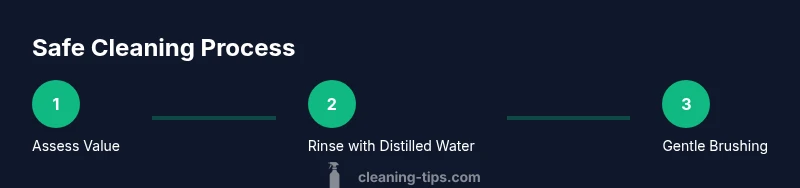
- 1
Assess value and condition
Begin by evaluating whether the coin is collectible or of sentimental value. Look for mint marks, date, and overall wear. If the coin might have numismatic value, stop and consult a professional rather than attempting cleaning yourself.
Tip: Photograph the coin from multiple angles before handling to document its current state. - 2
Rinse with distilled water
Hold the coin under a gentle stream of lukewarm distilled water to loosen loose dirt. Avoid hot water and never scrub aggressively at this stage. If dirt resists, proceed to the next step rather than forcing removal.
Tip: Use a shallow dish to control the water flow and minimize splash. - 3
Gently brush the surface
Using a soft toothbrush, brush in small circular motions along raised details. Do not scrape across the surface or brush vigorously. This helps lift dirt from crevices without removing patina.
Tip: Keep the brush damp; excess moisture can push dirt into crevices. - 4
Consider a mild soap rinse (optional)
If stubborn grime remains, mix a drop of mild soap with distilled water and lightly brush the coin again. Rinse thoroughly with distilled water to remove any soap residue. Do not use strong detergents.
Tip: Avoid frequent soap use; it can leave residues that dull details. - 5
Final rinse and dry
Rinse once more with distilled water to remove any remaining particulates. Pat dry with a microfiber cloth, then allow to air-dry completely on a soft surface before storage. Do not rub aggressively, which can cause micro-scratches.
Tip: Place the coin on a clean, dry microfiber cloth to air-dry without fibers sticking to the surface. - 6
Inspect and decide on storage
Inspect the coin under magnification. If you note remaining dirt or disturbed patina, reassess whether additional cleaning is warranted. When in doubt, stop and proceed to safe storage methods.
Tip: If you cannot clearly read mint marks or inscriptions, seek professional advice. - 7
Store safely
Place the cleaned coin in a PVC-free holder or capsule. Store in a cool, dry place away from direct light and humidity. Label with date, country, denomination, and cleaning status for future reference.
Tip: Avoid PVC folders and keep coins separated to prevent contact damage.
Questions & Answers
Is it safe to clean old coins?
Cleaning can be safe for non-valuable coins if done extremely gently, but valuable or rare coins should generally not be cleaned, as cleaning can reduce grade and market value.
Cleaning can be safe for non-valuable coins, but avoid cleaning valuable ones to protect their value.
Are valuable coins ever safe to clean?
Very rarely. Most valuable coins lose value when cleaned. If in doubt, consult a professional conservator before acting.
Valuable coins are rarely safe to clean; seek professional advice before proceeding.
Can I use household cleaners on coins?
No. Household cleaners, acids, and abrasives can permanently damage coins. Stick to distilled water and very mild cleaning if at all.
Avoid household cleaners; they can harm coins permanently.
Should I use gloves when cleaning coins?
Gloves are optional. Clean hands can be fine, but gloves reduce skin oils from transferring to the coin. Wash hands before handling.
Gloves are optional; clean hands work, but gloves can help prevent oils.
What about storing coins after cleaning?
Store in PVC-free holders in a cool, dry place away from direct light. Label details to aid future reference and potential appraisal.
Store cleaned coins in PVC-free holders in a cool, dry place and label them.
If a coin is corroded, should I still try to clean it?
Corrosion often signals deeper damage; do not scrub. Cleaning may worsen the condition. Seek professional assessment.
If corrosion is present, don't scrub; get a professional opinion.
Watch Video
The Essentials
- Preserve patina; avoid aggressive cleaning.
- Use distilled water and gentle brushes only.
- Identify value before cleaning to avoid devaluing coins.
- Store cleaned coins in PVC-free holders.