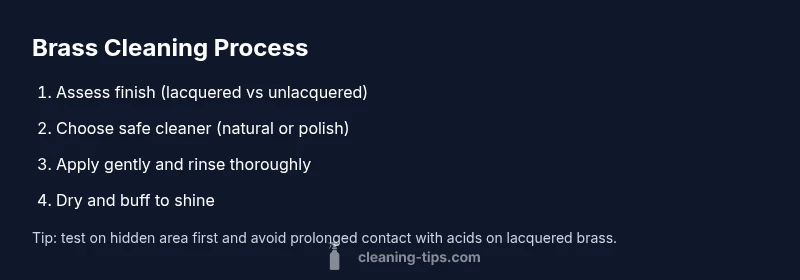
What cleans brass: safe, effective methods for a bright shine
Learn safe, effective ways to clean brass, from natural pastes to gentle polishes. This guide covers lacquered vs unlacquered brass, maintenance tips, and troubleshooting tarnish to keep brass gleaming.


Your goal is to safely restore brass to its natural luster without removing patina or lacquer. Start by identifying the brass piece type (unlacquered vs lacquered) and testing a small hidden area. For most items, soap and warm water or a simple natural paste (baking soda + lemon juice) removes grime. Avoid abrasive scrubs and harsh chemicals.
Why Brass Tarnishes and How Cleaners Work
Brass is an alloy of copper and zinc that naturally develops a patina over time. When exposed to air and moisture, surface oils and sulfur compounds react with the metal, creating tarnish ranging from a dull film to dark discoloration. Understanding what cleans brass is essential to avoid damaging the finish. The term 'what cleans brass' refers to a spectrum of methods—from gentle soap and water to room-temperature vinaigrette-like pastes—that remove grime while preserving the metal and any lacquer coating. According to Cleaning Tips, choosing the right approach depends on whether your brass is lacquered, unlacquered, or treated with a protective wax. Always test a hidden spot first to prevent unintended etching or discoloration. In this guide, we’ll cover safe, effective techniques that work for most household brass items, from fixtures to decorative pieces.
This introduction frames why brass reacts to cleaners differently than other metals and sets expectations for the methods that follow. By understanding the composition and finish, you’ll pick safer options and avoid over-cleaning, which can strip patina or dull shine. Whether you’re refreshing a brass door handle or a vintage lamp, the principles stay the same: gentleness first, abrasives last, and test spots always. Cleaning Tips emphasizes patience and methodical testing as the best route to a lasting shine.
Quick Natural Methods for What cleans brass
For many everyday brass items, start with warm water and a mild dish soap. Dip a soft cloth, wring it, and wipe the surface in gentle, circular motions. Rinse with clean water and dry thoroughly to prevent new tarnish from forming. This is often enough for items with light grime or minor finger oils. If tarnish persists, a natural paste—baking soda mixed with water to form a paste—can be applied with a soft cloth in small, circular motions. Rinse completely and dry; buff with a clean microfiber to restore luster. For a mild acid boost, fresh lemon juice combined with a pinch of salt can act as a gentle polish on unlacquered brass, but avoid prolonged contact on lacquered finishes. For tougher cases, consider a vinegar-dilution (1:1) for brief immersion on unlacquered pieces only, followed by thorough rinsing. Finally, an aluminum foil trick can sometimes lift tarnish, but only on unlacquered surfaces; test first and avoid this method on fragile or lacquered brass.
Commercial Cleaners vs Natural Options
When selecting cleaners for brass, you’ll often see two paths: natural methods and commercial polishes. Natural options—soap and water, baking soda pastes, and mild acids like lemon or vinegar—tizzle grime without aggressive abrasives. Commercial brass polishes and creams offer faster results and a protective residue but can be more abrasive and may remove lacquer if not used carefully. If your brass item has a lacquer coating, prefer non-abrasive, wax-based polishes and avoid ammonia-based formulas that can dull or strip the finish. Always read the label and perform a spot test in a concealed area. Cleaning Tips recommends starting with natural methods for most household pieces, reserving chemical polishes for detailed or heavily tarnished items and only when you know the finish is stable enough to withstand more aggressive cleaners. For DIY enthusiasts, combining mild cleanings with occasional protective waxes provides a balanced approach to long-term brass care.
Step-by-Step Cleaning Brass Hardware (unlacquered)
Unlacquered brass hardware, like drawer pulls or door hinges, tolerates more cleaning variety but still benefits from caution. Start by preparing a safe work area and gathering the necessary materials. Wet a soft cloth with warm soapy water and wipe away grime. If tarnish remains, apply a gentle paste and rub in small circles until you see a brighter tone. Rinse thoroughly and dry completely before buffing with a clean cloth to achieve a subtle shine. For persistent spots, reapply the paste or experiment with a short vinegar rinse, then rinse again and dry. Always avoid rubbing with abrasive pads on bare metal, which can scratch. Finally, inspect the piece in bright light to ensure even tone and no dull patches. Pro tip: never leave cleaning solution on brass hardware longer than a few minutes to prevent any potential dulling.
Special Considerations for Lacquered Brass
Lacquered brass is coated to resist tarnish, so aggressive cleaning can strip the coating, causing rapid tarnish and color changes. When cleaning lacquered brass, prioritize non-abrasive methods and avoid acidic solutions that can compromise the lacquer. A mild soap solution followed by quick drying is often sufficient. If tarnish begins to appear through the lacquer, do not remove it by scrubbing; instead, use a soft cloth with a small amount of brass-safe polish designed for lacquered surfaces, then wipe off promptly. If the lacquer is damaged, consult a professional to recoat instead of trying to sand or polish the metal underneath, which could alter color and value. Cleaning Tips notes that lacquered brass often benefits from a light coat of wax after cleaning to enhance the protective barrier without affecting the finish.
How to Clean Brass with Jewelry or Small Objects
Small brass items, including jewelry or decorative pieces, require extra care. Remove any stones or delicate attachments before cleaning. For simple pieces, use a mild soap solution and a soft brush to reach crevices. Gently rub with a microfiber cloth, rinse, and dry completely. If tarnish remains, use a paste with baking soda or a delicate brass-safe polish, applying sparingly to avoid over-cleaning. For items with intricate detailing, a soft cotton swab can help with tight corners. Always test a hidden area first and avoid long contact with any acidic cleaner to prevent adverse reactions with finishes. After cleaning, store the item in a dry place to prevent future tarnish.
Safety Precautions and Common Mistakes
Always wear gloves when handling chemical cleaners and work in a well-ventilated area. Never mix cleaning agents, especially acids with ammonia. Common mistakes include applying cleaners for too long, using abrasive pads, and cleaning lacquered brass with strong solvents. Overzealous scrubbing can remove patina or lacquer, leading to uneven results or additional damage. For best results, use gentle motion, moderate pressure, and plan for a second light cleaning if needed. Cleaning Tips emphasizes testing finishes on hidden patches to avoid surprises during broader cleaning.
Maintaining Brass Shine After Cleaning
To keep brass shining longer, consider applying a protective wax layer after drying. Microcrystalline wax or carnauba-based finishes create a barrier against air and moisture, slowing tarnish formation. Buff the surface with a soft cloth until the wax forms a light sheen. Regular maintenance—dusting with a microfiber cloth and wiping down with a mild soap solution every few weeks—helps prevent heavy oxidation. If you prefer a natural route, a quick wipe with a tiny amount of olive oil or lemon oil can offer a light protective film, but avoid building up residue. Routine care reduces the frequency of aggressive cleaning and preserves the brass’s natural warmth. The Cleaning Tips team notes that a simple monthly wipe can keep surfaces looking bright without harsh interventions.
When to Seek Professional Help
If tarnish seems deeply etched, if the piece has value or antique status, or if you suspect lacquer damage, seek professional restoration. A specialist can assess whether re-lacquering or refinishing is required, which preserves the piece’s integrity and value. Powdery residues, corrosion that exposes the brass beneath, or brownish verdigris require expert care. Cleaning Tips advises homeowners to avoid DIY fixes that could worsen the finish and to consult a reputable restorer when in doubt. Professional care often prevents irreversible damage and preserves the piece’s character for years to come.
Troubleshooting: Stubborn Tarnish and Green Patina
Stubborn tarnish may require a mild abrasive polish designed for brass. When using such products, apply sparingly and test first. A green patina, often copper-based, can indicate moisture exposure; remove gently with a polishing cloth and a brass-safe polish, then seal with wax or protective coating. If tarnish persists after multiple gentle cleanings, consider revisiting the entire method with a fresh paste and a new cloth, ensuring the piece is completely dry between passes. Finally, store cleaned brass away from humidity sources and sunlight, which can accelerate tarnish. If you keep a routine, the process becomes quicker and the results more consistent over time.
Eco-Friendly Routine for Brass Care
An eco-friendly approach emphasizes low-waste, non-toxic cleaners. Use a simple soap and water routine as your baseline, and rely on baking soda and lemon juice as occasional boosters. Wash cloths separately and line-dry to minimize energy use. When you do need a stronger clean, choose environmentally friendly polishes that avoid harsh solvents. Regular dusting and quick wipe-downs after handling maintain shine without heavy cleaning. The aim is to minimize chemical exposure for your family while keeping brass looking pristine through simple, repeatable steps.
Tools & Materials
- Mild dish soap(Gentle formula, no bleach)
- Warm water(For rinsing and diluting cleaners)
- Soft microfiber cloth(Lint-free finish, non-abrasive)
- Cotton swabs(Reach tight corners)
- Aluminum foil(Used in the tarnish-transfer trick (optional))
- Baking soda(Make a gentle paste with water)
- Fresh lemon juice(Optional acidic boost)
- White vinegar(For quick, light cleaning (unlacquered brass only))
- Soft-bristle brush(For textured surfaces)
- Lint-free towels(Drying and buffing)
- Protective gloves(Safety and grip)
- Brass polish (non-abrasive)(For final shine on lacquer-free pieces)
- Soft wax or microcrystalline wax(Sealant for protection)
Steps
Estimated time: 40-60 minutes
- 1
Identify finish and condition
Examine the item to determine if it is lacquered or unlacquered. Look for paint or clear coating. This guides which cleaners are safe to use.
Tip: Always test a hidden spot first to avoid finish damage. - 2
Gather cleaning supplies
Assemble mild soap, warm water, and a soft cloth. Gather optional pastes, lemon juice, or vinegar depending on your plan.
Tip: Keep everything within arm’s reach to minimize repeated handling. - 3
Prepare cleaning solution
Mix a small amount of mild soap with warm water. For paste cleaning, blend baking soda with water into a thick paste.
Tip: Start with the mild option; move to paste only if grime persists. - 4
Apply cleaner to brass surface
Dampen the cloth (not soaking) and apply cleaner in gentle circular motions. Avoid prolonged contact with any one area.
Tip: Do not scrub aggressively; brass can be scratched easily. - 5
Rinse and dry thoroughly
Rinse with clean water to remove residue. Dry completely with a lint-free towel to prevent water spots and new tarnish.
Tip: Drying immediately reduces oxidation risk. - 6
Buff to shine
Using a clean, dry cloth, buff until a soft glow appears. For lacquered finishes, avoid over-buffing to protect the coating.
Tip: A light touch yields a more natural shine. - 7
Address stubborn tarnish with paste
If needed, reapply baking soda paste to tarnished areas and rub gently for 30–60 seconds before rinsing.
Tip: Use circular motions to avoid uneven patches. - 8
Apply protective finish (optional)
Apply a thin layer of wax to untreated brass to slow tarnish. Let it set briefly and buff off.
Tip: Only apply wax if you are comfortable with maintenance routine.
Questions & Answers
Is lemon juice safe for brass?
Lemon juice can help remove tarnish, but its acidity may dull lacquer or protective coatings. Always test first and avoid prolonged contact on lacquered brass.
Lemon juice can help, but test first and use sparingly on lacquered brass.
Can toothpaste clean brass?
Toothpaste is an abrasive and can scratch brass finishes. It’s not ideal for most brass cleaning scenarios; use milder methods first.
Toothpaste is usually too abrasive for brass; try gentler cleaners first.
Will brass cleaning remove patina?
Yes, cleaning can remove patina or dull the finish if done aggressively. Preserve patina by avoiding harsh polishes and short cleaning sessions.
Cleaning can remove patina if done aggressively; be gentle to preserve it.
How often should I clean brass?
Clean brass as needed, typically when grime builds up or tarnish appears. Light routine cleaning prevents heavy buildup later.
Clean when you notice grime or tarnish; a light routine helps prevent heavy buildup.
Is it safe to use vinegar on brass?
Vinegar can be effective on unlacquered brass but may discolor or damage lacquer. Use cautiously and rinse thoroughly.
Vinegar can work on bare brass; avoid lacquered pieces or rinse well.
Watch Video
The Essentials
- Identify finish before cleaning to choose safe methods
- Start with mild soap and water, progress to paste if needed
- Avoid abrasives on lacquered brass
- Dry promptly to prevent new tarnish
- Seal with wax for long-term protection