What to Do When Cleaning Someone Else's House
A practical, respectful guide for cleaners and homeowners, covering consent, boundaries, safety, and an efficient task flow when cleaning someone else’s home.


By following this guide, you'll learn how to clean someone else's house respectfully and effectively. You'll secure clear consent, establish boundaries, and use a simple, efficient cleaning order that minimizes disruption while ensuring safety. You'll also manage supplies, communication, and privacy considerations to protect relationships and maintain trust.
Setting the foundation: consent, boundaries, and expectations
If you’re ever wondering what to do when cleaning someone else’s house, the answer starts with consent and clear boundaries. Before touching any surface, confirm what’s allowed, what isn’t, and which areas are off-limits. According to Cleaning Tips, transparent communication and a written scope of work reduce miscommunication and protect relationships. Schedule a quick walk-through with the host to outline tasks, preferred products, and any allergy or privacy concerns. Restate the plan aloud and get explicit confirmation. This upfront step sets a professional tone and minimizes last-minute surprises. You’ll also discuss timing, access, and whether you may bring your own supplies. Some hosts prefer a specific window or want you to use their products to avoid triggering sensitivities. Create a simple checklist you both agree on so you stay aligned and don’t overlook personal items or sensitive spaces.
Preparedness: materials, communication, and privacy safeguards
Preparation is more than gathering tools; it’s about clear expectations and safeguarding privacy. Assemble a concise kit with essential supplies, plus a small, host-approved backup. Establish a primary contact for the visit and verify emergency numbers if needed. Decide how you’ll handle private areas—will you knock first, ask permission to enter, or skip certain rooms? The Cleaning Tips team emphasizes documenting consent, tasks, and any deviations from the original plan. Label your tools and keep cleaners in a separate bag to prevent cross-contamination. If you have questions about product choices, bring a neutral set to test in an inconspicuous area and always ventilate rooms during use. This stage reduces interruptions and protects personal belongings.
Tools & Materials
- All-purpose cleaner(Choose a non-damaging formula and test on a hidden spot first)
- Microfiber cloths(Multiple colors to avoid cross-contamination when switching surfaces)
- Latex or nitrile gloves(Size: medium; change gloves if cleaning for long periods)
- Vacuum cleaner or handheld vacuum(Ensure it’s in good working order; have attachments handy)
- Broom and dustpan(Include an extendable wand for hard-to-reach areas)
- Spray bottles(Label with contents to prevent mix-ups)
- Bucket with wringer(Optional, for mopping and rinsing)
Steps
Estimated time: 60-90 minutes
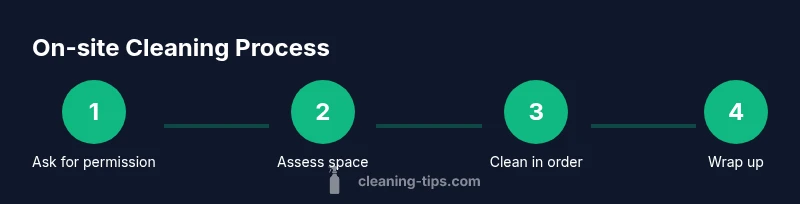
- 1
Ask for permission and confirm scope
Begin by requesting explicit permission to clean and confirm which areas are in-bounds. Restate the host’s expectations and any restrictions, such as avoiding personal spaces or certain products. This sets a respectful baseline and prevents awkward missteps.
Tip: Use a short permission script and summarize agreed tasks in a quick follow-up note. - 2
Assess the space and privacy boundaries
Do a quick walk-through to identify delicate surfaces, valuables, and restricted zones. Note high-traffic areas and urgent tasks (e.g., bathrooms, kitchens) so you can prioritize safely and efficiently.
Tip: Ask if you should move items or adjust lighting, and respect closed doors. - 3
Set up your cleaning kit and prep space
Arrange your tools in an organized way near the entry, minimizing trips in and out of rooms. Test a small area first and ensure ventilation when using cleaners. Keep personal valuables untouched and avoid reading mail or looking through personal items.
Tip: Label your spray bottles and keep a spare pair of gloves handy. - 4
Follow a logical cleaning order
Clean from top to bottom and from cleanest to dirtiest: dusting, surfaces, mirrors, then floors. Tackle high-traffic zones first (kitchen counters, bathroom surfaces) to reduce recontamination.
Tip: Work methodically to reduce backtracking and noise for occupants. - 5
Tackle high-priority areas first
Prioritize bathrooms, kitchens, and common areas. Leave sensitive spaces to the host if you’re unsure about products or methods. Use host-preferred products when requested.
Tip: If unsure about a product, test in a hidden spot and communicate any concerns. - 6
Check surfaces and handle delicate items with care
Avoid abrasive tools on delicate finishes; use microfiber for gentle cleaning and avoid soaking wooden surfaces unless appropriate cleaners are approved by the host.
Tip: Always spot-test before applying cleaners widely. - 7
Wrap up, document changes, and leave feedback
Conclude with a quick walk-through to confirm tasks completed. Leave a brief note or message summarizing what was done and ask for feedback on future visits.
Tip: Record any deviations for the host’s records and future visits. - 8
Respect privacy and close the interaction
Thank the host, sanitize your area of work, and ensure you haven’t left private items exposed. Confirm bag-and-bottle disposal methods if required and exit with discretion.
Tip: Provide a clear channel for post-cleaning feedback or questions.
Questions & Answers
Do I need written permission before cleaning, and what should it cover?
Yes. Obtain written or clearly documented verbal permission that outlines scope, areas allowed, products to use or avoid, and timing. This reduces disputes and protects both parties.
Yes—get clear written or recorded permission detailing the scope and timing.
What should I ask about before starting the cleaning?
Ask about timing, which rooms are in scope, product preferences, allergies, and any items to avoid touching. Confirm access instructions and emergency contacts.
Ask about timing, rooms, products, allergies, and access before you start.
How should I handle damaged items or missing items I encounter?
Stop cleaning that area, document the issue with notes or photos, and inform the host immediately. Do not attempt repairs or replacements without approval.
If you damage something, stop and report it right away with details.
What about privacy—how do I protect personal information?
Do not touch personal items, inspect only what’s necessary for cleaning, and respect locked spaces. If in doubt, ask before proceeding.
Respect privacy and avoid accessing personal belongings.
Should I bring my own supplies or use the host’s products?
Follow the host’s preference. If you bring your own, label containers and avoid cross-contamination with the host’s items.
Use host’s products when asked; if you bring your own, label clearly.
Is tipping or payment discussed, and what’s typical?
Discuss compensation upfront or at the end of the job. Tipping norms vary by location; confirm expectations to avoid awkwardness.
Talk about payment and tips before you start or right after you finish.
Watch Video
The Essentials
- Ask for explicit consent and scope.
- Respect boundaries and privacy at all times.
- Communicate clearly and document agreed tasks.
- Prioritize safety and leave spaces organized.