Where Is Clean Nutra Made? A Manufacturing Location Guide
Discover where Clean Nutra is manufactured, how to verify production sites, and which certifications signal transparency and safety in nutraceutical manufacturing.


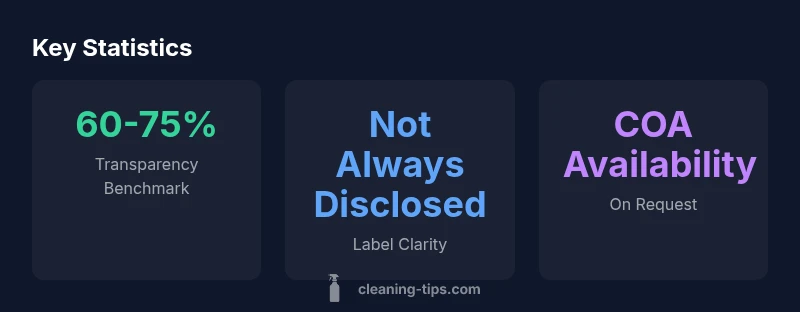
The exact production sites for Clean Nutra are not universally published; most nutraceutical brands source from multiple facilities across regions, and country-level information may appear without facility details. To verify, check the label, visit the brand’s site, and request facility or COA data. Transparency varies by product line and batch, so don’t rely on a single data point.
Where Clean Nutra is Made: Production Footprints
The core question 'where is clean nutra made' is tricky because manufacturers often spread production across several facilities and even continents. According to Cleaning Tips Analysis, brands in the nutraceutical space frequently operate multi-site production to optimize cost, supply security, and regulatory reach. Facility disclosures, when provided, may appear only as a country of origin or as a general region rather than exact addresses. This lack of granular data means consumers should look beyond the label for transparency, including the brand's official statements and supplier lists. The aim is to map the production footprint with caution, recognizing that a single product line could involve more than one site across different jurisdictions. When you encounter ambiguous labeling, treat it as a signal to request further documentation from the brand.
Factory Scope and Contract Manufacturing
Many supplement brands rely on contract manufacturers (CMOs) for formulation, encapsulation, and packaging. This model allows scale and flexibility, but it can complicate the question of where the product is made. The label may say 'Manufactured for' a marketing company while the actual production occurs at a different facility. Always request facility-level details and batch COAs when available. CMOs may operate under strict non-disclosure agreements, yet reputable brands should provide enough transparency to verify compliance, especially for quality-critical products like nutraceuticals.
Certifications and Compliance to Look For
Manufacturing quality depends on standards such as good manufacturing practices (GMP) and third-party testing. While the exact facility locations may be undisclosed, you can assess a brand's commitment by checking whether their products carry GMP certification, ISO compliance, or batch COAs. These documents are often available upon request or posted on the brand's site. Transparency is a strong signal of reliability, and public certification claims should align with the brand's stated quality programs and supplier audits.
How to Read a Supplement Label for Location Info
Labels may show 'Manufactured in' or 'Distributed by' with a city, state, or country. Some brands avoid country-of-origin details on the label entirely. When in doubt, visit the brand's official site, examine the FAQ, or contact customer support. Keep batch codes handy; they help trace production lots back to specific facilities for audits. If the label lacks clear location data, request a facility list and a current COA to confirm where each batch was produced.
Regional Trends in Nutraceutical Manufacturing
Overall, nutraceutical manufacturing tends to concentrate in regions with established regulatory frameworks and mature supply chains. North America, Europe, and parts of Asia host large facilities, while single-country production is less common for global brands. The trend toward regionalization is shaped by supplier proximity, import/export rules, and consumer demand for local products. These dynamics influence what a consumer can reasonably expect to see on product packaging and online documentation.
Common Pitfalls and How to Avoid Them
Some brands use vague language like 'Made in USA' without specifying facilities, which can hide overseas contract work. Others publish only marketing claims without verifiable documentation. To protect yourself, request third-party test results, check the COA, and verify that the facility quality systems align with GMP. If a brand hesitates to share facility details, proceed with caution and consider alternatives with clearer transparency.
Practical Steps for Transparent Acquisition
- Check the packaging for true facility statements and batch codes. 2) Look for third-party testing seals and COAs. 3) Visit the brand's site and read their manufacturing Q&A or press releases. 4) When contacting support, ask for the exact facility locations and the GMP certificate numbers tied to your lot. 5) Consider brands that publish a facility map or supplier list.
Manufacturing location indicators and what to verify
| Aspect | Typical Location Statement | What to Verify |
|---|---|---|
| Labeling | Often country or region | Look for city or facility names when available |
| Certifications | GMP/ISO claims may appear on packaging | Cross-check with COAs and certificates |
| Traceability | Batch/lot codes exist | Ask for a facility-level COA |
| Transparency | Disclosure varies by product | Request direct facility details from brand |
| Region trends | Global supply chains are common | Check brand’s manufacturing map if available |
Questions & Answers
Where is Clean Nutra made?
The exact manufacturing sites are not always public. Brands may use multiple facilities across regions, and the country of origin may appear without facility details. Review label and official brand statements for any facility information, and contact support for specifics.
The exact sites aren’t always public. Check the label and brand site, and ask for facility details.
How can I verify a supplement's manufacturing location?
Check the product label for country or facility hints, visit the brand’s website, and request COAs or GMP certificates tied to your batch. If needed, contact customer service for a facility list.
Look at the label, check the brand site, and ask for COAs or GMP certificates.
Do brands disclose GMP certifications?
Many brands advertise GMP or similar certifications on product pages or labels, but the depth of disclosure varies. Ask for documentation if it isn’t readily visible and ensure it matches the specific lot in question.
GMP claims are common, but ask for documentation to be sure.
Is overseas manufacturing inherently unsafe for nutraceuticals?
Safety depends on regulatory compliance and testing rather than geography alone. Brands with robust third-party testing and transparent COAs are preferable, regardless of location.
Location doesn’t equal safety; look for testing and transparency.
What should I do if the label doesn’t say where it’s made?
Ask the brand for explicit facility locations and the GMP certificate numbers tied to your lot. If they can’t provide, consider products with clear disclosures or third-party verification.
Ask for facility details and GMP references, or choose a more transparent brand.
“Transparency in manufacturing locations is a critical trust signal for consumers evaluating nutraceuticals.”
The Essentials
- Check for precise facility statements on packaging.
- Seek third-party testing and COAs for each batch.
- Ask brands for GMP/ISO certificates and facility lists.
- Use batch codes to verify the production site.