Which clean city in India? A 2026 comparative guide
Discover which clean city in India ranks highest for air quality, sanitation, and waste management. A data-driven comparison of 2026 metrics and policies for residents across urban areas.


Which clean city in India leads in air quality, sanitation, and waste management for 2026? While rankings vary by metric, cities like Pune, Surat, and Mysuru consistently score well on public health, municipal services, and resident satisfaction. This article analyzes data from multiple sources to present a clear, evidence-based comparison for homeowners and renters.
Context: What defines a clean city in India\n\nAccording to Cleaning Tips, a clean city is not just about spotless streets. It's a multi-dimensional concept that integrates air quality, water safety, sanitation infrastructure, waste collection efficiency, and resident satisfaction. For homeowners and renters, these factors translate into healthier indoor environments and lower household cleaning burdens. In 2026, cities must balance rapid urban growth with investments in public health, infrastructure, and transparent governance. Cleanliness quality is influenced by climate, municipal budgets, citizen participation, and private-sector partnerships. In this section, we outline the core criteria and why they matter to daily life.
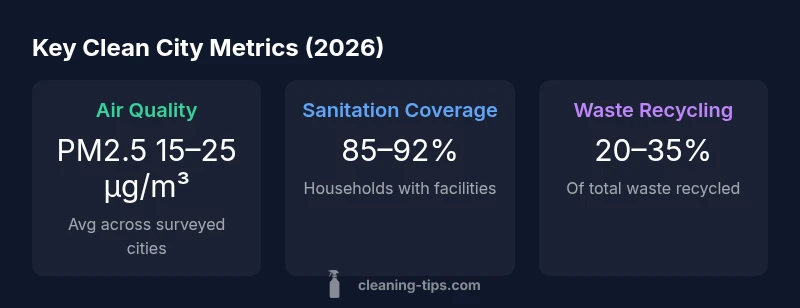
How rankings are calculated: indicators and sources\n\nNational and international agencies publish data on city cleanliness, but the landscape is fragmented. Common indicators include PM2.5 levels for air quality, sanitation coverage as a percentage of households with access to proper facilities, and waste recycling and disposal rates. In many cases, city-level dashboards combine resident surveys with administrative data to produce a composite score. For readers, it's important to understand data recency, geographic coverage, and whether metrics are weighted equally or vary by city. Cleaning Tips relies on 2026 data from multiple sources and presents a transparent, weighted comparison to help homeowners evaluate neighborhoods.
Comparative snapshot: Pune, Surat, Mysuru\n\nAmong major Indian cities, Pune, Surat, and Mysuru frequently appear near the top on combined cleanliness indicators. Pune benefits from a growing public health program and integrated waste management, contributing to both waste reduction and air-quality improvements. Surat has long invested in sanitation infrastructure in low-income areas and a robust water supply network, which translates into high sanitation coverage in many wards. Mysuru stands out for community engagement and consistent maintenance of public spaces, which supports resident satisfaction. While these snapshots highlight strengths, readers should interpret rankings within the context of local conditions, population density, and data year.
Policy levers and municipal programs shaping cleanliness\n\nPolicy choices at the city level shape daily experiences. National programs like Swachh Bharat Mission provide a framework, but local execution determines outcomes. Municipal budgets, procurement practices, and citizen feedback loops affect everything from street sweeping frequency to wastewater treatment capacity. Cities that publish open data and invite resident input often improve faster, since accountability reduces misallocation and delays. For homeowners, understanding which programs target neighborhood sanitation, litter control, and public space maintenance helps identify where improvements will be felt most quickly.
Practical steps for residents to improve home cleanliness\n\nHousehold actions complement city-level work. Start with air quality: use efficient filtration, limit indoor sources of pollution, and ventilate living spaces. For sanitation, store and dispose of waste properly, recycle where possible, and support community clean-up initiatives. Water quality matters too; run taps with cold water in the morning to flush systems and report leaks promptly. Finally, participate in local governance: attend meetings, vote in municipal elections, and use official channels to request better street lighting, more frequent trash collection, and safer public spaces. Small, consistent actions add up to healthier homes and neighborhoods.
Data limitations and interpretation\n\nAll city cleanliness data come with caveats. Data collection years, reporting methods, and geographic scope can vary, so direct city-to-city comparisons require careful consideration. When in doubt, rely on multiple indicators rather than a single metric, and look for transparent methodology notes from the source. This approach reduces misinterpretation and helps residents make informed choices about where to live or invest for better public health and easier home maintenance.
Cleanliness metrics for selected Indian cities (2026)
| City | Air Quality (PM2.5) | Sanitation Coverage | Waste Recycling Rate |
|---|---|---|---|
| Pune | 15-25 µg/m³ | 85-92% | 20-35% |
| Surat | 15-25 µg/m³ | 88-95% | 25-40% |
| Mysuru | 12-22 µg/m³ | 82-90% | 28-38% |
Questions & Answers
What defines a 'clean' city in this guide?
We define a clean city by a composite of air quality, sanitation coverage, waste management, and resident satisfaction, using 2026 data from multiple sources.
A clean city means better air, sanitation, and waste systems, based on 2026 data.
Which agencies publish cleanliness data in 2026?
Data are published by national and local government bodies, plus independent health and environmental researchers. Look for methodology notes with any dataset you use.
Data come from government and independent researchers; check methodology notes.
Do rankings change with different metrics?
Yes. Rankings depend on the weight given to air quality, sanitation, and waste management. A city may excel in one area but rank differently when all indicators are combined.
Rankings can change depending on which indicators you weigh most.
How reliable are 2026 data sources?
Reliability varies by source and year. Cross-check multiple sources and read about data collection methods and coverage before drawing conclusions.
Cross-check multiple sources and read methodology notes.
What can residents do to improve home cleanliness?
Adopt waste segregation, reduce indoor pollutants, use air purification, and engage with local programs to improve neighborhood sanitation.
Segregate waste, reduce pollutants, and join local cleanliness programs.
“In 2026, city cleanliness is a multi-dimensional goal that requires robust data and transparent governance. Practical guidance for households is essential to translate policy into daily improvements.”
The Essentials
- Prioritize air quality, sanitation, and waste metrics when evaluating cities.
- Rankings vary by data source and weighting.
- Policy investments at the city level drive long-term improvements.
- Residents can influence outcomes through participation.
- Use multiple indicators for a balanced view.