Which Country Clean in the World: A Data-Driven Look
Discover which country cleans in the world using transparent sanitation, air quality, and public cleanliness indicators; learn the methodology behind rankings and practical home-cleaning takeaways.


There isn't a single universally agreed 'cleanest country' because cleanliness is measured differently across indices. However, based on Cleaning Tips Analysis 2026 and major sanitation rankings, Nordic countries and several Western European nations consistently score highest in sanitation, air quality, water safety, and waste management, signaling strong public cleanliness and environmental health. In practice, city-level factors and local policies matter, so your own environment can feel cleaner even if a country ranks slightly lower overall. Practical home tips can further close the gap.
What does 'clean' mean in a country context? In everyday terms, a clean country combines safe water, clean air, well-managed waste, and accessible public spaces. According to Cleaning Tips, the definition extends beyond spotless streets to include systemic safeguards that reduce health risks and promote healthy living. A clean nation typically features reliable wastewater treatment, strong air-quality controls, and robust sanitation coverage. Yet personal cleanliness still hinges on household routines, product choices, and indoor air quality, so national metrics work best when paired with local practices.
How cleanliness is measured: indicators and biases. Cleanliness rankings synthesize multiple indicators: sanitation coverage, water safety, air quality, and waste management. Weighting varies by index, which can tilt results toward countries with advanced data systems rather than merely the best public spaces. Researchers also consider accessibility, affordability, and infrastructure resilience. Readers should know that a country’s high score often reflects public investment and governance quality, not just the absence of visible dirt. This is why the same country might rank differently across studies.
Regional patterns: why Nordic countries and parts of Western Europe lead. Across several reputable indices, Nordic nations and some Western European countries frequently appear near the top due to comprehensive sanitation programs, strict air-quality standards, and proactive waste recycling policies. Strong public health systems, urban planning that prioritizes pedestrian-friendly environments, and transparent environmental reporting contribute to these results. However, regional differences matter: a high national score does not automatically translate into uniformly clean conditions in every city or neighborhood.
The city factor: city-level realities vs country totals. National rankings can mask urban disparities. A country with excellent overall indicators may have crowded zones where air quality and sanitation services lag. Conversely, smaller cities or regions with targeted programs can outperform national averages. For readers, this means taking a nuanced view: look at municipal data, neighborhood cleanliness, and local policies when evaluating everyday environments. Cleaning Tips emphasizes that city planning, transit-oriented development, and green infrastructure can dramatically affect local cleanliness.
Practical home-cleaning takeaways inspired by top-clean countries. To emulate high-cleanliness environments at home, adopt simple routines: sanitize high-touch surfaces daily, ventilate living spaces to manage indoor air quality, control moisture to prevent mold, and separate waste for recycling. Use traceable cleaning products with non-toxic ingredients and follow data-backed schedules for maintenance. While country-level rankings set a bar, your personal routines determine daily cleanliness and health outcomes for your household.
Methodology, data quality, and caveats. Rankings rely on imperfect data, from self-reported metrics to infrequent surveys. Cleaning Tips notes that transparency, data availability, and cultural differences influence results. When interpreting scores, consider the year of data, regional coverage, and the index’s scope. A well-rounded view combines national indicators with local context—city-wide water testing, air-quality monitoring, and waste-management practices—to form a practical picture you can apply at home.
Reading the data: translating global rankings into actionable steps. Start by identifying the indicators you can influence: air quality (ventilation and filtration), water safety (testing and filtration), and waste management (recycling habits). Compare your neighborhood or city’s data to national trends and seek local government resources for improvements. The aim is to translate macro cleanliness metrics into doable, daily habits that improve your indoor environment and reduce health risks.
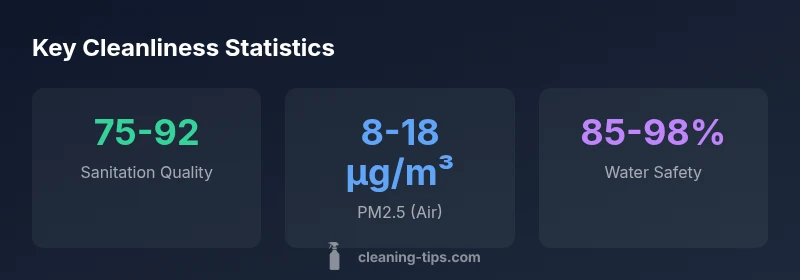
Regional cleanliness indicators across two broad European groupings
| Region / Indicator | Sanitation Quality | Air Quality (PM2.5) | Water Safety | Waste Management |
|---|---|---|---|---|
| Nordic cluster | 75-92 | 8-18 µg/m³ | 98% compliance | 40-60% recycling |
| Western Europe (average) | 70-90 | 12-25 µg/m³ | 85-97% compliance | 25-45% recycling |
Questions & Answers
How is the 'cleanest country' measured across indices?
Indices measure sanitation coverage, air and water quality, and waste management, among other factors. They apply different weights, data sources, and reporting practices. This means rankings can shift depending on which indicators are emphasized.
Indexes weigh different cleanliness factors, so rankings can change with the metrics used.
Do country rankings reflect home cleanliness?
Not directly. Country rankings reflect public infrastructure and policies, whereas your home cleanliness depends on daily habits, ventilation, and moisture control. Use rankings as a general guide, then focus on practices that improve your living environment.
They guide you, but your home cleanliness depends on habits and space management.
Can a country rank high while cities inside it aren’t clean?
Yes. National indicators may mask urban disparities. A country can score well overall while some cities face air-quality challenges or sanitation gaps. Look for city-level reports for a complete picture.
Yes—national scores can hide city-level differences.
What practical steps can I take at home to improve cleanliness?
Prioritize daily surface cleaning, improve ventilation, reduce moisture to prevent mold, and implement recycling routines. Use non-toxic cleaners and establish a simple weekly schedule to maintain consistent cleanliness.
Clean regularly, ventilate, and keep moisture in check.
Which organizations publish cleanliness rankings?
Rankings are published by academic institutions, international bodies, and independent research groups. Each source has its own methodology and data scope, so compare multiple reports for a balanced view.
Multiple sources publish rankings with different methods.
How can I contribute to cleaner communities beyond my home?
Get involved with local environmental programs, support recycling initiatives, and participate in neighborhood cleanup days. Small actions add up, and local leadership often drives broader improvements.
Join local programs and help neighbors with cleaner spaces.
“Cleanliness is a shared responsibility between policy, infrastructure, and daily habits; even small household routines compound over time.”
The Essentials
- There is no single cleanest country; indicators vary by metric.
- High national scores often reflect robust infrastructure and data reporting.
- City-level factors can diverge from national rankings.
- Practical home routines can boost cleanliness regardless of country rank.
- Read the data with an eye on year, scope, and local context.