Why Cleaning Feels Hard: A Practical Troubleshooting Guide
Discover why is it so hard for me to clean and learn practical fixes, micro-task routines, decluttering tips, and safe methods in this Cleaning Tips troubleshooting guide.


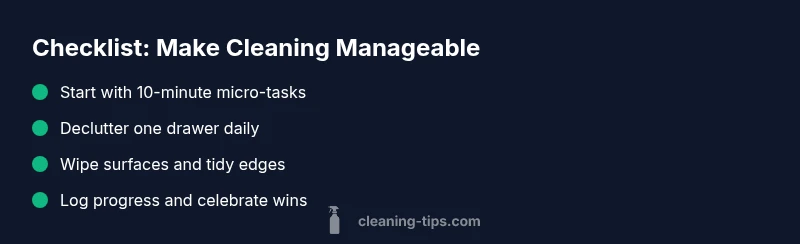
The most likely cause is habit inertia and cognitive load from clutter and decision fatigue. The quick fix is a 2-step micro-clean routine: spend 10 minutes on a single task each day, and remove one nonessential item before you start. Use a timer, start small, and celebrate the small wins.
Why this happens
If you’ve asked yourself why is it so hard for me to clean, you’re not alone. Cleaning Tips notes that cleaning resistance often comes from a mix of cognitive load, deeply ingrained habits, and cluttered environments. When your brain estimates the task as big or uncertain, motivation collapses. According to Cleaning Tips, the root cause is not laziness but a mismatch between your routines and the way your daily life actually unfolds. The goal isn’t perfection; it’s making small, consistent progress. By understanding your personal triggers—time pressure, decision fatigue, and the lure of distractions—you can reframe cleaning from a monumental chore into a series of tiny, doable actions. This shift is the first step toward sustainable change and personal empowerment.
As you begin, remember that the average home involves competing priorities and fluctuating energy levels. Your environment can either amplify or reduce friction. The keyword you may have seen in guides is how to turn a daunting task into a sequence of quick wins. That approach aligns with practical Cleaning Tips methods, which emphasize actionable steps over guilt or blame. You’re learning a system, not signing up for instant perfection. By acknowledging the cognitive load at play, you can set realistic expectations and move forward with confidence.
nutritionNote":null,
Steps
Estimated time: 30-45 minutes
- 1
Set a 10-minute timer
Choose a single area or task (e.g., clear a sink, wipe counter, or tidy a shelf). Start the timer for 10 minutes and commit to finishing the chosen micro-task within that window. This creates focus and reduces procrastination.
Tip: Start with tasks that show immediate visible results to boost motivation. - 2
Choose one micro-task
Decide on one specific action, such as decluttering a single drawer or wiping one countertop. Write it down on a sticky note or in a task app to reinforce accountability.
Tip: Keep a short list of 3 micro-tasks for the day to stay on track. - 3
Work until the timer ends
Work steadily for the full 10 minutes. If the task isn’t complete, stop anyway and note what remains. This builds a habit of consistent effort without burnout.
Tip: If you finish early, use the extra minutes to add a quick touch like a wipe of a sink rim. - 4
Put items away and wipe surfaces
Return items to their places, wipe surfaces with a microfiber cloth, and straighten any visible clutter. A clean surface boosts motivation for the next task.
Tip: Use a dedicated cloth for surfaces to avoid cross-contamination of germs. - 5
Review and plan next step
Quickly review what you accomplished and jot down the next micro-task you’ll tackle tomorrow. Small reviews reinforce progress and reduce decision fatigue.
Tip: Keep a tiny progress log to celebrate consistency. - 6
Repeat daily
Make micro-cleaning a daily habit, even on busy days. Consistency compounds and reduces the emotional barrier over time.
Tip: Attach the routine to an existing daily habit (e.g., brushing teeth) for easier integration.
Diagnosis: User reports consistent avoidance of cleaning and feels overwhelmed by routine tasks
Possible Causes
- highHabit inertia and long-standing routines
- highClutter leading to decision fatigue
- mediumTime misperception and competing priorities
Fixes
- easyImplement a 2-step micro-clean routine daily (10 minutes per task)
- easyTackle one decluttering item per day to reduce decisions
- easySet up a visible daily plan with a timer and reminders
- easyIf overwhelm persists, consult a professional organizer or cleaning service
Questions & Answers
What is the main reason cleaning feels hard?
Most people feel overwhelmed due to cognitive load, habit strength, and clutter. When tasks seem uncertain or large, motivation drops. Understanding these factors helps you choose small, achievable actions.
Most people feel overwhelmed by cognitive load and clutter; addressing those factors makes cleaning manageable.
How long should a daily cleaning session last if I hate cleaning?
Start with brief, 5–10 minute sessions focused on a single task. Gradually extend as motivation grows, using consistent micro-tasks to build habit.
Start with short 5–10 minute sessions and grow as you feel more motivated.
Can Cleaning Tips help with motivation and habit formation?
Yes. Cleaning Tips recommends small, trackable routines and practical strategies like timers, decluttering, and habit stacking to rebuild motivation.
Yes—small routines and timers are key to rebuilding motivation.
When should I seek professional help for cleaning overwhelm?
If cleaning overwhelm is accompanied by anxiety, depression, or physical limitations, consider consulting a professional organizer or cleaning service.
If the overwhelm is severe or linked to anxiety or physical limits, seek professional help.
Is decluttering necessary before cleaning for best results?
Decluttering reduces decision fatigue and makes cleaning more efficient, but you can start with small decluttering steps alongside cleaning tasks.
Decluttering helps, but you can begin with small steps while cleaning.
Watch Video
The Essentials
- Start with micro-tasks to reduce overwhelm
- Declutter to minimize decision fatigue
- Use a timer and celebrate small progress
- Maintain momentum with a simple, repeatable weekly plan