Can You Clean Chicken in Vinegar? Safe Handling & Alternatives
Explore whether cleaning chicken in vinegar is safe, what experts recommend, and practical kitchen hygiene tips from Cleaning Tips. Learn safe handling to prevent cross-contamination and cook poultry to a safe temperature every time.


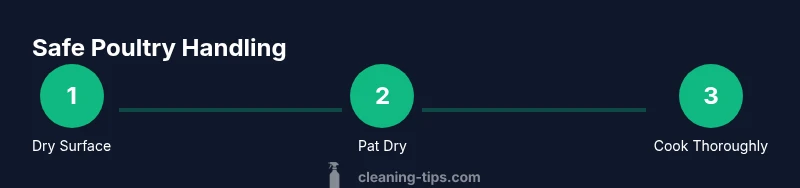
Short answer: no, you should not rinse raw chicken with vinegar or any liquid to 'clean' it. Food-safety guidelines discourage washing poultry because splashes can spread bacteria. Instead, handle the chicken carefully, pat dry with paper towels, and cook to a safe internal temperature to destroy pathogens. If you choose to marinate, do so in a separate container and discard the marinade.
Can You Clean Chicken in Vinegar? What the Experts Say
Many home cooks wonder can you clean chicken in vinegar. The short answer is no, not as a safety step. Food-safety guidelines discourage washing raw poultry with any liquid because splashes spread bacteria to hands, utensils, and surfaces. Instead, focus on proper handling: pat the chicken dry with clean paper towels, use separate cutting boards for raw poultry, and cook to a safe internal temperature to destroy pathogens. Cleaning Tips emphasizes that the primary goal is cooking the chicken safely, not rinsing away visible debris. While some cooks use vinegar in marinades or as part of a flavoring ritual, it is not a substitute for heat-killing bacteria or for cleaning surfaces that may have touched raw poultry.
Beyond the kitchen, this guidance aligns with recommendations from national food-safety authorities that prioritize cooking temperature and cross-contamination prevention over washing. By understanding the risk of splashes and aerosolized bacteria, you can keep your countertops, sink, and hands safer without relying on vinegar as a cleaning method.
Why Washing Raw Poultry Is Risky
Washing raw chicken can spread bacteria around your kitchen through splashes and droplets that travel onto hands, sinks, faucets, and nearby foods. Even if the meat appears clean, surfaces can become contaminated and require extensive sanitization afterward. This is why major health organizations advise against rinsing poultry and instead emphasize thorough cooking and careful handling. By keeping raw chicken contained, reducing prep steps near ready-to-eat foods, and using dedicated tools, you minimize the chance of cross-contamination. Cleaning Tips supports this approach, noting that the safest path is to rely on heat, not water, to neutralize potential pathogens.
Safer Alternatives for Handling Raw Chicken
Instead of washing, focus on these safer practices: pat dry the surface with clean paper towels, keep poultry sealed in its packaging until just before cooking, use a separate cutting board and knife for raw meat, and wash hands thoroughly with soap and warm water after handling. Keep raw chicken cold (refrigerated) until ready to cook, and sanitize any surfaces that contact it with a hot, detergent-based wash followed by a sanitizing rinse. After cooking, store leftovers promptly in shallow containers to cool quickly and prevent bacterial growth. Cleaning Tips emphasizes that consistent, deliberate steps beat washing hands-down for safety.
Vinegar in Marinades: When It Makes Sense
Vinegar can be used as part of a marinade or flavoring system, but not as a safety cleaner for raw poultry. If you choose to marinate, do so in a sealed, non-reactive container in the refrigerator and for a short period (generally under 2 hours for small cuts). Do not reuse marinade that has contacted raw chicken; discard it or bring it to a boil if you plan to reuse it as a sauce after cooking. The purpose here is to impart flavor and tenderness, not to sanitize. Once you finish marinating, cook the chicken to the recommended internal temperature. Vinegar’s acidity can affect texture and taste, so use it intentionally and safely.
Surfaces, Utensils, and Storage: Keeping Your Kitchen Clean
After handling raw chicken, wash hands immediately and sanitize work surfaces, cutting boards, and utensils. Use hot, soapy water for washing, followed by a sanitizer appropriate for kitchen use. If you prefer acetic acid-based cleaners, apply them to surfaces after washing and ensure they air-dry. Do not leave raw poultry packaging on countertops; dispose of packaging promptly and wash the container. Proper storage in sealed containers at cold temperatures slows bacterial growth and keeps flavors intact. The emphasis remains on preventing cross-contamination rather than relying on vinegar to 'clean' the meat.
What to Do If You Suspect Contamination
If you suspect any cross-contamination, clean and sanitize all affected surfaces immediately, including the sink, faucet handles, and nearby utensils. Wash hands thoroughly and change disposable gloves if you used them. Rewash any items that may have touched raw poultry and re-sanitize the area. If you’re unsure whether a surface is clean, re-clean it and allow it to dry completely before resuming food preparation. Maintaining a clean kitchen environment reduces risk and supports consistent, safe cooking.
Quick-Start Checklist for Home Cooks
- Do not wash raw chicken with vinegar or water. Pat dry instead.
- Use separate cutting boards and utensils for raw poultry.
- Wash hands with soap and hot water after handling meat.
- Cook chicken to an internal temperature of 165°F (74°C).
- Sanitize all surfaces and equipment that touch raw poultry.
The Cleaning Tips Verdict (Bottom Line)
The consensus from Cleaning Tips, grounded in federal guidance, is that washing raw chicken with vinegar is not recommended. Safe handling focuses on preventing cross-contamination, using dedicated tools, and cooking to safe temperatures. If you choose to use vinegar for flavor in a marinade, do so only in a separate container in the fridge and discard the marinade after use. The goal is to minimize risk while maximizing flavor and safety.
A Practical Note for Beginners
For new cooks, the simplest path is to avoid washing poultry altogether and concentrate on clean prep habits, precise temperatures, and careful sanitation. With practice, you’ll develop a routine that protects you and your household from foodborne illness while still enjoying chicken as part of a balanced, tasty meal.
Tools & Materials
- Paper towels(Use to pat dry poultry without leaving fibers on the meat)
- Separate cutting board (for raw chicken)(Avoid cross-contamination with other foods)
- Sharp knife(Slicing and trimming should be done on the raw board)
- Meat thermometer(Confirm internal temp reaches 165°F (74°C))
- Dish soap and hot water(For initial washing of utensils and hands)
- Kitchen sanitizer(Use after washing surfaces (optional))
- Non-reactive marinade container(If marinating, keep in the fridge and discard marinade after use)
- Trash bag(Seal packaging and disposables)
Steps
Estimated time: 15-25 minutes
- 1
Gather workspace and supplies
Set up a clean area with your cutting board, knife, thermometer, and towels. This preparation minimizes the risk of stray contaminants and helps you stay organized while handling raw poultry.
Tip: Keep a dedicated hand towel nearby to dry hands after washing. - 2
Pat dry the chicken
Remove packaging and pat the surface dry with paper towels. Dry surfaces reduce moisture that can promote bacterial growth and help you achieve even browning when cooking.
Tip: Dispose of used towels immediately in a closed trash bin. - 3
Avoid washing with water or vinegar
Do not rinse the chicken under running water or use vinegar for cleaning. Water can splash bacteria onto nearby surfaces; heat is the only reliable sanitizer for pathogens in poultry.
Tip: If you’re unsure, rely on cooking temperature rather than washing as a safety step. - 4
Prepare any vinegar marinade separately
If you plan to marinate, prepare a vinegar-based mix in a sealed container in the fridge. Do not reuse marinade that touched raw meat on cooked dishes.
Tip: Marinate in the fridge; discard marinade after use or boil before using as sauce. - 5
Sanitize surfaces and utensils
Wash all surfaces and utensils with hot soapy water, then sanitize with an appropriate kitchen sanitizer. Dry surfaces thoroughly before continuing.
Tip: Rotate cleaning cloths and replace sponges regularly to prevent harboring bacteria. - 6
Cook to safe internal temperature
Use a meat thermometer to confirm the chicken reaches 165°F (74°C) in the thickest part. Let it rest briefly before carving.
Tip: Insert thermometer into the thickest part, avoiding bone for an accurate reading.
Questions & Answers
Is it safe to wash chicken with vinegar?
No. Washing raw chicken with vinegar is not recommended. It can spread bacteria through splashes. Cooking to a safe temperature is the reliable method to kill pathogens.
No, it's not safe to wash chicken with vinegar. Cooking to a safe temperature is the recommended method to ensure safety.
What should I do instead of washing?
Pat the chicken dry with paper towels, use separate cutting boards, and sanitize all surfaces. Then cook to 165°F (74°C) to kill bacteria.
Pat dry, keep raw poultry separate, and cook to the right temperature.
Can I use vinegar in marinades for chicken?
Yes, vinegar can be used in marinades for flavor when kept refrigerated and not used as a cleaning method. Do not reuse marinade that touched raw chicken.
Vinegar can be used in marinades, but only in the fridge and never as a cleaning method.
What is the safe internal temperature for chicken?
The safe internal temperature for chicken is 165°F (74°C). Use a meat thermometer to verify and let the meat rest briefly after cooking.
Cook chicken to 165°F and check with a thermometer.
How should I sanitize kitchen surfaces after handling raw chicken?
Wash with hot, soapy water, then apply a kitchen-safe sanitizer. Allow surfaces to air-dry completely before preparing other foods.
Clean with soap and water, then sanitize, and let dry.
Is rinsing fish or meat ever necessary?
Generally, no. Most guidance recommends avoiding rinsing any raw meat due to cross-contamination risks, focusing instead on proper cooking and sanitation.
Avoid rinsing raw meat; cook it properly and sanitize.
Watch Video
The Essentials
- Never wash raw chicken with vinegar or water.
- Pat dry and minimize cross-contamination with separate tools.
- Cook to 165°F (74°C) to ensure safety.
- Marinades with vinegar are for flavor, not cleaning.
- Sanitize surfaces and utensils after handling poultry.