How to clean nutra: Safe cleaning for nutraceuticals at home
A practical, expert-led guide from Cleaning Tips on safely cleaning nutraceutical packaging, bottles, and storage surfaces. Learn best practices, safe cleaning agents, and organization tips to keep your home healthier and your nutra products pristine.


You will learn how to safely clean nutra containers, shelves, and surfaces used for nutraceuticals. This quick guide covers safe cleaning agents, spot-cleaning techniques, and steps to prevent cross-contamination. By the end, you’ll be able to maintain a tidy, healthful pantry while protecting your nutra products.
What clean nutra means in a home
In home cleaning terms, clean nutra refers to keeping nutraceutical containers, labels, and storage areas free from residues, contaminants, and odors that could compromise the integrity of supplements. The goal is not to sterilize every item but to create a safe, hygienic environment where powders, capsules, and liquids stay stable and free from cross-contact. The term emphasizes gentle, food-safe practices that respect both product quality and household health. According to Cleaning Tips, adopting a consistent routine for nutra-related cleaning helps minimize accidental mixing of products and reduces the risk of residue transfer from one container to another. A practical approach starts with simple steps: designate a dedicated cleanup space, limit clutter around pantry shelves, and keep a small toolkit of approved cleaners. You’ll notice results quickly: bottles stay clearer, labels remain legible, and powder clumps become easier to manage if spills occur. Clean nutra is about consistency as much as capability; small, regular actions beat sporadic, heavy cleaning every few weeks.
Health and safety foundations
Safety comes first when cleaning nutra items. Use a dedicated cleanup area, wear gloves if you prefer, and avoid mixing cleaning agents that can release harmful fumes. Keep products out of reach of children and pets, and ensure good ventilation when using stronger solutions. Store all containers upright, seal lids tightly after cleaning, and label fresh bottles clearly. The goal is to remove residues without degrading packaging or contents. Cleaning Tips analysis shows that consistent, simple routines reduce cross-contact and odors in pantry spaces. Always rinse with warm water before applying soap, and dry thoroughly to prevent mold growth on damp surfaces. Regular, methodical cleaning helps protect the integrity of nutraceuticals and supports a healthier home environment.
Common challenges for nutraceutical packaging and surfaces
Nutraceutical packaging presents unique cleaning challenges. Powder spills can embed in labels, lids, and seam lines, making residue difficult to remove. Adhesive residues from labels can attract dust and create a slippery surface. Odors from powders or capsules can linger if drying is incomplete. Cross-contact between containers is a real risk when storage bins are cluttered or lids are not secured. To combat these issues, keep a dedicated cleaning zone, wipe labels with a damp cloth before washing, and avoid over-saturating porous packaging. Cleaning Tips notes that small, regular checks reduce buildup and help sustain product integrity over time.
Safe cleaning agents for nutra containers
Choose mild, food-safe cleaners whenever possible. A small amount of fragrance-free dish soap mixed in warm water works well for most containers. White vinegar (5% acidity) is effective for sanitizing non-food-contact surfaces when diluted, but avoid using it on porous materials and always rinse afterward. Baking soda makes a gentle paste for tough residues without scratching plastics or glass. For sanitizing non-food-contact areas, you can use diluted isopropyl alcohol (70%) on hard, non-porous surfaces, followed by a thorough rinse with water. Always test cleaners on a hidden area first and avoid mixing cleaners that produce harmful fumes. Microfiber cloths and a soft brush help lift residues without scratching.
Cleaning methods by material: glass, plastic, metal
Glass containers rinse and scrub easily with mild soap and a soft brush; soak for stubborn residues if needed, then air dry. Plastic bottles require gentler scrubbing to avoid micro-scratches that harbor residues; avoid harsh solvents that can warp or crack them. Metal tins and lids are durable but prone to rust if not dried promptly; avoid acidic cleaners on unsealed metal. Always dry completely before reassembly and store upright to prevent leaks. If labels are heat- sensitive, avoid heat exposure during cleaning. For best results, keep separate microfiber cloths for glass, plastic, and metal to prevent cross-material contamination.
Sanitation, odor control, and residue removal
Sanitation focuses on reducing microbial presence, while cleaning targets visible dirt and residues. Use a vinegar solution or isopropyl alcohol on non-food-contact surfaces to sanitize, then rinse and dry. Odor control can be achieved with a light sprinkle of baking soda in storage bins or an open box of activated charcoal in the pantry. Residue removal benefits from a two-step approach: pre-rinse to remove loose powder, followed by a gentle wash with soap and water. Avoid saturating containers that hold supplements, and always ensure seals are dry before reusing. Regularly inspecting and refreshing storage liners can also reduce lingering smells and clingy residues.
Organization to prevent mess and contamination
Organization matters as much as cleaning. Use clearly labeled, stackable storage bins with airtight lids, and dedicate a shelf or bin for nutra products that is separate from household cleaning supplies. Rotate stock so older containers are used first, and create a simple labeling system for open vs closed products. Keep a small cleanup kit within arm’s reach of the pantry: microfiber cloths, a spray bottle with the diluted cleaner, a brush, and a dry towel. With a tidy setup, you reduce cross-contact risk and simplify routine maintenance. Finally, consider a simple checklist that prompts you to wipe, sanitize, and dry after every use, turning good hygiene into a habit.
Quick routine you can implement today
Start with a 5-minute daily quick tidy: wipe down shelves, check lids for tightness, and replace any damp towels. Schedule a deeper clean once a week: remove containers, rinse, scrub with mild soap, sanitize non-food-contact surfaces, dry thoroughly, and reassemble. Keep one zone dedicated to nutra items and complete a short weekly audit to spot scratches, label wear, or odors. This minimal routine yields clear benefits quickly and reinforces the habit of clean nutra across your kitchen.
Starter plan and next steps
Create a two-zone pantry: a nutra zone and a general food zone. Gather a basic toolkit and season your routine with small, repeatable actions. Track what works best for your household, adjust the cleaners you use, and gradually introduce a mini-sanitization cycle for non-food-contact surfaces. By following a starting plan, you’ll build confidence in maintaining nutra integrity and reduce waste by preventing spills and residue buildup.
Authority sources and further reading
To deepen your understanding of safe cleaning practices around food-contact surfaces, consult these authoritative sources. They provide guidelines on hygiene, safe cleaners, and sanitation practices relevant to home kitchens:
- U.S. Food and Drug Administration (FDA) – Food safety and handling guidance: https://www.fda.gov/food
- Centers for Disease Control and Prevention (CDC) – Hand hygiene and surface sanitation: https://www.cdc.gov/handwashing/
- National Institutes of Health (NIH) – General cleaning and safety resources: https://www.nih.gov
Tools & Materials
- Mild dish soap(Choose a pH-balanced, fragrance-free option if possible)
- Warm water(For rinsing and soaking as needed)
- White vinegar (5% acidity)(For sanitizing non-food-contact surfaces; dilute before use)
- Baking soda(Make a gentle paste for residue and odor removal)
- Microfiber cloths(Soft, non-abrasive for surfaces and labels)
- Non-abrasive sponge(Avoid scratching plastics and glass)
- Spray bottle(For diluted cleaners and vinegar solution)
- Isopropyl alcohol 70%(Sanitize non-food-contact surfaces; ensure proper ventilation)
Steps
Estimated time: 20-40 minutes
- 1
Clear workspace and gather supplies
Remove all nutra items from the cleaning area and place them on a protected surface. Gather soap, water, cloths, and cleaners in one spot so you won’t search while cleaning.
Tip: Lay a towel to catch spills and prevent water damage. - 2
Inspect containers and separate by material
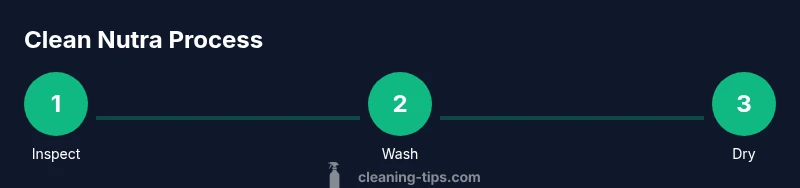
Check each container for cracks and residue. Separate glass, plastic, and metal items so you can tailor the cleaning method to each surface.
Tip: Set aside any containers with damaged seals to avoid leaks. - 3
Rinse and pre-clean
Rinse containers under warm water to remove loose powder. A quick pre-clean reduces staining and makes washing easier.
Tip: Avoid soaking metal lids for too long to prevent rust. - 4
Wash with mild soap
Fill a basin with warm water and a small amount of mild dish soap. Scrub gently with a non-abrasive sponge, focusing on creases and labels.
Tip: Use circular motions to lift dried residues. - 5
Sanitize non-food-contact surfaces
Prepare a vinegar solution or use 70% isopropyl alcohol on non-food-contact parts. Wipe surfaces and let air dry completely before reassembly.
Tip: Do not apply alcohol to lids that contact food directly unless labeled safe. - 6
Rinse and dry thoroughly
Rinse items with clean water and dry with a microfiber cloth. Ensure all surfaces are completely dry to prevent mold and label damage.
Tip: Dry lids separately to avoid trapping moisture inside containers.
Questions & Answers
What is clean nutra and why is cleaning important?
Clean nutra means maintaining hygienic nutraceutical containers, labels, and storage areas to minimize contamination and residue transfer. It supports product integrity and household health.
Clean nutra means keeping nutraceuticals clean and safe at home.
Can I use bleach on nutraceutical containers?
Bleach is generally not recommended for food-contact surfaces or containers that hold nutraceuticals. Use milder cleaners unless the label explicitly says bleach is safe.
Bleach is usually not safe for nutraceutical containers unless the manufacturer says so.
Is vinegar safe for sanitizing the pantry?
White vinegar is a common, food-safe option for sanitizing non-food-contact surfaces. It should not be used on porous items where odors linger.
Yes, vinegar can be used on non-food-contact surfaces.
How long should I soak containers?
Soaking is optional; for stubborn residues, a 5–10 minute soak with warm soapy water helps loosen particles before scrubbing.
Soak for a few minutes if needed, then scrub.
Should I air-dry or towel-dry containers?
Air-drying is often sufficient, but towel-drying improves mold prevention in humid kitchens. Ensure airtight lids are fully dry before reusing.
Air-dry or towel-dry as needed to prevent moisture.
Can I reuse cleaning towels for nutra containers?
Yes, use dedicated towels for nutra cleaning to prevent cross-contamination with other duties. Wash separately from other laundry.
Yes, but keep towels clean and separate from other tasks.
Watch Video
The Essentials
- Use mild, food-safe cleaners for nutra items
- Sanitize non-food-contact surfaces, not food-contact surfaces unless safe
- Dry thoroughly to prevent mold and odors
- Label and rotate containers to avoid cross-contact