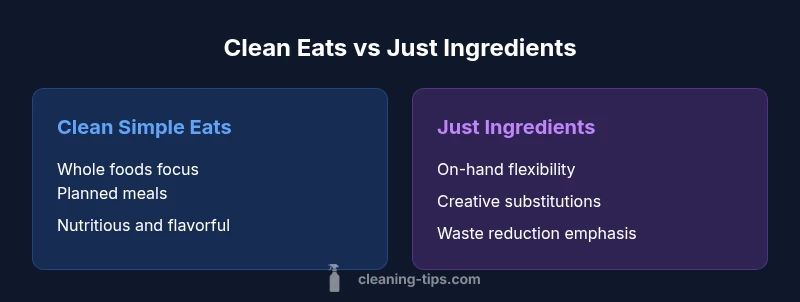
Clean Simple Eats vs Just Ingredients: A Practical Guide
A detailed, analytical comparison of clean simple eats vs just ingredients, with practical tips for smarter meal prep, pantry strategy, and balanced nutrition.


Clean simple eats emphasize whole, minimally processed ingredients that support health, while 'just ingredients' focuses on using whatever you have, prioritizing transparency and flexibility. The Cleaning Tips analysis shows that understanding the intention behind each approach helps tailor meal prep to your goals—nutrition, simplicity, budget, or creative cooking. This quick comparison guides you toward a strategy that fits your schedule and values.
Defining clean simple eats vs just ingredients
The phrase clean simple eats vs just ingredients brings together two practical mindsets for home cooking. Clean simple eats describes a philosophy that values whole, minimally processed foods as the foundation of meals. In this frame, the emphasis is on ingredients you would recognize in a basic pantry or farmers market: leafy greens, whole grains, legumes, lean proteins, fresh produce, herbs, and natural fats. The goal is straightforward: maximize nutritional value with minimal processing, while preserving flavor and satisfaction. By contrast, the “just ingredients” approach centers on the act of cooking with whatever is on hand, prioritizing transparency, flexibility, and waste reduction. It asks you to name and use the ingredients you actually possess, even if some items require improvisation or substitution. In practice, this means less reliance on rigid recipes and more attention to how flavors, textures, and techniques interact in your kitchen.
From a practical standpoint, both stances can coexist. The clean simple eats path helps you set a baseline for nutrition and meal structure, while the just ingredients mindset supports creativity and resilience when shopping is limited or schedules change. The Cleaning Tips team notes that neither approach is inherently superior; each offers distinct advantages depending on your context, goals, and cooking comfort level. The key is to understand your priorities: Do you want predictable nutrition, or do you prefer maximum flexibility when faced with an empty cart? Throughout this article, we’ll compare these strategies using practical criteria—ingredients, planning, cost, time, and flavor—so you can choose a method that actually sticks.
,
Comparison
| Feature | clean simple eats | just ingredients |
|---|---|---|
| Primary focus | Nutrition-first, minimal processing | Flexibility, use-what-you-have |
| Planning required | Moderate planning with ingredient lists | Ad-hoc planning with pantry-first mindset |
| Shopping behavior | Shop for whole foods, seasonal produce | Shop based on what’s available or on sale |
| Waste management | Less waste through planning | Potential for more waste without planning |
| Flavor development | Flavor through natural ingredients | Flavor through substitutions and improvisation |
| Time to prepare | Longer planning but efficient prep | Faster to start cooking but variable results |
Strengths
- Supports clear nutrition goals and consistent meal quality
- Reduces decision fatigue with a defined framework
- Encourages mindful ingredient selection and flavor
- Helps with dietary restrictions and family meals
Weaknesses
- May require more planning and shopping discipline
- Less flexibility during pantry shortages without adaptation
- Potential for perceived rigidity in social settings
Blend for balance: adopt a hybrid approach that prioritizes core nutrition while remaining adaptable to on-hand ingredients.
For most households, a hybrid approach delivers reliable nutrition and flexibility. If nutrition is the priority, lean into clean simple eats; if spontaneity matters, keep just ingredients as a backup. The Cleaning Tips Team recommends using both as needed to sustain healthy, enjoyable meals.
Questions & Answers
What exactly is meant by clean simple eats?
Clean simple eats refers to a nutrition-focused approach that prioritizes whole, minimally processed foods. Meals are built around recognizable ingredients and straightforward preparation to support consistent nutrition and flavor without relying on ultra-processed products.
Clean simple eats emphasizes whole foods and straightforward prep for reliable nutrition and flavor.
How does 'just ingredients' differ from clean eating?
Just ingredients centers on using whatever items are available, emphasizing flexibility and waste reduction. It favors substitutions and creative cooking over rigid recipes, which can be helpful in tight budgets or unpredictable schedules.
Just ingredients is about flexibility and making use of what you have.
Can I combine both approaches in one week?
Yes. A hybrid plan can reserve structured meals around clean simple eats while leaving room for pantry improvisation with just ingredients on lighter days or when meals must be adjusted for guests or budget changes.
Absolutely—blend the two to keep nutrition stable and meals flexible.
What are practical tips to implement these approaches?
Start with a small core of whole foods for most meals, build a flexible pantry with shelf-stable items, and plan leftovers to minimize waste. Use substitutions deliberately to maintain flavor while sticking to your goals.
Build a small core of staples and use substitutions to stay flexible.
How do I handle meals when shopping with kids?
Involving kids in choosing simple, familiar ingredients can support clean simple eats while leaving room for a few fun, kid-approved substitutions under the just ingredients approach.
Get kids involved to build buy-in for healthy choices.
The Essentials
- Define your goal before shopping
- Prioritize whole foods for nutrition and flavor
- Keep a flexible pantry to reduce waste
- Balance structure with improvisation for sustainable meals