Clean vs Dirty: A Practical Guide to Home Cleanliness
Explore the science behind clean versus dirty surfaces, practical steps to maintain hygiene, and how to balance effort, cost, and safety in everyday cleaning for a healthier home.


Clean vs dirty is not a moral label but a practical framework for health, efficiency, and routine maintenance in homes. By examining surfaces through this lens, you decide where to wipe, wash, or disinfect, and you balance time, cost, and safety. According to Cleaning Tips, adopting this framework reduces guesswork and makes cleaning routines more predictable. This comparison helps homeowners prioritize tasks, set realistic expectations, and build sustainable habits that reduce long-term effort.
Framing the Debate: What clean versus dirty Really Means
Clean versus dirty is not a moral label. It's a practical framework to gauge hygiene, risk, and maintenance in real homes. The terms help homeowners decide where to invest effort, what surfaces to prioritize, and how to balance speed with thoroughness. In everyday life, the 'clean versus dirty' lens clarifies two questions: How clean is clean enough for health and comfort? What is the cost of ignoring dirt over time? According to Cleaning Tips, embracing this framework reduces guesswork and makes routines more predictable. In this article, we compare the states of clean and dirty across rooms, surfaces, and tasks, and provide a clear decision framework for when to wipe, wash, or disinfect. The goal is not perfection, but steady, evidence-based improvement in home hygiene. This perspective also helps renters and homeowners judge upgrades—whether replacing towels, upgrading cleaners, or investing in better storage—without overhauling the entire cleaning ritual.
How Dirt Impacts Health and Habitats
Dirt is more than a cosmetic issue. Visible grime often accompanies invisible residues, allergens, and microbes that can irritate skin, lungs, and eyes. In kitchens and bathrooms, dirt on high-touch surfaces like faucet handles, light switches, and countertops creates microenvironments where bacteria and mold spores can accumulate. Regular cleaning reduces these micro-habitats, while allowing grime to build up increases the chance of cross-contamination during meals or family routines. The clean versus dirty framework helps households set thresholds: what level of soiling warrants wiping versus washing, and when to escalate to disinfection for high-risk situations such as food prep areas or bathrooms used by multiple household members. Cleaning Tips emphasizes that consistent maintenance beats sporadic deep cleans, especially in homes with children, pets, or elderly residents who are more susceptible to irritants and pathogens.
The Science of Microbes on Surfaces
Surface microbiology is not a simple black-and-white story. Most home surfaces host a mix of harmless and potentially harmful organisms that respond to cleaning, moisture, and temperature. The critical takeaway in the clean versus dirty comparison is that high-touch, moisture-prone spots—kitchen sinks, door handles, faucet bases—favor microbial transfer if left unchecked. Regular cleaning reduces the overall microbial load, while disinfection, when appropriate, dramatically reduces viable pathogens on surfaces. Cleaning Tips Analysis, 2026 synthesizes practical guidance from public health sources and consumer testing to help readers tailor frequency and rigor to room use. The emphasis is on strategic disinfection for high-risk zones, and routine cleaning for general upkeep, not on chasing spotless perfection.
Time, Money, and Energy: The Cost of Cleanliness
Investing in cleanliness is a cost-benefit equation. A routine 'clean versus dirty' approach prioritizes quick daily actions—wiping spills, rinsing sinks, swiping counters—that prevent stubborn grime from forming and requiring labor-intensive scrubbing later. The time saved by early attention compounds over days and weeks, while the money spent on safer cleaners and basic tools tends to be offset by reduced wear and maintenance needs in appliances and textiles. From a homeowner perspective, the energy spent on daily upkeep is often more efficient than rare, heavy cleaning sessions. Cleaning Tips guidance suggests selecting multi-surface cleaners and reusable tools to minimize waste and simplify routines. A practical mindset is to treat dirt as a controllable variable rather than a fixed, unavoidable condition.
Practical Cleaning Routines: Daily vs Deep Cleans
Daily routines should target hygiene-sensitive zones: kitchen counters, sink basins, stove tops, and bathroom surfaces. A swift, 5–10 minute wipe-down can dramatically reduce grime buildup and maintain a sense of order. Deep cleans, conducted monthly or seasonally, involve dismantling fixtures, scrubbing grout lines, descaling kettles, and refreshing storage spaces. The clean versus dirty decision here hinges on usage patterns: homes with kids or frequent guests benefit from more frequent deep cleans to manage soil, oils, and mineral deposits. The Cleaning Tips team recommends a simple cadence: light daily maintenance, extended weekly tasks for bathrooms and kitchens, and a quarterly deep clean for hard-to-reach areas. Organizing cleaning supplies by zone makes the process faster and reduces cognitive friction when starting a session.
Cleaning Agents: Choosing Safe and Effective Products
Product choice matters as much as technique. In the clean versus dirty framework, selecting agents that fit the surface and the level of soiling is crucial. For routine wipe-downs, gentler cleaners with minimal fragrance reduce chemical exposure while still removing spills and fingerprints. For stubborn grime, slightly stronger formulations or enzyme-based cleaners can improve results without requiring excessive scrubbing. Always follow label directions and practice proper ventilation, particularly in small spaces. Cleaning Tips recommends keeping a simple inventory: a multi-surface cleaner, a bathroom cleaner, a descaler, and a pantry of microfiber cloths and brushes. Remember to test cleaners on inconspicuous areas first to avoid damage to finishes or coatings.
Environmental Considerations: Green Cleaning and Waste
A sustainable clean versus dirty balance focuses on reducing chemical load and waste. Choose eco-friendly products with clearly stated ingredients and recyclable packaging, and pair them with reusable cloths and mop heads. Water use matters, too: efficient rinse and wring habits lower waste while preserving effectiveness. The decision framework includes evaluating the environmental impact of cleaners, the frequency of disposal of single-use wipes, and the lifetime of tools. Cleaning Tips guidance encourages readers to adopt refillable containers, concentrate formulas, and microbial-friendly soils strategies that reduce landfill contributions while maintaining cleanliness and hygiene.
Common Cleaning Myths Debunked
Myths about dirt being harmless or that 'natural' products always work better persist in households. The clean versus dirty framework helps debunk them with practical reality: dirt is a sign that surfaces have been in contact with people, moisture, or oils, and unchecked dirt can harbor allergens and pathogens. Not all 'natural' cleaners are safe for every surface, and some may require more frequent use to achieve the same results as conventional cleaners. Another myth is that cleaning is always time-consuming; automation, zone-based routines, and microfiber cloths can dramatically speed up tasks while improving outcomes. Remember that context matters: the kitchen demands different frequency and products than the living room.
Case Studies: Real-World Scenarios
In a family apartment, a weekly rotation of surface cleaning on the kitchen island, faucet handles, and light switches kept grime low and odors minimal, supporting a smoother grocery routine and meal prep. In a rental with heavy use and limited ventilation, a focus on high-touch disinfectant during illness seasons helped minimize cross-contamination while preserving porous finishes. A shared home with pets required more frequent cleaning of floors and pet-specific zones; combining vacuuming with damp mopping, plus targeted stain removers, kept the indoor environment healthier without overpricing products. These scenarios illustrate how the clean versus dirty framework translates into concrete schedules and product choices.
Tools and Inventory: What Do You Really Need?
A lean toolkit is often enough to manage most cleaning tasks. Start with a microfiber cloth kit, a spray bottle, a versatile cleaner, a bathroom cleaner, glass cleaner, a descaler for mineral deposits, a small brush set, a squeegee for windows, and a durable mop or microfiber mop head. Add a few spare towels, spare cloths, and a fold-out organizer to keep everything in its zone. The goal is to reduce friction when starting a session; the more you reach for the same tools, the faster you complete tasks and maintain a consistent level of cleanliness. Cleaning Tips stresses that quality tools reduce time and effort, supporting a sustainable, repeated routine.
Put It All Together: A Decision Framework
The practical framework for choosing when to clean, wipe, wash, or disinfect follows a simple logic: evaluate surface type, level of soiling, and exposure risk; apply cleaning action appropriate to the surface and context; then reassess on a regular schedule. In high-traffic areas, prioritize frequent wipe-downs and targeted disinfection for high-touch zones. In long-neglected spaces, plan a deep clean that covers grout, vents, and storage areas. The goal is to maintain a stable baseline of cleanliness while avoiding over-cleaning that wastes time and resources. Reading Cleaning Tips articles about healthful homes can help you calibrate your routines to your household's needs.
The Psychological Side of Cleanliness
Cleaning routines do more than remove grime; they shape mood, stress, and perceived control over the home. The clean versus dirty equation reflects not only physical health but mental well-being: a tidy space reduces decision fatigue, supports focus, and signals care for family members and guests. However, obsession over perfection can be counterproductive, increasing tension and reducing motivation to maintain sustainable habits. The key is to set realistic goals, celebrate small wins, and adapt routines as a living system. The Cleaning Tips team notes that simple rituals—designating zones, involving other household members, and tracking progress—can transform cleaning from a chore into a manageable, satisfying practice.
Comparison
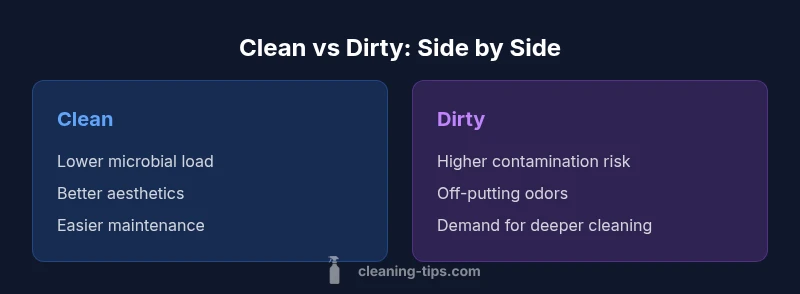
| Feature | Clean | Dirty |
|---|---|---|
| Hygiene impact | Low contamination risk with regular cleaning | Higher contamination risk with neglect |
| Time investment | Moderate daily time for maintenance | Higher effort when grime accumulates and requires deep cleaning |
| Cost of supplies | Moderate recurring costs | Lower upfront, higher long-term if neglected |
| Aesthetics | Bright, fresh appearance | Dull, stained surfaces |
| Maintenance impact | Easier upkeep with routine care | Challenging upkeep when dirt builds up |
| Health outcomes | Better respiratory and skin comfort | Increased risk of irritation and pathogens without cleaning |
Strengths
- Reduces health risks by lowering microbial load
- Improved aesthetics and air quality
- Lower long-term cleaning effort when maintained consistently
- Supports safer environments for kids and pets
Weaknesses
- Requires ongoing effort and discipline
- Potential chemical exposure if cleaners are not used properly
- Some products may harm surfaces or the environment if misused
- Can feel tedious if routines are too rigid or complex
Regular cleaning outperforms neglect; prioritize high-touch areas and routine maintenance
A consistent, practical cleaning routine reduces health risks and long-term maintenance costs. The Cleaning Tips team recommends focusing on high-touch surfaces, combining quick daily wipes with periodic deep cleans, and choosing eco-friendly products when possible.
Questions & Answers
What is the clean vs dirty framework and why does it matter?
The framework is a practical way to assess surfaces based on cleanliness and contamination risk. It guides when to wipe, wash, or disinfect and helps allocate time and resources effectively.
Think of it as a hygiene checklist for your home. It helps decide what needs quick wiping and what deserves a deeper clean.
How often should I disinfect versus just clean?
Disinfect high-touch surfaces during illness or high-risk periods and routinely clean general surfaces. The balance depends on household health, pets, and traffic.
Disinfect high-touch areas during illness seasons, and keep up with regular cleaning in between.
Is dirt ever beneficial in a home?
Dirt itself isn’t beneficial for health, but a small amount can indicate normal use and airflow. The goal is to manage contamination and allergens through consistent cleaning.
Dirt isn’t helpful for health; aim to limit it with regular cleaning and good habits.
What should be in a basic cleaning kit for beginners?
A microfiber kit, a multi-surface cleaner, a bathroom cleaner, glass cleaner, a descaler, microfiber cloths, brushes, and a reusable mop head form a solid starter set.
Start with a small, simple kit and add based on your needs.
How can I clean safely around kids and pets?
Choose non-toxic, fragrance-light products, ventilate rooms, and store cleaners securely. Clean daily surfaces first and reserve stronger formulas for tougher tasks.
Use kid- and pet-friendly cleaners and ventilate when cleaning.
What is the difference between cleaning and disinfection?
Cleaning removes visible dirt and reduces the microbial load; disinfection kills pathogens on high-touch surfaces. Use both where risk is higher.
First clean, then disinfect high-touch areas for best safety.
The Essentials
- Establish a daily wipe-down routine for high-touch surfaces
- Prioritize high-touch areas for disinfection when needed
- Choose eco-friendly cleaners when possible
- Balance time, money, and effort with a practical cadence
- Invest in quality tools to reduce long-term effort
- Use the clean versus dirty framework to guide decisions