Airbnb Cleaning List: A Complete Host Guide
Create a thorough Airbnb cleaning list that covers every room, turnover scenarios, safety checks, and supplies. This educational guide helps hosts maintain consistent, guest-ready spaces from kitchen to bedroom.


This guide helps you create a complete cleaning list for Airbnb that covers every room, turnover scenario, and supplies. By the end you'll have a ready-to-use checklist, a materials kit, and step-by-step tasks to ensure guest-ready spaces. You'll learn how to tailor the list to apartment sizes, occupancy patterns, and local regulations, while keeping safety and efficiency front and center.
Why a Thoughtful Airbnb Cleaning List Matters
A well-structured cleaning list is the backbone of reliable hosting. It reduces guest complaints, speeds turnover, and helps you maintain consistent quality across bookings. According to Cleaning Tips, hosts who implement a standardized cleaning checklist report smoother guest transitions and fewer missed tasks. A robust list also supports compliance with health and safety standards, reassuring guests that their stay will be clean and comfortable. By starting with a comprehensive cleaning list, you set clear expectations for cleaners, property managers, and yourself, which translates into better reviews and higher occupancy over time.
Beyond routine cleanliness, an Airbnb cleaning list provides a framework for seasonal deep cleans, inventory checks, and restocking. It can be adapted to reflect local regulations, allergy-conscious guests, and property type (studio, 1-bedroom, family-friendly homes). The goal is to create a living document that evolves with your listing, but remains concise enough to be practical during turnover days. Regular reviews of the checklist, paired with quick audits after every stay, help you maintain momentum and diminish the risk of forgetful tasks.
Core Areas to Cover in Every Cleaning
Your cleaning list should touch every surface and space guests interact with. Start with high-traffic zones (kitchen, living room) and flow through bedrooms, bathrooms, and ancillary spaces. Ensure you include entryways, closets, and windows, plus any outdoor seating or balcony areas that guests may access. Cover hard surfaces, soft furnishings, and appliances to prevent dust buildup and odor. If you host multiple units, tailor sections to mirror the layout of each space, but keep a consistent core set of tasks.
Key rooms to include:
- Kitchen: countertops, sink, stovetop, oven, microwave, fridge exterior, cabinet fronts, dining area.
- Living spaces: dusting, vacuuming or mopping floors, furniture upholstery, electronics screens, and lighting.
- Bedrooms: bed linens and surfaces, dresser tops, under-bed areas, and closet spaces.
- Bathrooms: toilet, sink, mirror, shower/tub, grout, and ventilation.
- Entry and common areas: doormats, light switches, handrails, trash bins, and floor mats.
- Windows and mirrors: wipe-downs and streak-free finishes.
- Appliances and fixtures: dishwasher, washing machine, exhaust fans, and vents.
In all sections, include safety checks (smoke detectors, fire extinguishers) and note any wear or damage for repair.
Room-by-Room Checklist Structure
This section outlines a practical, category-based approach you can adapt. Each room has a core set of tasks plus optional add-ons for larger properties. Label tasks clearly (e.g., Kitchen Surfaces, Bathroom Fixtures) and assign responsibility if you work with a cleaning team. A master template helps you scale across listings while maintaining uniform standards.
Kitchen:
- Wipe all surfaces, sanitize handles, clean sink, and run the dishwasher if available.
- Clean microwave, oven exterior, stovetop, and fridge exterior.
- Empty trash, wipe cabinet fronts, and replenish supplies like dish soap. Bathrooms:
- Scrub toilets, sinks, and showers; clean mirrors; check grout and caulking.
- Empty trash, replace towels if necessary, and ensure ventilation works. Bedrooms and Living Areas:
- Dust surfaces, vacuum or mop floors, and refresh linens and pillows where appropriate.
- Check under furniture for debris, wipe light switches, and sanitize remote controls. Entry and Common Areas:
- Clean entry mats, wipe switches, and organize shoes and coats to reduce clutter.
- Inspect safety devices, test smoke detectors, and ensure lighting is functional.
Turnover Efficiency:
- Create a checklist for quick passes (15-20 minutes) on low-occupancy turns and a deeper pass for full turnovers. This helps you tailor tasks to occupancy patterns while preserving quality.
Supplies and Equipment Essentials
Having the right tools on hand makes every cleaning pass faster and more reliable. Invest in a small, color-coded kit for each area to prevent cross-contamination. Keep replenishment on a simple reorder list so you can refresh supplies after each guest turnover. The goal is to standardize supplies across listings and simplify the cleaning routine for any team member.
Core supplies:
- All-purpose cleaner, glass cleaner, and a disinfectant labeled for household use
- Microfiber cloths in color-coded sets (blue for bathrooms, green for kitchen, etc.)
- Sponges, scrub brushes, and non-scratch pads
- Vacuum cleaner, broom, dustpan, mop and bucket
- Trash bags, replacement liners, and spare paper towels
- Laundry supplies: detergent, fabric softener, and towel bags for clean linens
- Gloves, aprons, and safety glasses if needed
- A basic toolkit for small repairs and a flashlight for dark corners
- Linen inventory log and a restock list Optional: odor neutralizers, stain removers, and a lint roller for fabrics
Customization for Turnover Scenarios
Turnover scenarios vary by occupancy and property type. A studio with back-to-back bookings requires rapid passes and precise restocking, while a multi-bedroom home may need a deeper deep-clean between longer stays. Build two or three turnover templates that you can swap in and out depending on the schedule. Maintain a central master checklist to ensure consistency.
Turnover templates:
- Quick turnover (15-20 minutes per room): focus on trash removal, surface wipe-downs, and fresh towels.
- Standard turnover (45-60 minutes per room): add floor cleaning, appliance exterior cleaning, and a more thorough bathroom refresh.
- Deep turnover (90-120 minutes per room): include laundry, linen restock, minor repairs, and full deep-cleaning of soft furnishings.
Adjust these templates after each stay by logging what tasks were missed, which can guide your next shift or cleaning team.
Safety, Health, and Regulatory Considerations
Guest safety is non-negotiable. Use approved cleaning products and follow label directions. Ensure ventilation when using strong cleaners and never mix chemicals (especially ammonia and bleach). Keep a safe storage area for cleaners away from children and pets. If you operate in jurisdictions with specific health codes, align your checklist with local requirements and post-cleaning checklists for accountability. Regularly inspect smoke detectors and carbon monoxide detectors and maintain batteries according to local guidelines.
Additional health considerations include occupant allergies, chemical sensitivities, and sensitivity to fragrances. Where possible, offer fragrance-free options or clearly label products used in each space. Document any safety concerns and schedule timely maintenance if detectors or vents show wear.
Authority Sources
To support best practices, refer to established health and safety guidelines:
- https://www.cdc.gov/coronavirus/2019-ncov/prevent-getting-sick/cleaning-disinfection.html
- https://www.epa.gov/pesticide-registration/list-n-disinfectants-use-against-covid-19
- https://www.osha.gov/SLTC/cleaning_hygiene
These sources provide general principles for cleaning, disinfection, and occupational safety that you can adapt to your Airbnb workflows. Always verify local regulations and adjust protocols accordingly.
Keeping Records and Consistency
A consistent cleaning routine helps you scale across listings and time. Maintain a master checklist and a per-booking quick-pass log to capture what tasks were completed, who did them, and any notes about condition. Use a simple digital form or a printable sheet stored in a shared drive so cleaners can tick tasks off in real time. Regular audits of completed tasks against the master list will help identify gaps and opportunities for improvement. Documenting turnover quality also supports guest communication and refunds if issues arise.
Tools & Materials
- All-purpose cleaner(Choose a formula safe for kitchen surfaces and countertops.)
- Disinfectant spray or wipe(EPA-registered for household use; follow label directions.)
- Glass cleaner(Streak-free finish for mirrors and glass surfaces.)
- Microfiber cloths (color-coded)(Blue for bathroom, green for kitchen, yellow for general surfaces.)
- Sponges and scrub brushes(Non-scratch pads for delicate surfaces.)
- Vacuum cleaner(HEPA-filter recommended for better air quality.)
- Broom, dustpan, and mop(Keep separate mops for wet areas.)
- Trash bags and liners(Variety of sizes to fit bins.)
- Towels and bed linens(Stock clean towels and bed linens; inspect for wear.)
- Gloves and safety gear(Use disposable gloves; consider eye protection for chemical use.)
- Lint roller(Optional for fabric surfaces.)
- Ventilation aids(Open windows during cleaning when safe; consider fan for circulation.)
Steps
Estimated time: 2-4 hours
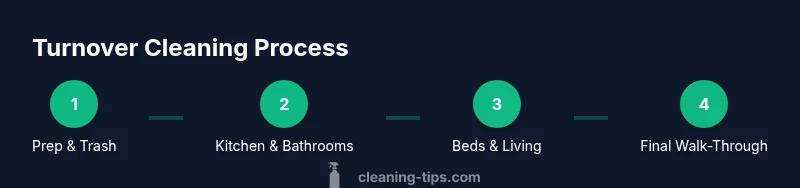
- 1
Prep and safety check
Enter the space, ventilate if needed, and collect all cleaning supplies. Remove trash and place a fresh liner in each bin. Inspect detectors and ensure safe handling of cleaners.
Tip: Use color-coded containers to prevent cross-contamination and log any safety concerns. - 2
Kitchen deep clean
Wipe all surfaces with an appropriate cleaner, clean the sink, and sanitize high-touch areas like cabinet handles. Clean exterior of appliances and discard old sponges or cloths.
Tip: Warm water can help lift grease; avoid harsh abrasives on delicate finishes. - 3
Bathrooms refresh
Scrub toilets, sinks, and showers; wipe mirrors; check grout and caulk. Improve ventilation by ensuring exhaust fans function properly.
Tip: Rinse cloths regularly and use separate cloths for toilets to prevent cross-contamination. - 4
Living areas and bedrooms
Dust surfaces, vacuum or mop floors, and refresh bedding where appropriate. Wipe remote controls, light switches, and any tech devices.
Tip: Pay attention to under-bed storage and behind furniture for hidden dust. - 5
Floors and fixtures
Mop or vacuum all floors, focusing on high-traffic paths. Clean windows and mirrors for a streak-free finish. Wipe down any seating and tables.
Tip: Change rags/mops used in bathrooms to prevent cross-contamination with living areas. - 6
Linen and restocking
Collect used linens, launder, and replace with fresh sets. Restock essential supplies (toilet paper, soap, coffee, tea, etc.) according to occupancy.
Tip: Create a simple restock checklist per property to speed turnover. - 7
Final inspection
Do a quick walk-through to confirm all tasks are completed, check for odors, and test safety devices. Note any damages or missing items.
Tip: Walk through with photos or a simple scoring system to verify quality. - 8
Documentation and handoff
Log the cleaning activity, save notes, and update inventory levels. Prepare the property for the next guest with a clean, inviting presentation.
Tip: Maintain a central log to track maintenance and cleaning history across listings.
Questions & Answers
What should be included in an Airbnb cleaning list?
A comprehensive list includes kitchen, bathrooms, bedrooms, living areas, entryways, and safety checks, plus restocking and linen management. It should be tailored to property size and turnover frequency.
A complete list should cover kitchen, bathrooms, bedrooms, living areas, entryways, safety checks, and restocking. Adapt it to your property's size and turnover rate.
How often should bed linens be changed for Airbnb guests?
Change linens between guests and when a stay extends beyond a typical turnover window. Always stock fresh towels and linens for new guests.
Change linens between guests and when needed for new bookings. Always provide fresh towels and bedding.
What tools are essential for an Airbnb cleaning kit?
Essential tools include a vacuum, microfiber cloths, all-purpose cleaner, disinfectant, glass cleaner, and a mop. Color-coded cloths help prevent cross-contamination.
A vacuum, microfiber cloths, cleaners, and a mop are essential. Use color codes to stay organized.
How can I handle rapid turnovers between bookings?
Use a quick-pass template for short turns and a deeper-clean template for longer stays. Maintain a master checklist and log misses to improve over time.
For rapid turns use a quick-pass template, then do a deeper clean when time allows. Keep a master checklist.
Are there safety considerations hosts should follow?
Follow product labels, ventilate when cleaning, avoid mixing chemicals, and check detectors regularly. Store cleaners out of reach of children and pets.
Always follow labels, ventilate, avoid mixing chemicals, and check detectors regularly. Store cleaners safely.
How do I customize the cleaning list for different property types?
Create core tasks that apply to all properties and add property-specific items for studios, 1-bedroom, or multi-bedroom homes. Use adjustable checklists to reflect layout and amenities.
Keep core tasks universal, then add property-specific items for each listing type.
Should I verify cleaning quality with photos or notes?
Yes. Maintain a brief photo log or notes section after each turnover to document the condition and any maintenance needs.
Use quick photos or notes to verify quality after each turnover.
What if a guest reports a cleanliness issue after check-in?
Respond quickly with a structured remediation plan, use the log to identify root causes, and adjust your checklist to prevent recurrence.
If a guest reports an issue, address it promptly and update your checklist to prevent repeats.
Watch Video
The Essentials
- Create a master checklist and customize for each listing.
- Prioritize safety and air quality in every pass.
- Standardize supplies and workflows for consistency.
- Document turnover results to improve over time.