Eat Clean vs Factor: A Practical Comparison for Healthy Meals
A comprehensive analysis of eating clean at home versus Factor meal delivery, covering nutrition, cost, time, waste, and suitability for different schedules and goals.


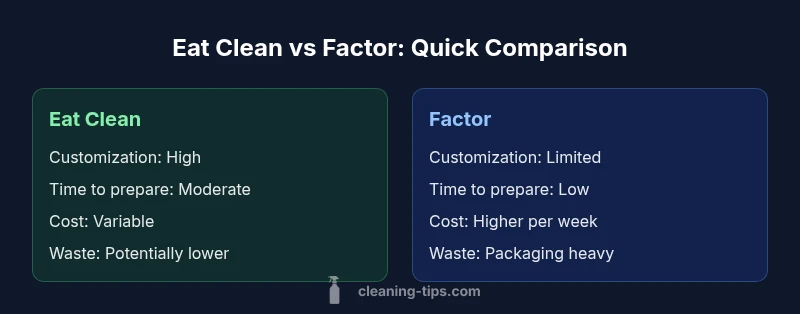
Eat Clean vs Factor represent two distinct paths to healthier meals. Eat Clean emphasizes ingredient control, cooking skills, and budget savings over time, while Factor prioritizes convenience, consistent portions, and less kitchen work—often at a higher ongoing cost. This comparison helps you weigh nutrition, time, and lifestyle fit to choose the right approach for you.
What eat clean vs factor really means for modern kitchens
At its core, the choice between eat clean and Factor hinges on how much you value control, convenience, and consistency in your weekly meals. eat clean, in practical terms, means cooking with whole, minimally processed foods you select yourself, from groceries or farmers markets, and preparing meals in a way that preserves nutrients and flavor without relying on pre-made ingredients. Factor, by contrast, offers ready-to-heat meals curated by chefs, with standardized portions and nutrition information delivered to your doorstep. The distinction isn’t just about taste; it’s about time, planning, and how disciplined you want your kitchen practice to be. According to Cleaning Tips, the decision often comes down to schedule, budget, and personal health goals. If your week is packed with meetings and school runs, Factor’s delivery model can be a lifesaver; if you love the process of cooking and want transparent ingredient lists, eat clean remains appealing.
For many households, the best strategy is a hybrid: use Factor during busy weeks while keeping weekends for batch cooking and stocking up on staples for nutrient-dense meals. This hybrid approach helps you maintain nutrition without sacrificing time. The key is clarity about what you want to optimize: cost, skill-building, or steady meal access. In this sense, “eat clean vs factor” is not a binary choice; it’s a spectrum on which you can move based on real-world constraints and evolving health targets.
Top differences in approach to nutrition and control
Nutrition and control sit at the heart of the eat clean vs factor decision. When you cook from raw ingredients, you know exactly what goes into each dish—salt, sugar, fats, and seasonal produce. This level of control is particularly valuable if you’re managing dietary restrictions, aiming to reduce sodium, or emphasizing whole foods. Factor meals provide standardized portions, built-in nutrition data, and chef-curated variety, which can help with portion consistency and stress-free meals, but the grocery-store ingredient variability you have with DIY cooking is absent. The trade-off is that Factor’s nutrition information reflects menu-formulations rather than your personal customizations; while they aim to align with common dietary needs (balanced macros, adequate protein), you can’t tailor every ingredient to your palate or allergy profile as precisely as with home cooking. For most families, evaluating how much you value customization versus convenience clarifies which path to prioritize.
Cost dynamics: long-term savings versus upfront costs
Financial considerations play a central role in eat clean vs factor. DIY groceries can be cost-effective over the long term if you plan meals, buy staples in bulk, and utilize leftovers efficiently. The cost can vary widely by region, season, and dietary choices, but in many cases, you’ll see fewer recurring subscription fees and more flexibility to optimize per-meal expenses. Factor introduces predictable weekly pricing with minimal waste, but the per-meal cost is typically higher than cooking from scratch, especially if you’re feeding a family. The exact math depends on your grocery habits, how many meals you replace with Factor, and whether you maximize couponing or store-brand ingredients. In short, if you value lower weekly outlays over the long haul and enjoy cooking, DIY can win on cost. If you prioritize predictable spend and minimal heavy-lifting during busy weeks, Factor can justify the premium.
Time, planning, and shopping: the real-world time investment
The time cost of eat clean includes planning, grocery shopping, prepping, and cooking. Even quick weeknight dinners can add up to 30–60 minutes per meal, plus travel time to shops. Batch cooking on weekends can dramatically reduce daily time spent cooking while preserving nutrition. Factor minimizes prep time to minutes per meal and reduces decision fatigue, which can be a major benefit for families juggling work and kids. However, you still need to consider delivery windows, storage, reheating, and potential plate-cleanup. The choice depends on how you value free hours: do you want to reclaim time now at the cost of more expensive meals, or invest in kitchen routines to lower long-term food costs? Cleaning Tips notes that time-versus-cost trade-offs should align with your weekly schedule and energy levels.
Waste, packaging, and environmental considerations
Packaging often becomes a prominent factor in the eat clean vs factor comparison. DIY meals can produce less packaging if you source ingredients in bulk and reuse containers, but you may also generate more food waste from imperfectly portioned batches. Factor, while providing convenience and portion control, typically uses more packaging and shipping materials—though many services are making strides toward recyclable or compostable packaging. If sustainability matters, you can mitigate packaging waste by planning meals with reusable containers, choosing Factor options that emphasize greener packaging, and prioritizing ingredients with minimal processing. Cleaning Tips emphasizes evaluating the true environmental footprint, including transport emissions and food waste, when weighing these options.
Dietary customization and reliability for diverse households
Dietary needs vary widely, from gluten-free to dairy-free or plant-based preferences. DIY eat clean gives you the flexibility to tailor every ingredient, use substitutions, and adjust cooking methods to fit allergies or intolerances. Factor offers curated menus with allergen information and filter options, but the degree of customization is limited to what the service provides. Families with strict diets may prefer the DIY path for complete control, while busy households seeking reliable, ready-to-eat options may lean toward Factor. The balance you choose should reflect both the strictness of dietary needs and the day-to-day practicality of maintaining them.
Flavor variety, seasonality, and long-term habits
A long-term commitment to clean eating often depends on developing a diverse repertoire of recipes and rotating seasonal ingredients. DIY cooking invites experimentation, slow-cooking, and custom spice blends that keep meals interesting. Factor’s rotating menus deliver chef-crafted flavor profiles and global inspiration without requiring you to master every technique. If you’re motivated by culinary exploration and skill-building, DIY supports growth; if you’re more motivated by consistency and novelty without shopping trips, Factor helps sustain habit formation. The optimal approach may combine both: use Factor during tight weeks for variety and nutrition support, then cycle back to home cooking to sharpen skills and reduce costs.
Implementation tips: making the most of either path
To maximize outcomes, start with a clear plan. For eat clean: create a weekly menu, shop with a detailed shopping list, batch-cook when time allows, and organize your fridge for easy assembly. For Factor: map out delivery days, stock pantry staples that complement meals, and keep a simple rotation of quick add-ons like steamed vegetables or a quick salad to balance nutritionally. Periodically review nutrition labels, watch for added sugars or high-sodium meals, and adjust accordingly. A blended approach—keeping home-cooked meals for most days and leveraging Factor during particularly busy weeks—often delivers the best blend of health, cost, and time savings.
Comparison
| Feature | Eat Clean (DIY groceries) | Factor Meal Delivery |
|---|---|---|
| Meal customization | High flexibility with chosen ingredients | Pre-set menus with limited customization |
| Nutritional control | Full control over portions, fats, and salt | Nutritional data provided; portions fixed per meal |
| Cost per week | Groceries can vary; potential savings with bulk buying | Typically higher per week for 4 meals |
| Convenience & time | Planning, shopping, and cooking time may total 60–120 min/meal | Delivered meals; reheating in minutes |
| Waste & packaging | Less packaging with bulk buys; possible prep waste | More packaging and shipping materials |
| Dietary accommodations | Easily tailor to allergies and restrictions with ingredients | Dietary filters and menu notes; limited substitutions |
| Flavor variety | Broad customization; seasonality drives variety | Rotating chef-created menus; newer options weekly |
| Environmental impact | Depends on sourcing and leftovers; potential efficiency with smart planning | Packaging and delivery footprint varies by provider |
Strengths
- Maximal control over ingredients and cooking methods
- Potential long-term cost savings with savvy shopping
- Builds cooking skills and nutrition literacy
- Flexibility to adapt to evolving dietary needs
Weaknesses
- Time-intensive; requires planning and prep
- Shopping trips and kitchen energy use increase weekly workload
- Risk of food waste if portions aren’t managed
- Higher ongoing cost if relying on premium delivery services
DIY eat clean generally offers greater nutritional control and potential long-term savings; Factor excels in busy weeks with minimal kitchen work.
Choose Eat Clean if you want maximal control of ingredients and portions. Choose Factor if time is your primary constraint and you want predictable, ready-to-eat meals without cooking.
Questions & Answers
What does 'eat clean' mean in practice when shopping and cooking?
Eat clean generally means choosing whole, minimally processed foods and cooking at home to control ingredients, portions, and additives. It emphasizes vegetables, fruits, lean proteins, and whole grains over packaged, highly processed options.
Eat clean means choosing real ingredients and cooking at home to control what goes into your meals.
Is Factor healthier than home cooking on average?
Health outcomes depend on menu selections. Factor provides balanced meals with nutrition labels, but home cooking lets you tailor every ingredient. Both can be healthy if you choose whole foods and watch portions.
Factor offers balanced meals, but home cooking lets you tailor ingredients for your health goals.
Which saves more money: grocery shopping for DIY vs Factor?
Grocery-based DIY meals can save money over time with careful planning and bulk buying, especially for families. Factor tends to be pricier per week but reduces waste and eliminates prep time.
DIY groceries can save money long-term; Factor saves time but costs more per week.
Can Factor accommodate allergies and dietary restrictions?
Factor provides allergen information and filters, but customization is limited to the offered menus. If you need strict or unusual restrictions, DIY cooking offers the most flexibility.
Factor lists allergens and options, but full customization requires DIY cooking.
How much time does each option typically require weekly?
DIY cooking can range from 4–12 hours per week depending on batch cooking versus daily meals. Factor reduces daily meal prep to a few minutes, with occasional kitchen involvement for storage and reheating.
DIY takes more time; Factor cuts prep to minutes per meal.
What about waste and packaging with Factor?
Factor packages meals for freshness, which increases packaging waste but is often recyclable. DIY can reduce packaging by buying in bulk, though leftovers may create food waste without proper planning.
Factor tends to have more packaging; DIY can reduce packaging with bulk buys.
Is a hybrid approach beneficial, and how might it look?
A hybrid approach combines Factor during busy weeks with home-cooked meals when time allows. This strategy can balance nutrition, cost, and time by preserving cooking skills while maintaining convenience.
A hybrid plan uses Factor in busy weeks and DIY when you have time.
The Essentials
- Prioritize nutrition control if you cook at home often
- Value convenience when schedules are tight
- Weigh weekly time commitments against per-meal cost
- Consider a hybrid approach to balance nutrition, cost, and time