How Many Cleaner Shrimp Per Gallon: A Practical Guide
Learn the recommended cleaner shrimp per gallon, how stocking affects tank balance, and practical guidelines for reef and freshwater setups, with Cleaning Tips analysis.


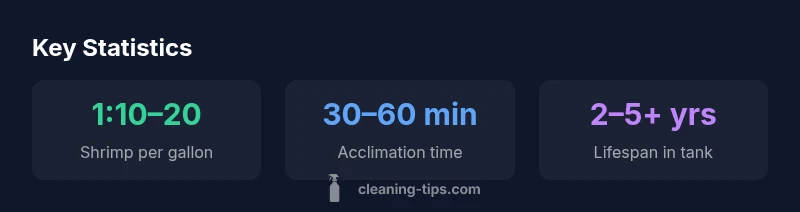
Most hobbyists start with about 1 cleaner shrimp per 10-20 gallons, adjusting for tank maturity, bioload, and tank mates. In larger or more stocked systems, you may use 1 per 15-20 gallons, while smaller or more shy species may require tighter ratios. Always monitor behavior and space, and be prepared to adjust as the tank matures.
How to determine how many cleaner shrimp per gallon
Determining the right number starts with a realistic stocking target: around 1 cleaner shrimp per 10-20 gallons is a common starting point, with adjustments for tank maturity, bioload, and the presence of other invertebrates. The exact number depends on the size of the shrimp species you choose; smaller Lysmata amboinensis may be compatible with tighter ratios in a mature system, while larger species might require more space. When planning, map out the entire bioload: ammonia, nitrite, nitrate levels, and the amount of natural detritus produced by feeds and inhabitants. In general, you want enough shrimp to create a consistent cleaning presence without crowding surface access or hiding spots. Remember that cleaners are not a cure-all; they supplement routine tank maintenance, not replace it. For beginners, aim for the lower end of the range and observe behavior for 4-6 weeks before considering a second individual. This cautious approach reduces stress and helps ensure the resident shrimp thrive.
Core stocking guidelines for reef vs freshwater tanks
Reef and mixed tanks frequently support a light to moderate bioload, so a safe starting point is 1 cleaner shrimp per 15-20 gallons in many setups. In larger, multipurpose tanks or those with heavier feeding regimens, some aquarists gradually increase to 1 per 15 gallons, but only after confirming stable water chemistry and ample hiding places. Freshwater systems differ because invertebrates may face different water parameters and plant/ fish interactions; in these cases, you might prefer hanging back toward 1 per 20 gallons or more, depending on filtration and bio-load. Regardless of your tank type, you should provide stable acclimation, cover for escape attempts, and diverse feeding routines that keep detritus to manageable levels. The goal is a steady, visible cleaning presence without crowding or aggressive interactions. If you already maintain on the lower end, observe your cleanup crew’s interactions with resident fish; aggressive tank mates or shy cleaners may require cave-like refuges, more feeding times, or modest reductions in density.
Behavioral expectations and signs of stress
In the first weeks after adding a cleaner shrimp, expect steady grazing on established algae and detritus, with occasional exploration of rockwork and coral crevices. Cleaning Tips analysis shows that a healthy density in line with the 1 per 10-20 gallons range typically yields consistent cleaning without crowding aggression. Look for clear signs of stress: repeated swarming at the tank glass, chasing by fish, tardy retreat into safe crevices, or loss of appetite. If any of these appear, reduce density, increase hiding spots, or adjust feeding to reduce competition. Monitor oxygen exchange and water movement; cleaners appreciate well-oxygenated water with moderate flow. In a properly balanced tank, you should observe a respectful display of mutual tolerance—cleaners doing their job while other inhabitants remain settled in their territories.
Species differences and tank setup considerations
Different cleaner shrimp species vary in size, behavior, and space needs. Lysmata amboinensis tends to be a tad larger and more active, while Lysmata debelius often occupies tighter crevices and can be more shy in dimly lit tanks. When planning stocking, consider the physical footprint of rockwork, coral structure, and the available mid- to upper-water column space. A taller, well-structured tank with abundant hiding opportunities can comfortably host a higher density, whereas a sparse setup may require stricter limits. Water chemistry still governs success: stable salinity, temperature, and pH support healthier, longer-lived invertebrates. If you tilt toward multiple specimens, ensure you have enough compatible niches and avoid crowding around feeders or pumps. Finally, ensure compatibility with current residents; aggressive fish can disrupt cleaners, leading to stress or withdrawal from cleaning duties.
Acclimation steps and welfare best practices
Always start with a quarantine period when possible and introduce new cleaners gradually. Drip-acclimate the shrimp over 30-60 minutes to minimize osmotic shock, then float them in the display tank to adjust to temperature before transfer. Use a gentle catching method to reduce stress, and inspect the specimen for damaged appendages or signs of disease. After introduction, feed small amounts of meaty foods or specially formulated shrimp foods, and monitor feeding response. A well-fed cleaner shrimp is less likely to roam erratically in search of food and more likely to contribute consistently to detritus removal. Maintain stable parameters during this period and avoid sudden changes in salinity or temperature, which can trigger stress responses and alter cleaning behavior.
Feeding, maintenance, and interaction with other cleaners
Cleaners rely on a mixture of biofilm, detritus, and prepared foods. Provide a varied diet and avoid overfeeding to prevent water quality degradation. Regular water testing helps detect shifts in ammonia, nitrite, and nitrate that could influence shrimp health. Space is critical: ensure multiple hangouts, ledges, and crevices so cleaners aren’t forced into tight confrontations with corals or fish during cleaning sessions. If you notice one species repeatedly dominating the space, you may need to adjust tank layout or reduce density to keep competition fair. With proper feeding and space, cleaners can contribute consistently to tank hygiene while enhancing the overall ecosystem without causing stress to other inhabitants.
Compatibility, breeding, and long-term planning
Stocking density should consider long-term plans, including potential breeding if your system supports it. Prefer peaceful tank mates and avoid combining many active fish that could bully cleaners away from feeding and cleaning zones. If breeding is a goal, plan for a larger, well-aquascaped environment to accommodate more shrimp and to provide multiple larval targets. Keep in mind that maintaining stable water quality, consistent lighting, and gentle water flow helps promote healthy, sustainable shrimp populations. Regular maintenance, observation, and incremental adjustments over time help ensure that the stocking approach remains aligned with your tank’s evolving needs.
Stocking guidelines by topic
| Topic | Recommended Range | Notes |
|---|---|---|
| Stocking per gallon | 1 per 10-20 gallons | Adjust for tank maturity and bioload |
| Acclimation time | 30-60 minutes drip acclimation | Follow standard acclimation procedure |
| Species considerations | Lysmata amboinensis; L. debelius | Size and behavior vary by species |
| Tank type influences | Reef vs freshwater | Consider hiding spots and rock density |
Questions & Answers
What is the best starting point for cleanER shrimp per gallon?
A practical starting point is about 1 cleaner shrimp per 10-20 gallons, adjusting for tank maturity and bioload. Begin at the lower end and monitor for 4-6 weeks before adding another.
Start with 1 shrimp per 10-20 gallons and watch their behavior for 4-6 weeks before adding more.
Can I add more than the guideline if I have a large tank?
Yes, but only after confirming stable water conditions and enough hiding spaces. Increment density gradually and watch for signs of stress in both cleaners and residents.
Yes, but increase density slowly only after water quality is stable and you have adequate hiding spots.
Do all cleaner shrimp species follow the same ratio?
Different species vary in size and territory needs. Larger species may require more space, while smaller ones can thrive in tighter setups when conditions are right.
Different species have different space needs; choose the ratio based on the species and tank layout.
What are signs that I’ve overstocked or stressed the tank?
Common signs include increased hiding, reduced feeding, aggressive interactions, and erratic swimming. If observed, reduce density and improve hiding options.
Look for crowding, aggression, or feeding issues; reduce shrimp numbers if you see stress.
Is quarantine recommended for cleaner shrimp?
Quarantine is advisable when possible, especially if sourcing from unknown suppliers. It helps prevent introducing disease and pests into the display tank.
Quarantine is a good idea when you can, to protect your main tank.
“"Stocking cleaner shrimp is a balance between cleaning benefits and animal welfare; begin conservatively and adjust based on tank feedback."”
The Essentials
- Start with a conservative ratio and adjust over time
- Observe behavior before adding more shrimp
- Tailor density to tank type and bioload
- Acclimate carefully and quarantine when feasible
- Maintain water quality to support shrimp health