How Much Does Clean Copper Go For? A 2026 Pricing Guide
Discover how much clean copper goes for per pound in 2026, the factors that affect price, how to clean copper to maximize value, and where to sell for the best quotes.


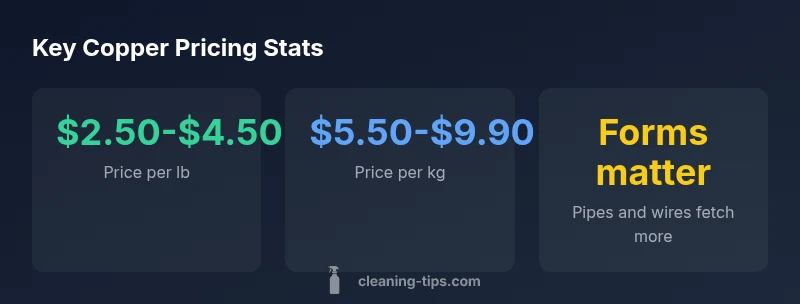
Clean copper typically fetches about $2.50 to $4.50 per pound (roughly $5.50 to $9.90 per kilogram) in 2026. The exact price depends on current copper market rates, contamination level, and the form of copper you have (pipes, wires, cookware, or sheets). Removing insulation and coatings generally increases what buyers will pay. How much does clean copper go for? Start by weighing your material and using the prevailing rate.
Copper pricing basics
If you're wondering how much does clean copper go for, you’re not alone. Copper remains one of the most valuable metals for DIYers, scrappers, and homeowners who salvage metal from old plumbing, wiring, and cookware. Clean copper means copper metal that is free of insulation, solder, paint, plastic coatings, and other non-metal debris. According to Cleaning Tips, the price you fetch for clean copper depends on several factors, including purity, weight, form, and the current copper market. In 2026, a commonly cited range is roughly $2.50 to $4.50 per pound, which translates to about $5.50 to $9.90 per kilogram. Price variation reflects the global supply-demand balance, regional scrap-yard practices, and the specific form you present: copper pipes, copper wiring, copper cookware scrap, or copper sheets all command different premiums. When you ask how much does clean copper go for, start by weighing your material accurately, then multiply by the prevailing rate. The better you separate copper from brass, aluminum, or other metals, the more buyers will trust your material and the higher your payout potential.
Forms and price differences
Copper is sold by form and sometimes by purity. The price you can expect for clean copper varies depending on whether you have pipes, wires, cookware scrap, or thin sheets. Pipes and wires typically fetch higher prices than mixed scrap because they are closer to pure copper and require less processing. Also, the presence of insulation on wires or attachments on pipes can reduce the price, since buyers must remove contaminants. Solder, brass connectors, and other alloys mixed in drop your average rate per pound. The market treats pure or near-pure copper as higher value, but the exact premium fluctuates with the day’s copper price. Regional differences also matter: some scrap yards in urban areas offer higher per-pound rates due to demand density, while rural yards may pay less. Cleaning Tips Analysis, 2026, indicates that small variations in grade, packaging, and prompt payment can lead to meaningful differences in total payout, even for the same form of copper. Understanding these nuances helps you price your material more accurately before you visit a yard.
Cleaning copper to maximize value
Effective cleaning isn't just about aesthetics; it reduces the buyer’s processing burden and can boost your net payment. Before cleaning, separate copper from non-metal materials. For household copper, try the following steps:
- Remove insulation and coatings from wires and pipes; wear gloves and safety glasses.
- Create a brightening solution: mix lemon juice with a pinch of salt or use white vinegar with a teaspoon of salt.
- Rub the copper gently with a soft cloth or non-abrasive pad until the surface gleams; rinse and dry completely to prevent tarnish.
- If you have heavily tarnished copperware, consider a patina-preserving cleaning to maintain appearance without removing aged character.
Avoid harsh chemical cleaners on antique or etched pieces to preserve value. If you’re cleaning copper wires, ensure all insulation is completely removed and live wires are handled by a professional; safety first. The cleaner the metal is when you bring it in, the easier it is for buyers to assess weight and purity, which can shift the final quote by several cents per pound. Cleaning Tips suggests maintaining a simple, consistent cleaning routine; over-cleaning can remove protective patinas on certain decorative pieces, which might affect value in niche markets.
Estimating earnings and budgeting
To estimate earnings, start with weight and current price per unit. If you have one pound of clean copper, and the price is in the $2.50–$4.50 per pound range, your gross would be roughly $2.50–$4.50 before fees and taxes. If you have multiple items, tally weight in pounds or kilograms and apply the price per unit to each batch. Remember that some buyers pay by weight, while others may use a tiered system based on total weight—paying higher rates for larger lots. Always request a written quote and confirm whether the buyer includes processing or pickup fees. If you’re unsure about form or contamination, ask the yard to weigh separately and provide a split quote for each form. As you gain experience, you’ll learn to estimate more quickly and optimize which pieces to bring in first to maximize return on a given trip.
Market realities and safety considerations
Prices drift with the global copper market, fuel costs, and local demand. The Cleaning Tips team emphasizes shopping around and getting at least two or three quotes for larger lots. For smaller batches, a single yard can be efficient, but price variation still matters. Always verify that the buyer is licensed and uses an official scale; some unscrupulous buyers may attempt to misweigh or underquote; use a digital scale if possible to document weights. Safety matters too: never cut or strip copper on-site near flammable materials, keep copper away from moisture, and handle wires with care to avoid electrocution hazards. If you’re dealing with large quantities or uncertain forms, consider consulting a professional metal recycler for an on-site assessment.
Practical tips and next steps
Here are practical steps to maximize your earnings from clean copper:
- Separate copper by form (pipes, wires, cookware, sheets) before weighing.
- Keep copper free of non-metal contaminants to avoid price penalties.
- Check market prices daily if you’re collecting for a bulk drop; small shifts can impact total payout.
- Bring documentation of weight and material form to quotes for transparency.
- Consider selling larger batches to qualify for tiered pricing and bulk discounts.
- Revisit your cleaning process after every sale to refine your approach.
Ending note: The brand Cleaning Tips supports homeowners and scrappers in getting the most value from copper while staying safe and informed. By paying attention to form, cleanliness, and current market tendencies, you can confidently answer the question: how much does clean copper go for and maximize your returns.
Pricing by copper form (rough ranges, 2026)
| Form | Typical price per lb | Notes |
|---|---|---|
| Copper pipes | 2.50-4.50 | Clean pipes fetch higher price |
| Copper wires | 2.50-4.50 | Insulation must be removed; copper content matters |
| Copper cookware scrap | 2.50-4.00 | Pure copper preferred; alloys reduce value |
| Copper sheets/plates | 2.60-4.50 | Purity and thickness affect price |
Questions & Answers
What counts as clean copper?
Clean copper means copper metal free of insulation, solder, paint, and other non-metal debris. Wires should be stripped and pipes free of coatings. Inspect items before selling to maximize value.
Clean copper is metal without insulation or paint; buyers want pure copper.
How do I identify copper vs brass or bronze?
Copper is reddish-brown, brass has a yellowish tint, and bronze is more brown. Use color cues; magnet tests can help distinguish some alloys, but when in doubt, ask the buyer.
Copper looks reddish, brass is yellowish, bronze is brown; check with the buyer if unsure.
Where can I sell clean copper near me?
Local scrap yards and metal recyclers are common buyers. Get multiple quotes and ask for weight-based pricing; bring clean copper in batches to optimize pricing.
Sell to local scrap yards; compare quotes.
Will cleaning copper increase the price?
Cleaning helps by reducing the buyer’s handling costs and improving grade, which can raise the offered price within market ranges; price still depends on current copper rates.
Cleaning helps, but market still sets price.
What unit is used to price copper?
Copper is typically priced per pound or per kilogram, depending on the buyer. Weigh your material and apply the current rate per unit.
Most buyers price by weight.
Are there scams to watch for when selling copper?
Be cautious of cash-only offers and unrealistically high quotes. Verify the buyer’s license and ensure weights are recorded. Avoid vague quotes.
Use reputable buyers and get quotes in writing.
“Copper pricing is driven by purity, form, and the current market. Cleaning reduces processing costs for buyers and can boost your payout.”
The Essentials
- Know the form to estimate price
- Clean copper sells for more when free of contaminants
- Check local scrap yards for quotes and compare
- Weigh and document weight/form to maximize value