How to Clean Fresh Eggs: A Practical Step-by-Step Guide
Learn safe, practical methods to clean farm-fresh eggs at home without compromising their protective bloom. This guide covers methods, tools, storage, and common mistakes for homeowners and renters.


To clean fresh eggs, use a cold-water rinse or light dry wipe as needed. Avoid hot water and soap to preserve the bloom. Start with dirt removal, then dry the shells thoroughly and refrigerate promptly after cleaning.
What are fresh eggs and why clean them?
Fresh eggs arrive with a natural protective bloom that helps keep bacteria out. This thin coating, called the cuticle, is part of the egg’s first line of defense. Cleaning them isn’t about removing dirt so much as removing material that can harbor bacteria or transfer odors to the inside. For many home environments, especially when eggs come from trusted sources like backyard hens or local farmers, you’ll only need gentle dirt removal. According to Cleaning Tips, minimize handling to reduce disruption of the bloom. When done carefully, cleaning eggs at home can extend their usable life and reduce cross-contamination risks. The goal is to keep eggs clean enough for immediate use or short-term storage, not to scrub every shell perfectly smooth.
In practical terms, think of cleaning as a two-step process: first remove visible dirt with a dry method, then decide if a rinse is truly necessary. In most cases, the best approach is to rely on the natural bloom and hold off on washing until you’re about to use the eggs. This approach aligns with what the Cleaning Tips team recommends for everyday kitchen cleaning and food safety.
What to know about the bloom and safety
Eggs in homes are often unwashed, which preserves the bloom. The bloom helps block bacteria from entering through the shell’s pores. When you wash eggs, especially with warm water or detergents, you can remove this protective coating. That’s why washing is typically limited to eggs that are visibly dirty or have been in contact with poultry litter or soil. The key is to wash only what you need, with cold water, and to dry immediately. Cleaning Tips analysis (2026) emphasizes that minimal handling and fast drying reduce the chance of contamination. If you must wash, do it quickly and dry completely before refrigeration to prevent moisture from encouraging bacterial growth.
Safety considerations and bloom protection
Cross-contamination is a real concern in kitchens. Always wash eggs away from ready-to-eat foods and utensils. Use cold water, avoid soaking, and dry with a clean towel or air-dry on a rack. If you notice a crack, discard the egg as bacteria can enter through the shell. Clean hands, towels, and surfaces after handling eggs to prevent the spread of microbes. The blooming coating is delicate; preserving it by limiting washing helps maintain quality and shelf life. Cleaning Tips analysis reminds readers that home washing should be the exception, not the rule, and that clean, dry storage supports safety and flavor.
When to wash vs. wipe and how to minimize handling
A dry wipe can remove dry dirt without compromising the protective bloom. If dirt remains, use a damp cloth or a quick cold-water rinse directly over the sink, not in a soaking bath. Hold the egg by the broad end to minimize pressure on the shell and water entry points. After any cleaning, pat dry with a clean towel and promptly refrigerate or store in a cool area. The aim is to minimize moisture exposure and keep the eggs at safe temperatures. This approach aligns with home-cleaning best practices discussed by Cleaning Tips and supports safer food preparation.
Tools, materials, and cleanliness guidelines
Before you start, gather only what you need to avoid cross-contamination: a clean sink or bowl for rinsing if you must wash, cold running water, a soft brush or lint-free cloth, and clean towels or a drying rack. If you choose to use a cleaning solution, use a mild, unscented option and rinse thoroughly with cold water. Keep eggs separate from other produce while cleaning to prevent flavor transfer or residue. Sanitize any surfaces that contact the eggs after cleaning. Cleaning Tips recommends keeping a dedicated towel or cloth for egg cleaning to minimize repeat contamination and promote kitchen hygiene.
Step-by-step method: washing eggs safely
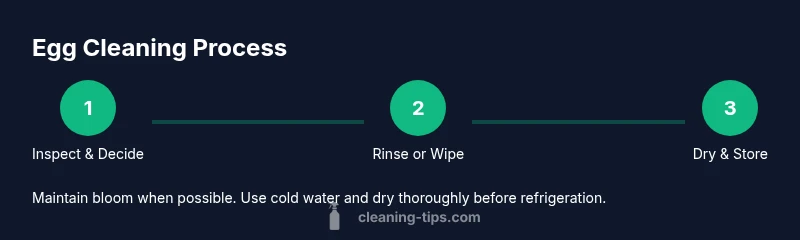
This section provides an overview of the practical steps used in practice, summarized for quick reference. For the full, step-by-step instructions, see the dedicated STEP-BY-STEP block below.
- Remove excess dirt using a dry cloth or soft brush.
- If washing is necessary, rinse briefly under cold running water, holding the eggs level to reduce water entry.
- Dry thoroughly with a clean towel or air-dry on a rack.
- Store promptly in the refrigerator in a clean container or egg carton.
- Inspect shells for cracks before use and discard any compromised eggs.
Note: The goal is to preserve the bloom as much as possible, thus avoid frequent washing and keep eggs cold after cleaning. See visuals in the infographic for best practices.
Storing washed eggs and ongoing care
After cleaning, store eggs in their carton or an egg tray to maintain their shape and prevent odor absorption. Refrigeration is recommended for most households, especially in warm climates. Keep eggs away from foods with strong odors, and label storage with date to track freshness. If you plan to use eggs soon after cleaning, ensure they are dry and cold. Maintaining consistent temperatures reduces condensation and slows microbial growth. Cleaning Tips emphasizes that maintaining a clean, organized egg-keeping area helps ensure safety and quality over time.
Tools & Materials
- Clean sink or large bowl for rinsing(Use cold water and avoid soaking eggs)
- Cold running water(Never use hot water; warmth can promote bacterial growth)
- Soft brush or lint-free cloth(Gentle on shells to avoid cracking)
- Clean towels or drying rack(Thorough drying prevents moisture-related spoilage)
- Mild unscented soap (optional, not recommended for washing eggs)(If used, rinse eggs thoroughly and consider not using soap on shells)
- Separate container or carton for storage(Keep eggs cold and away from strong-smelling foods)
Steps
Estimated time: 25-40 minutes
- 1
Gather and inspect
Bring eggs to a clean workspace and quickly inspect for cracks, dirt, or manure traces. Remove any obviously damaged eggs and set them aside for disposal. This initial check prevents contaminated eggs from entering the cleaning process.
Tip: Handle eggs gently to avoid cracks; cracks can allow bacteria in. - 2
Choose cleaning method
Decide between a light dry wipe or a brief cold-water rinse. Dry wipe is preferred to preserve the bloom; use a damp cloth only if necessary and ensure quick drying afterward.
Tip: Keep water usage minimal to limit moisture exposure. - 3
Rinse if needed
If dirt remains, rinse under cold running water while holding the egg level and away from other eggs. Do not soak the eggs, which can push dirt inside through the pores.
Tip: Work one egg at a time to avoid cross-contamination. - 4
Dry thoroughly
Pat eggs dry with a clean towel or place on a drying rack until completely dry. Moisture left on shells invites bacteria and odors.
Tip: Ensure no damp spots before storing. - 5
Store promptly
Place cleaned eggs back into their carton or a dedicated container and refrigerate promptly. Temperature control is key to maintaining freshness and safety.
Tip: Label with date and use within a safe window.
Questions & Answers
Should you wash farm-fresh eggs?
Washing farm-fresh eggs is optional and should be done only if they are visibly dirty. The bloom helps protect them, so washing reduces that protection. If washing is necessary, use cold water and dry immediately.
Washing farm-fresh eggs is optional and best avoided unless they’re visibly dirty; if you must, use cold water and dry quickly.
Is it safe to use soap or detergent on eggs?
No. Soap can leave residues on the shell and may be absorbed. Use only water and a gentle wipe if needed.
Soap is not recommended for washing eggs; stick to water and gentle wiping if needed.
Can I refrigerate eggs after washing?
Yes. Refrigeration after washing helps slow bacterial growth. Ensure eggs are completely dry before placing in the fridge.
Yes, refrigerate washed eggs, making sure they’re dry first.
What if an egg cracks during washing?
Discard cracked eggs to prevent bacterial intrusion. Use only intact eggs for cleaning and storage.
If an egg cracks while cleaning, throw it away to stay safe.
How do I manage dirt on eggs from a farm?
Wipe away large dirt with a dry cloth first, then use a quick cold-water rinse if needed. Dry immediately afterward.
Wipe off stubborn dirt with a dry cloth, then rinse briefly with cold water and dry thoroughly.
How long will cleaned eggs stay fresh?
Stored properly in a fridge, cleaned eggs should be used within a safe window, typically within a week or two, depending on initial freshness.
Keep cleaned eggs refrigerated and use within a reasonable timeframe for best quality.
Can I reuse the same towel after cleaning eggs?
It’s best to have a dedicated towel for egg cleaning to avoid cross-contamination with other kitchen activities.
Use a dedicated towel for eggs to keep your kitchen hygienic.
Watch Video
The Essentials
- Wash only when necessary to protect the bloom.
- Rinse with cold water, not hot, and dry completely.
- Store cleaned eggs promptly in a cool area or refrigerator.
- Handle eggs gently to avoid cracks and contamination.
- Follow basic kitchen hygiene to prevent cross-contamination.