How to Clean Quartz Countertops Stains: A Practical Guide
Learn proven methods to remove stains from quartz countertops without damage. This step-by-step guide covers safe cleaners, test spots, and maintenance for a pristine kitchen.


You can remove most quartz countertop stains by following a gentle, non-abrasive routine. Start by testing a small area, then use a soft cloth with mild dish soap and warm water, plus a non-abrasive cleaner. For tougher stains, apply a paste of baking soda and water, wait 5–10 minutes, and rinse.
Why quartz stains can appear and how they behave
Quartz countertops are engineered to be hard and non-porous, which makes them resistant to many stains. However, pigments, oils, dyes, and acidic foods can still leave marks if spills aren’t wiped up promptly. The Cleaning Tips team notes that some stains look dramatic but are usually surface level and removable with gentle methods. For best results, address spills quickly and avoid rubbing hard with abrasive tools, which can dull the surface. Understanding stain behavior helps homeowners choose the right cleaner and technique, reducing the need for costly refinishing. When in doubt, opt for mild, pH-neutral cleaners and always test in an inconspicuous area before wider application to prevent any unintended discoloration.
Key takeaway: know your stain type
- Oil-based stains: leave a greasy film that may appear darker on light counters.
- Pigment-based stains: colored substances like wine or coffee that can cling to the resin binder if left to sit.
- Mineral stains: mineral buildup from hard water can appear chalky or cloudy.
According to Cleaning Tips, most everyday stains respond to a careful cleaning routine without harsh products. The team found that consistent, gentle cleaning yields the best long-term results for quartz surfaces.
What to avoid on quartz countertops
Avoid abrasive pads, steel wool, and strong solvents that can scratch or dull the resin binder. Do not rely on bleach or highly acidic cleaners for prolonged contact, as they can degrade the surface over time. Stick to soft cloths, a mild dish soap, and a non-abrasive quartz-safe cleaner for routine upkeep. If you’re unsure about a product, perform a small patch test first and consult manufacturer care guidelines. This helps preserve the counter’s gloss and longevity while minimizing risk of etching.
Pre-clean prep: tools, workspace, and safety
Prepare a clean workspace and gather essentials: microfiber cloths, a spray bottle with warm water, a mild dish soap, baking soda, a non-abrasive quartz-safe cleaner, and a plastic scraper for residue. Always wipe spills promptly to prevent setting. If you have a stubborn stain, set the paste on for a short dwell time and rinse thoroughly with water. Keeping drawers and cabinets nearby helps keep your cleaning routine efficient, reducing the chance of leaving cleaner on the surface longer than needed.
When to test a patch and how to do it correctly
Testing a patch ensures your chosen method won’t damage the finish. Dampen a small, inconspicuous area with your cleaner and wait for a few minutes to observe any changes. If there’s no adverse reaction, you can proceed to treat the larger stain. For dye-rich stains, a baking soda paste applied for a brief period may be more effective than plain soap. Always rinse well and dry with a lint-free cloth to avoid water spots.
Practical stain-removal approaches you can trust
- Baking soda paste: mix baking soda with water to form a thick paste, apply to stain, cover with plastic wrap if you’re away, and wipe off after 5–10 minutes before rinsing and drying.
- Mild detergent method: a few drops of dish soap in warm water on a microfiber cloth can lift many stains without leaving residue.
- Quartz-safe cleaners: follow label directions for use on quartz, and rinse thoroughly after cleaning to remove any cleaner film.
The Cleaning Tips analysis shows that many typical kitchen stains respond well to these methods, with minimal agitation and proper rinsing. This approach helps maintain the countertop’s shine and surface integrity over time.
Special cases: stubborn or unusual stains
Some stains require a slightly different approach. For ink or dye stains, hydrogen peroxide performed briefly can help, but only if it’s been tested first. For mineral deposits, a diluted vinegar solution may be tempting, yet prolonged exposure isn’t recommended due to possible resin damage; instead, rely on a baking soda paste or a commercial quartz cleaner. Remember to re-rinse and dry completely after each treatment to prevent streaks.
Maintenance habits to keep quartz countertops looking new
Establish a simple daily routine: wipe spills immediately, use a soft cloth, and avoid abrasive pads. Regular cleaning with a mild soap solution keeps the surface clear of residues that could attract more stains. Use a protective mat under highly staining items (like coffee makers) and place coasters beneath acidic drinks. Periodically inspect the edges for dullness or chips and address them early with a quartz-safe polish if recommended by the manufacturer.
When to seek professional help and what to expect
If a stain persists after multiple gentle cleanings, consider consulting a professional restorer who specializes in quartz surfaces. They can assess whether any sealant or resurfacing is appropriate according to the counter’s original fabrication. The Cleaning Tips team suggests documenting the stain type and cleaning attempts to share with the technician, which can speed up the process and prevent unnecessary treatments.
Tools & Materials
- Microfiber cloths (soft)(Lint-free for streak-free drying)
- Mild dish soap(Dilute in warm water)
- Warm water(Needed for dilution and rinsing)
- Baking soda(Used for gentle pastes)
- Non-abrasive quartz-safe cleaner(Follow label; avoid harsh solvents)
- Spray bottle(For easy application)
- Plastic scraper or card(Gently lift dried residue)
- Gloves (optional)(Protect hands during longer cleanups)
Steps
Estimated time: 15-25 minutes
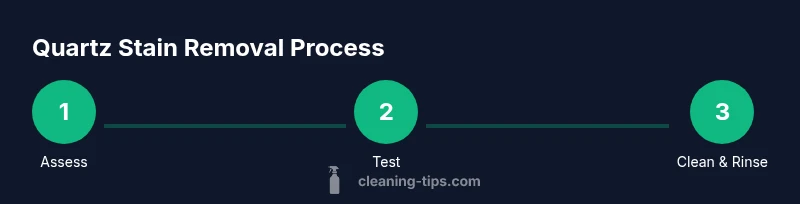
- 1
Blot and assess spill
Blot the stained area with a dry microfiber cloth to remove excess liquid. Do not rub, which can push stain deeper. Assess the type and severity of the stain to choose the right method.
Tip: Act quickly to prevent setting the stain. - 2
Test a small area
Apply a tiny amount of cleaner on a hidden corner. Wait 2–3 minutes to observe any reaction before proceeding.
Tip: If a discoloration occurs, stop and switch to a milder method. - 3
Apply cleaning solution
Dampen a microfiber cloth with warm water and mild dish soap, then gently wipe the stain using circular motions. Rinse with a clean cloth and water.
Tip: Always rinse thoroughly to remove soap film. - 4
Use baking soda paste for stubborn stains
Mix baking soda with water to form a thick paste. Apply to stain, cover with plastic wrap if needed, and let sit 5–10 minutes before wiping away.
Tip: Do not leave paste longer than recommended. - 5
Rinse and dry
Rinse the area with clean water and dry completely with a lint-free microfiber cloth to prevent water spots.
Tip: Drying helps reveal if any stain remains. - 6
Evaluate results
Check the area under good lighting. If stain persists, repeat with a milder method or consider a quartz-safe cleaner.
Tip: Avoid multiple aggressive treatments in one day.
Questions & Answers
What causes quartz countertops to stain even though they are non-porous?
Quartz is non-porous, but some spills contain dyes, oils, or pigments that can cling to the surface if left untreated. Prompt cleanup and mild cleaners typically prevent lasting marks. If a stain lingers, gentle paste treatments are often effective without harming the surface.
Quartz is non-porous, but stains can occur from dyes or oils that sit on the surface. Clean promptly with mild cleaners; most stains respond to gentle pastes if needed.
Can I use bleach on quartz countertops?
Bleach and other harsh solvents can degrade the resin binder in some quartz surfaces. It’s best to avoid them and rely on mild dish soap, water, and quartz-safe cleaners. If in doubt, test a small area or consult the countertop manufacturer.
Bleach can damage some quartz finishes. Use milder cleaners and test first if unsure.
Do I need to seal quartz countertops after cleaning?
No sealing is required for quartz countertops. They are engineered to be non-porous and stain-resistant. Regular cleaning and quick spill management are usually sufficient to maintain their appearance.
No sealing needed for quartz countertops; just clean regularly and wipe spills promptly.
What should I avoid putting on quartz countertops?
Avoid abrasive pads, ammonia-based cleaners, acetone, and prolonged exposure to highly acidic cleaners. Use soft cloths and quartz-safe cleaners to protect the countertop’s shine and durability.
Don’t use abrasive pads or harsh solvents; stick to soft cloths and quartz-safe cleaners.
How long should baking soda paste sit on a stain?
Typically 5–10 minutes is enough for a baking soda paste to lift most stains. For stubborn marks, you can reapply once, but do not exceed the recommended dwell time to avoid surface dulling.
Let the baking soda paste sit for about 5–10 minutes, then rinse and dry.
Watch Video
The Essentials
- Test cleaners first on a hidden area
- Use gentle, quartz-safe methods for most stains
- Rinse and dry completely after each step
- Avoid harsh abrasives and strong solvents