Is Washing Better Than Wiping: A Practical Comparison
Explore whether washing beats wiping for cleaning tasks. This objective guide compares soil removal, hygiene, water use, and practicality, with task-based recommendations and practical tips.


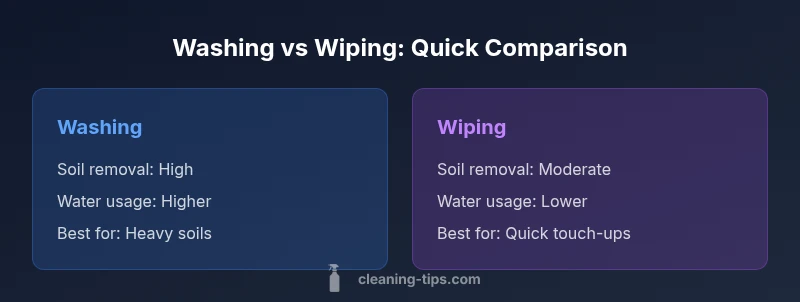
In most cleaning tasks, washing with soap and water provides better soil removal and hygiene than wiping alone, especially for hands and high-touch surfaces. This comparison explains when to wash, when wiping suffices, and how to combine both methods for safer, more efficient cleaning. Use washing for heavy soils and drying for complete sanitation, then wipe as needed for touch-ups.
Why the Question Matters in Everyday Cleaning
Cleaning decisions affect hygiene, waste, and time. The question of is washing better than wiping comes up in homes every day, especially when tackling high-traffic surfaces. According to Cleaning Tips, the choice between washing and wiping hinges on soil type, surface material, and the cleaning goal. The analysis highlights that mechanical action with soap and water often yields superior soil removal and fewer residues than wiping with a dry cloth. For high-traffic areas like kitchen counters and bathroom fixtures, washing followed by thorough drying tends to improve both perceived cleanliness and measurable hygiene compared with wiping alone. Yet wiping remains valuable for quick touch-ups, delicate surfaces, and when water access is limited. The aim is to balance effectiveness with practicality while minimizing waste, which is why this guide stays neutral and evidence-based.
What We Mean by Washing vs Wiping
Washing uses water and soap to loosen and emulsify soils, often with some amount of mechanical action (scrubbing or kneading) and a rinse to remove loosened material. Drying afterward prevents watermarks and helps complete the cleanliness process. Wiping relies on friction and a cleaning cloth or disposable wipe to lift soils; it may involve a cleaning solution but does not require rinsing. Understanding these definitions helps tailor the approach to surfaces, soils, and context.
Hygiene and Soil Removal: How Washing Performs
Soap lowers surface tension and emulsifies oils, allowing water to carry soils away. When combined with deliberate mechanical action and adequate contact time, washing can remove residues that wiping may leave behind, improving hygiene on frequently touched areas. Cleaning Tips analysis shows that proper technique—pre-wetting, apply soap, agitate, and rinse—consistently supports deeper cleaning than dry wiping alone, especially on non-porous surfaces. Drying that follows is essential to minimize microbial survival and streaks. In many households, this combination reduces the likelihood of residual oils and sticky films that can harbor bacteria over time.
Surfaces and Scenarios: When Wiping Is Sufficient
Wiping can be effective for light soils, dust, and quick refreshes on smooth surfaces where water may cause damage. For electronics, laminated surfaces, and coatings sensitive to moisture, a damp or dry microfiber wipe with a small amount of cleaner is often safer than a full wash. For spot cleaning and frequent touchpoints, a fast wipe can reduce downtime, preserve materials, and keep spaces looking tidy between deeper cleanings. Wiping also shines in contexts where rapid turnover matters, such as in kitchens between busy meal prep sessions or in bathrooms between uses when immediate sanitization isn’t required.
Water Use, Environmental Considerations and Waste
Water use and waste are central to sustainable cleaning. Washing typically uses more water and soap than a wipe, especially when rinsing is involved. However, reusing cloths and choosing concentrated cleaners can mitigate impact. Disposable wipes add plastic waste and may require frequent replacement, increasing landfill contribution unless responsible disposal is practiced. Cleaning Tips emphasizes selecting methods that minimize waste while maintaining hygiene, such as cloth-based cleaning and careful rinse management. Adopting a routine that pairs washing for deep cleaning with microfiber wiping for quick upkeep can significantly lower overall environmental impact when done thoughtfully.
Practical Techniques: How to Wash Effectively
To wash effectively, start with a suitable soap or detergent appropriate for the surface. Use warm but not hot water and apply with a washcloth or sponge, then work in small sections with deliberate, circular motions. Rinse thoroughly to remove loosened soils, and dry with a clean towel to prevent watermarks and microbial growth. For tougher soils, repeat steps with additional scrubbing pressure and time. Finish by inspecting the surface for any remaining residues and re-cleaning if necessary. The goal is consistent, thorough cleaning rather than a quick but incomplete effort. For best results, rotate cleaning tasks to ensure each area receives adequate attention over time and reduce the risk of recontamination during maintenance.
Practical Techniques: How to Wipe Effectively
A wipe-based approach shines for quick refreshes and delicate surfaces where water could cause damage. Use a microfiber cloth or disposable wipe with an appropriate cleaner, working in a consistent pattern to lift soils rather than smear them. Avoid excessive moisture on electronics and wood finishes by selecting damp—not soaking-wet—patterns. For best results, finish with a brief dry wipe to remove streaks and ensure dryness. When possible, follow with a short wash cycle for areas that accumulate oils or fingerprints to prevent buildup over time.
Making the Decision: A Task-Based Guide
For heavy soils on countertops and appliances, washing with soap, water, and proper drying yields the best hygiene. For quick touch-ups, lightly soiled areas, or water-sensitive surfaces, wiping is often sufficient and faster. For bathrooms and kitchens, a routine that alternates: routine wipe-downs for maintenance, with periodic washes for deep cleaning, helps balance hygiene and efficiency. Cleaning Tips recommends outlining a cleaning schedule that fits your space and uses both methods strategically. Consider the material type, the likelihood of contamination, and your available time when assigning each task to a method.
Integrating Washing and Wiping for Best Results
The most robust approach combines washing for deep cleaning and wiping for maintenance. Use washing to remove difficult soils and sanitize when needed, then switch to wiping for quick refreshes and to reduce water use. Always dry after washing to minimize microbial growth and avoid watermarks. By integrating both methods, households can maintain higher hygiene standards, reduce long-term wear on surfaces, and control waste more effectively. With thoughtful planning, you can create a simple, repeatable system that keeps spaces feeling fresh without overcomplicating routine cleaning.
Comparison
| Feature | Washing | Wiping |
|---|---|---|
| Soil removal | High with soap and mechanical action | Moderate to high depending on wipe quality |
| Hygiene potential | Higher when paired with thorough drying | Lower unless antimicrobial wipe is used |
| Time efficiency | Longer process with multiple steps | Faster for light soils and touch-ups |
| Water usage | Higher water use due to rinsing and wet work | Lower water use; primarily friction and moisture |
| Waste generated | Water, soap packaging, and cloth maintenance | Disposable wipes contribute to waste; cloth-based options reduce waste |
| Best for | Heavy soils, sanitizing needs, high-traffic areas | Quick touch-ups and moisture-sensitive surfaces |
Strengths
- More effective soil removal with rinsing and soap
- Higher hygiene potential with thorough drying
- Flexible for different surfaces and soils
- Can reduce watermarking and streaking when paired with proper drying
Weaknesses
- Higher water usage and longer process
- Requires access to water, soap, and drying tools
- More planning and time per clean
- Potential waste from disposable wipes if used extensively
Washing generally offers better hygiene and deeper cleaning than wiping, but wiping remains valuable for quick touch-ups and delicate surfaces.
Choose washing for heavy soils and sanitation; opt for wiping for quick refreshes and moisture-sensitive surfaces. A mixed approach often yields the best balance of cleanliness, time, and waste.
Questions & Answers
Is washing always better than wiping for kitchen surfaces?
In most cases, washing with soap and water provides deeper soil removal and better hygiene than wiping alone, especially for high-touch areas. Wiping remains useful for quick touch-ups and reducing downtime between washes. The best approach blends both methods according to the soil and surface.
Washing usually cleans better, but use wiping for quick refreshes when you’re short on time.
When should I wipe instead of washing?
Wiping is appropriate for light soils, dusting, and moisture-sensitive surfaces where water could cause damage. It’s also useful for quick maintenance between deep cleans and on surfaces that are difficult to dry completely.
Wipe for light soils or delicate surfaces and use washing for deeper cleaning.
Can I reuse cloths to save water and reduce waste?
Yes, reusing clean microfiber cloths can reduce waste and water use, especially when paired with a local rinse and proper drying. Rotate towels and wash them regularly to maintain cleaning effectiveness.
Reuse clean cloths to cut waste and water use.
What about hands hygiene—washing vs sanitizing?
For hands, washing with soap and water is generally the preferred method for removing soils and microbes. Sanitizers can be used if soap and water aren’t available, but they may be less effective on dirt-heavy hands. Always follow with air or towel drying.
Wash hands with soap and water when possible; sanitizer if water isn’t available.
Do temperature and water quality affect washing efficacy?
Temperature and water quality can influence cleaning results. Warm water often improves soap effectiveness and soil suspension, while very hard water can leave mineral residues if not rinsed well. Use clean water and a suitable detergent for best outcomes.
Warm water usually helps soap work better; use good water quality and rinse well.
The Essentials
- Wash for deep cleaning and hygiene
- Wipe for quick touch-ups and delicate surfaces
- Combine methods to balance waste and efficiency
- Inspect surfaces to prevent streaks and residue
- Choose method based on soil type and surface health