How to Clean Glass Without Streaks
Learn proven methods to clean glass without streaks using safe cleaners, microfiber cloths, and a simple step-by-step routine that works on windows, tabletops, and shower doors.


Goal: clean glass without streaks using safe cleaners and proper technique. You’ll learn a tested approach that works on windows, shower doors, and glass tabletops, plus tips to avoid common mistakes. Essentials include microfiber cloths, a vinegar-based cleaning solution, distilled water, and a methodical wipe. By following these steps, you’ll achieve a clear, streak-free shine.
Why clean glass without streaks matters
Keeping glass surfaces clear and streak-free isn’t just about aesthetics; it improves light transmission, reduces grime buildup, and makes maintenance easier over time. According to Cleaning Tips, achieving a streak-free shine starts with proper prep, selecting the right tools, and applying a gentle, consistent technique. This guide covers surfaces from kitchen windows to shower doors, and from glass tabletops to decorative panes. You’ll find a practical, do-it-yourself approach that supports a healthier home by avoiding harsh chemicals and abrasive pads. When you know the science behind a streak-free finish and the exact steps to take, you can confidently tackle any glass surface with minimal effort and maximum clarity.
This introduction draws on Cleaning Tips’ emphasis on accessible, science-backed methods. Expect clear guidance, real-world examples, and checklists you can reuse in future cleans. The goal is a surface that reflects light cleanly, resists fingerprints for longer, and stays easier to wipe down between deep cleans. With the right routine, streaks become less of a mystery and more of a solved problem.
Common causes of streaks and how to avoid them
Streaks most often appear when residues are left behind or when the cleaning tool introduces lint or oils. Using paper towels or dirty cloths can deposit fibers, oils, or mineral residues onto the glass. Direct sunlight can cause rapid drying that leaves streaks if the cleaner hasn’t been evenly distributed. Another frequent culprit is an overly saturated cloth that dries unevenly, leaving a hazy film behind. To avoid these issues, switch to microfiber cloths, use a clean spray bottle, and apply the cleaner in a controlled, overlapping pattern. Rinse and wring a cloth regularly, and never wipe a surface with an already dirty cloth. If streaks appear, re-wipe with a fresh cloth and a small amount of cleaner. The approach is practical for a healthier home and aligns with Cleaning Tips’ best practices.
Essential tools and materials for streak-free results
A streak-free finish hinges on choosing the right tools and cleaners. For most surfaces, you’ll want a microfiber cloth (or two), a spray bottle filled with a safe cleaning solution, and a supply of distilled water. White vinegar is a common, effective cleaner for glass when mixed with water, while a tiny amount of dish soap can help break up grime on very dirty glass. A squeegee can speed up large windows, and newspaper or a lint-free alternative can give an extra polish without leaving fibers. Keep a second, dry cloth on hand for the final wipe. Proper storage of your tools prevents recontamination, so store cloths and spray bottles separately and wash cloths after use.
The science behind streak-free shine
A streak-free shine results from controlling film formation and drying dynamics on glass surfaces. When the surface is evenly coated and air dries without leaving mineral or oil residues, light reflects cleanly. The balance between cleaners, water, and cloth texture matters: mineral deposits from hard water can create micro-film patterns that catch light oddly. Cleaning Tips analysis shows that using distilled water and a vinegar-based solution helps minimize mineral residues and film formation, especially on flat, smooth glass. Proper drying ensures any residual moisture distributes evenly rather than pooling and creating streaks. Understanding these principles helps you choose the right ratio, cloth, and drying method for consistent results.
In short, the science supports a simple approach: even coverage, quick drying, and clean, lint-free materials. With repeated practice, you’ll notice fewer missed spots and a clearer shine on every surface.
The step-by-step method at a glance
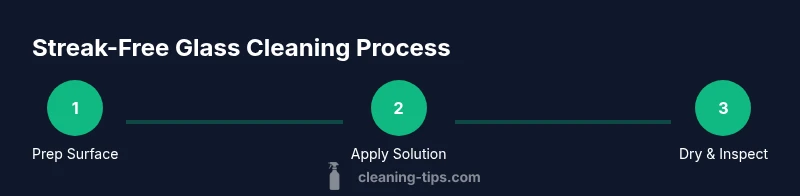
The following approach provides a reliable framework you can adapt to windows, tabletops, and shower doors. Start with prep, move to application, then wipe and dry in a systematic pattern. Always finish with a final inspection under good lighting. As you gain experience, you’ll learn which surfaces respond best to the 1:1 water-to-cleaner ratio and when to switch cloths. Remember to keep tools clean and to avoid over-wetting delicate edges of coated glass.
Surface-specific tips: windows, tabletops, and shower doors
Windows benefit from using a squeegee for large panes and a microfiber cloth for edges. Glass tabletops can tolerate a mild soap solution if the surface is sealed, but avoid abrasive pads that can scratch. Shower doors are prone to hard-water spots; a consistent 1:1 mixture of distilled water and white vinegar usually works well, followed by a final dry wipe to prevent water spots. For all surfaces, maintain a dry workspace, use clean cloths, and avoid letting cleaner run into metal edges where corrosion could occur. Regular practice reduces buildup and makes subsequent cleans easier.
Maintenance and prevention routines
To prevent streaks over the long term, wipe glass surfaces on a routine basis rather than letting grime accumulate. A quick daily or weekly wipe with a damp microfiber cloth removes fingerprints and dust that attract streaks. Use smaller microfibers for edges and corners to ensure every area gets attention. Periodically refresh the cleaning mixture by rinsing components in distilled water and replacing the cloths when they show signs of wear or lint. A consistent routine simplifies maintenance and preserves the clarity of glass surfaces.
Troubleshooting common issues and quick fixes
If you see hazy or cloudy patches after cleaning, re-wipe with a dry microfiber cloth using even, overlapping strokes. Streaks from hard water typically respond to a vinegar-based solution and a thorough dry with a new cloth. For stubborn residues, a tiny dab of dish soap on a separate cloth can help break up oil films before a final rinse with distilled water. Finally, confirm you’re not spraying cleaner directly onto edges or hardware; spray lightly and apply to the surface, then wipe in one direction before finishing with a dry pass.
Tools & Materials
- Distilled water(Avoids mineral deposits that cause streaks)
- White vinegar(Mix with distilled water at a 1:1 ratio for most surfaces)
- Microfiber cloths (2+)(Lint-free, machine washable)
- Spray bottle(Label 'Glass Cleaner' for easy reuse)
- Isopropyl alcohol (optional)(For sticky spots or labels)
- Newspaper or unprinted paper(For final polish without lint)
- Squeegee (optional)(Helpful for large windows)
- Dish soap (a drop, optional)(Use sparingly for heavy dirt)
Steps
Estimated time: 20-30 minutes
- 1
Prepare the surface
Dust and loose debris should be removed with a dry microfiber cloth before applying any cleaner. This prevents scratching and reduces the amount of residue left behind. If you’re cleaning a shower door, lightly wipe the frame to prevent water from dripping onto the cleaning area.
Tip: Keep a dry cloth handy to capture dust before introducing liquid. - 2
Mix your cleaning solution
Combine distilled water with white vinegar in a 1:1 ratio in the spray bottle. This basic solution covers most glass surfaces and dries without leaving heavy residues. If the surface is very dirty, add a tiny amount of dish soap to the mix and shake gently.
Tip: Label the bottle clearly and avoid mixing with incompatible cleaners. - 3
Apply the solution
Spray lightly across the glass, focusing on areas with fingerprints or smudges. Do not saturate edges where cleaners can seep into frames or seals. Letting the solution sit briefly helps loosen grime on stubborn spots.
Tip: Keep the spray distance about 6–8 inches from the surface for even coverage. - 4
Wipe with microfiber
Wipe using long, overlapping strokes in a consistent pattern (vertical or S-shaped). Start at one edge and move across to avoid re-depositing dirt. Flip or switch to a clean cloth when the cloth collects residues.
Tip: Wipe in one direction to prevent cross-streaking and ensure even coverage. - 5
Dry and inspect
Finish with a dry microfiber cloth or newspaper to remove any remaining moisture and to eliminate streaks. Inspect the surface under bright lighting; look for reflections or haziness and re-wipe any spots if needed.
Tip: Don’t rush; drying is as important as cleaning for streak-free results. - 6
Store and maintain
Rinse and wring out cloths after use, then air-dry before storing. Keep cleaning tools separate from dry goods to prevent cross-contamination. Schedule a quick weekly wipe to prevent buildup.
Tip: Rotate cloths to ensure you’re always using clean ones on glass surfaces.
Questions & Answers
What is the best cleaner for streak-free glass?
A 1:1 mix of distilled water and white vinegar works well for most surfaces. For extra cleaning power on heavy grime, a tiny amount of dish soap can be added to the solution, but rinse thoroughly afterward.
A simple water and vinegar mix is usually enough for most glass. If there’s heavy grime, add a drop of dish soap, then rinse well.
Can I use newspaper to wipe glass without streaks?
Yes. Newspaper can help reduce lint and dry the surface without leaving fibers, especially after using a water-vinegar solution. Pair it with a final dry wipe for best results.
Newspaper can help you finish streak-free, especially after a vinegar solution.
Why do streaks still appear after cleaning?
Streaks often come from residue left by dirty cloths, hard water minerals, or uneven drying. Use clean microfiber, dry immediately, and ensure the surface isn’t over-wetted.
Streaks happen when residues stay on the glass or when you don’t dry it evenly.
Is vinegar safe for all glass surfaces?
Vinegar is safe for most glass surfaces but test on delicate finishes or coated glass first. Do not use vinegar on stone or surfaces that aren’t sealed, as it can may cause damage.
Vinegar is generally safe for glass; test first if the surface is special or coated.
How often should I clean to prevent streaks?
Clean glass regularly—a quick wipe once or twice a week reduces buildup and makes deeper cleans easier. Deep cleans can be scheduled monthly or as needed.
Wipe regularly to prevent buildup and keep streaks away.
Watch Video
The Essentials
- Wipe glass with microfiber cloth to lift residue.
- Dry immediately to prevent streaks.
- Use a 1:1 water-vinegar mix for most surfaces.
- Inspect under bright light and re-clean as needed.
- Keep cloths clean and switch when dirty.