What Do You Use to Clean Quartz Countertops: A Practical Guide
Discover safe, effective techniques for cleaning quartz countertops using mild cleaners, water, and soft cloths. Learn do's and don'ts, stain removal, and maintenance to keep your surface looking new.


To clean quartz countertops, use a mild dish soap with warm water and a soft microfiber cloth. Wipe spills promptly and avoid harsh cleaners like bleach, ammonia, or highly acidic products. For stubborn stains, apply a quartz-safe, non-abrasive cleaner, rinse, and dry. Quartz surfaces don’t need sealing.
What do you use to clean quartz countertops
Quartz countertops are a popular choice in modern kitchens for their durability and low maintenance. But maintaining their luster requires the right approach. In short, the answer to the question what do you use to clean quartz countertops is simple: a mild dish soap diluted in warm water, applied with a soft cloth or microfiber. Avoid abrasive tools and harsh chemicals that can dull the surface or leave streaks. According to Cleaning Tips, the key is to keep the cleaning routine gentle, consistent, and free from solvents that break down the resin binder. The non-porous surface resists most stains, but it still needs protection from damage caused by harsh cleaners or abrasive scrubbing. For daily maintenance, wiping away spills promptly with a soft cloth reduces the need for heavy stain treatment. When you do tackle stains, you should start with a gentle soap solution and only escalate to a specialty quartz cleaner if the stain persists. The goal is clear: maintain the countertop’s smooth, even finish while avoiding micro-scratches or discolouration.
Do's and don'ts: safe cleaners and methods
This section lists actionable guidelines for what to use and what to avoid when cleaning quartz countertops. Do use a mild, pH-neutral dish soap mixed with warm water and apply with a soft microfiber cloth. Don't use bleach, ammonia, lemon juice, vinegar, or abrasive pads; these can degrade the resin binder and dull the finish. Do rinse with clean water after wiping and dry with a soft towel to prevent water spots. If you’re unsure whether a cleaner is quartz-safe, check the label for 'pH-neutral' or 'safe for quartz' before applying. The Cleaning Tips team emphasizes using a dedicated quartz-safe cleaner only when needed. Regular cleaning with a simple solution is usually enough to keep the surface looking new. For those who want a more thorough routine, do a weekly wipe-down with a quartz-approved cleanser to remove any residue that soap might leave behind. In daily life, minor spills like coffee or juice should be wiped up immediately to prevent staining and streaks.
Stain removal techniques for quartz
Tough stains on quartz countertops respond best to targeted, non-abrasive methods. Start with a paste made from baking soda and water, applied to the stained area and left for 15–20 minutes. Gently scrub with a soft cloth and rinse thoroughly. For more stubborn stains, cover the paste with plastic wrap to keep it moist and let it sit longer, up to 24 hours, before wiping away and rinsing. If stains persist, switch to a quartz-safe cleaner following the product’s directions. Always finish with a wipe of clean water and dry with a microfiber towel. The key is patience and using products specifically labeled for quartz to avoid dulling the surface or leaving cloudy marks.
Daily care and maintenance routine
A lightweight daily routine keeps quartz countertops looking like new. Start by wiping with a solution of mild dish soap and warm water using a soft microfiber cloth. Rinse the area with clean water and dry completely to prevent streaks. Once a week, perform a deeper clean with a quartz-safe cleaner or a mild, pH-neutral cleaner, especially around the sink and behind faucets where soap scum can accumulate. Avoid abrasive scrubbing and never mix cleaners with bleach or ammonia. Regular care also means avoiding cutting directly on the surface, using trivets for hot pots, and promptly cleaning spills from wine, coffee, or oils to reduce the risk of staining. A small, dedicated spray bottle for quartz-safe solutions helps maintain a quick and consistent routine.
Handling spills, heat, and everyday messes
Spills should be dealt with promptly using a soft cloth to prevent staining. For hot cookware, always use a trivet or heat-resistant mat—exposure to high heat can damage the resin binder over time. When dealing with liquids like wine, coffee, or fruit juice, wipe with a damp cloth and dry thoroughly to minimize streaks. For sticky residues, a little warm water and mild soap on a microfiber cloth works well without scratching the surface. Never use scouring pads or steel wool on quartz countertops; their abrasiveness can scratch the surface and dull the finish.
How to choose the right cleaner
Looking at cleaners is not just about smell; it’s about formulation. Choose a cleaner labeled as pH-neutral and safe for quartz surfaces. If you’re unsure, start with a simple mild dish soap and warm water. For persistent stains, purchase a cleaner specifically formulated for quartz countertops and follow the manufacturer’s instructions. Always check for warnings about bleach, ammonia, or acidic cleaners. A good rule is to keep a dedicated quartz-safe cleaner in a spray bottle for quick, daily maintenance and reserve harsher products for rare, specialized needs. Remember, the goal is to preserve the surface sheen and prevent micro-scratches over time.
Common mistakes to avoid
Avoid common pitfalls that can compromise quartz countertops: using bleach or ammonia-based cleaners, employing abrasive pads, and letting harsh cleaners sit on the surface. Do not use highly acidic substances like vinegar or lemon juice frequently, and never use abrasive powders that can scratch the finish. Also, don’t rely on hot oil or grease cleaners that may leave a residue. After cleaning, always dry the surface with a clean microfiber towel to prevent water spots and streaks. Following these guidelines helps maintain the countertop’s original appearance for years.
Step-by-step guide overview
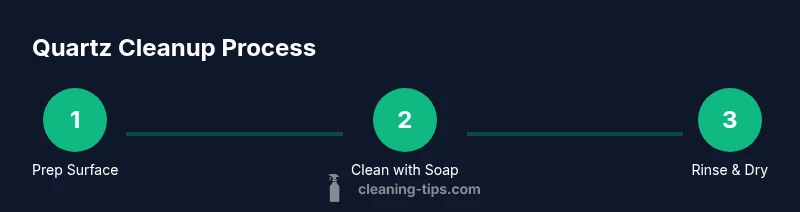
This article follows a practical, step-by-step approach to cleaning quartz countertops. It emphasizes gentle, quartz-safe methods and explains how to handle daily maintenance, stains, and special cases. By keeping the routine simple and consistent, you protect the countertop’s longevity while preserving its glossy finish. The guidance aligns with Cleaning Tips’ recommendations for safe cleaning practices in kitchen environments.
Tools & Materials
- Mild dish soap(Choose a gentle, fragrance-free formula)
- Warm water(For diluting soap and rinsing)
- Soft microfiber cloth(Lint-free and non-abrasive)
- Non-abrasive sponge(For light scrubbing without scratching)
- Spray bottle(Label for the cleaning solution)
- Drying towel(Use to buff and prevent streaks)
- Quartz-safe cleaner(Optional for tough stains)
- Baking soda(For DIY stain pastes (3:1 with water))
Steps
Estimated time: 15-25 minutes
- 1
Clear the surface and prep the area
Remove all objects and debris from the countertop. Wipe down nearby areas to minimize dirt transfer. This prep reduces scratching and ensures even cleaning across the surface.
Tip: Dust with a dry microfiber cloth first to lift grit before wet cleaning. - 2
Mix a mild cleaning solution
In a spray bottle, combine a small amount of mild dish soap with warm water (roughly 1–2 teaspoons per quart). Gently shake or swirl to create suds. This solution is safe for quartz when used in moderation.
Tip: Label the bottle clearly as a quartz-safe cleaner to avoid cross-use with harsher products. - 3
Wipe the surface with a microfiber cloth
Lightly mist the cleaner on the cloth, not directly on the surface, and wipe in a smooth, circular motion. Avoid saturating the surface; moisture can seep into seams and cause streaks. Repeat if needed for sticky residues.
Tip: Use a fresh section of cloth for each pass to prevent re-depositing grime. - 4
Rinse and dry
Wipe away any soap residue with a clean, damp cloth. Dry thoroughly with a microfiber towel to prevent water spots and streaks. A dry finish helps quartz maintain its shine.
Tip: Drying in a single direction minimizes streaks and helps see any remaining residue. - 5
Address stubborn stains with paste if needed
If stains persist, make a paste with baking soda and water (3:1). Apply to the stain, cover with plastic wrap, and wait 15–60 minutes depending on stain intensity. Gently wipe with a damp cloth and rinse.
Tip: Avoid applying paste directly to edges or seam lines to prevent seepage. - 6
Final buff and inspect
Buff the surface with a clean, dry microfiber cloth until it shines evenly. Inspect for any streaks, residue, or missed spots and address as needed. Store your cleaning supplies out of direct sunlight to maintain effectiveness.
Tip: Keep a dedicated quartz-cleaning kit handy for quick touch-ups.
Questions & Answers
Can I use vinegar on quartz countertops?
Vinegar is acidic and can dull the finish over time; use a mild soap solution instead. For stained surfaces, opt for a quartz-safe cleaner labeled for quartz countertops.
Vinegar can dull the finish over time, so avoid it. Use a mild soap solution and a quartz-safe cleaner if needed.
Is it safe to use bleach on quartz countertops?
Bleach can degrade the resin binder in quartz and should be avoided. Stick to pH-neutral cleaners and mild soap for daily cleaning.
Bleach can damage quartz; avoid it and use quartz-safe cleaners instead.
How often should I clean quartz countertops?
Wipe daily with mild soap and water. Do a deeper clean weekly or as needed, especially if there are stains or heavy residues.
Clean daily with soap and water; do deeper cleans weekly or as needed.
What should I do for tough stains?
Make a baking soda paste, apply to the stain, cover with plastic wrap, and wait up to 24 hours before wiping away and rinsing.
For tough stains, a baking soda paste with plastic wrap can work after a waiting period.
Can I use a microfiber cloth on quartz countertops?
Yes. Microfiber cloths are ideal for gentle cleaning and drying without scratching the surface.
Microfiber cloths are great for safe, gentle cleaning.
Do quartz countertops require sealing?
Quartz countertops do not require sealing. Regular cleaning and gentle care help maintain their appearance.
No sealing needed for quartz countertops.
Watch Video
The Essentials
- Use mild soap and warm water for routine cleaning.
- Avoid bleach, ammonia, vinegar, and abrasive tools.
- Tackle stains with baking soda paste only when needed.
- Dry completely to maintain shine and prevent streaks.