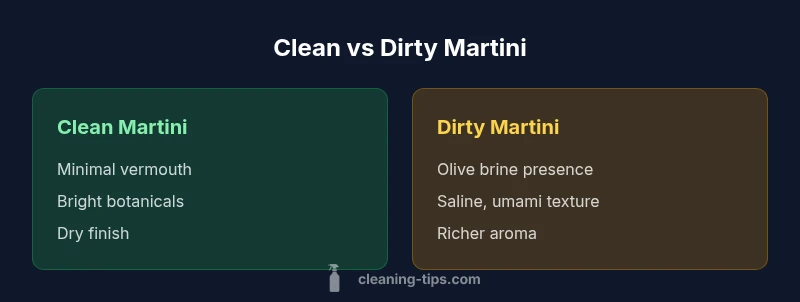
Clean vs Dirty Martini: An Expert Comparison
An analytical, home-bartender friendly comparison of clean and dirty martinis. Learn how vermouth, brine, technique, and garnishes shape flavor, texture, and presentation for better cocktail choices at home.


What is a clean vs dirty martini?
For many home bartenders, the question above is more than a curiosity; it defines how you approach ingredients, balance, and presentation. A clean martini emphasizes a pristine, botanically forward gin or a neutral vodka with a light touch of dry vermouth. By contrast, a dirty martini introduces olive brine, which brings saltiness, texture, and a distinct umami note. If you ask a seasoned bartender, they'd describe it as the difference between a clear, crisp expression and a savory, olive-kissed finish. The term 'clean' signals minimal admixture, while 'dirty' signals a deliberate brine infusion. Vermouth acts as a flavor bridge in the clean-style, whereas the brine in the dirty style shifts the structure toward saline depth. According to Cleaning Tips, optimizing the vermouth-to-spirit balance is a dial for a clean martini, while adjusting brine intensity is the dial for a dirty martini. Preferences vary: some savor bright botanicals and dryness; others seek a saline, comforting finish that brine provides.