Why is my cleanser not working? A practical troubleshooting guide
Struggling with a cleanser that won’t work? Learn fast checks, common causes, and proven fixes to restore cleaning power and safe results at home.


Most likely the cleanser isn’t working because its formula has lost potency or isn’t compatible with your water or surface. Factors like expired product, dilution from hard water, or using too little product reduce results. Try warming water slightly, shake the bottle, apply a small amount to the damp surface, and let it sit for 1–2 minutes before scrubbing and rinsing. If problems persist, check expiry and switch to a surface-appropriate cleaner.
Why this matters: understanding the problem
When a cleanser seems ineffective, it’s easy to assume you’re doing something wrong. In reality, several practical factors can undermine performance. The phrase why is my cleanser not working matters because it points to a mismatch between the product, the surface, and the water conditions. In many homes, simple fixes—like testing on a hidden area, adjusting water temperature, or checking the expiry date—resolve most issues without special tools. This section outlines the core reasons behind poor cleaning results and sets the stage for targeted, safe fixes. Throughout, you’ll see concrete, actionable steps you can take today to reclaim cleaning power without guessing.
Common culprits at a glance
- Expired or degraded formula: After time, cleaners can lose potency and smell different or appear separate.
- Surface compatibility: A cleaner designed for one surface may be ineffective on another, especially if it’s a different material or finish.
- Water quality: Hard water minerals can bind with cleaners, reducing suds and lift.
- Use amount and contact time: Too little product or too-short dwell time lowers effectiveness.
- Temperature and agitation: Cool water and insufficient agitation can hinder emulsification and residue removal.
- Container and storage: A damaged nozzle, clumping, or exposure to heat can alter performance.
Recognizing these factors helps you decide whether to replace the product or adjust your method. Cleaning Tips analysis, 2026, notes that product-surface mismatch and expiry are frequent reasons for underperforming cleansers. The aim is to narrow down quickly to the most likely cause and apply a safe, practical fix.
Start with quick checks you can do in minutes
- Inspect the bottle: Check for clumping, separation, or changes in color or scent that suggest degradation.
- Verify expiry date: If the product is past its date, replace it. Expired cleaners can underperform or become less effective.
- Test on a hidden area: Before broad application, test on a small, inconspicuous patch to gauge results.
- Confirm surface compatibility: Read the label for surface types the product is intended for (e.g., glass, stainless steel, ceramic).
- Assess water temperature: Warm water (not hot) often improves cleaning action and helps emulsify oils. If you’re using hard water, consider softening or using a cleaner formulated for hard water.
Diagnostic pathway: symptom → likely cause → quick fixes
If you notice streaks, residue, or poor lifting of grime, start with the simplest explanations: insufficient product amount, improper dwell time, or incompatible surface. Increase dwell time by a minute or two, rinse, reapply a slightly larger amount, and re-check. If the issue persists after these basics, move to more specific checks like water quality and product expiry. This layered approach minimizes risk and maximizes safety.
Step-by-step fixes for common causes
- Symptom: Little or no foam or lift
- Likely cause: Hard water or diluted formula
- Quick fix: Use distilled or softened water, shake bottle, apply a slightly larger amount, let dwell, then rinse.
- Symptom: Streaks or film after cleaning
- Likely cause: Surface residue or improper rinsing
- Quick fix: Rinse thoroughly with clean water, reapply with a fresh wipe, and dry with a microfiber cloth.
- Symptom: Stains persist on surface
- Likely cause: Incorrect cleaner for stain type
- Quick fix: Switch to a cleaner designed for the stain type (e.g., mineral deposits vs. organic residue) and test first on a small area.
- Symptom: Odor or unusual texture
- Likely cause: Degraded formula or contamination
- Quick fix: Replace the product and store upright away from heat. Do not mix with other cleaners.
Safety notes and common mistakes to avoid
- Never mix cleaners; toxic fumes can result.
- Avoid using a cleaner on surfaces it is not rated for, which can cause damage.
- Do not use hot water on delicate finishes unless the label permits it.
- Always ventilate the area when using chemical cleaners to avoid inhalation hazards.
- If you’re unsure about a surface, test in a hidden area first before wider use.
Prevention and long-term care
- Store cleaners upright, capped, away from direct sunlight and heat.
- Rotate stock so you’re using the oldest bottles first to avoid expiry issues.
- Keep a simple log of which cleaners you use on which surfaces to track compatibility.
- Use the correct product for each task (kitchen surfaces, bathroom surfaces, appliances) to prevent performance gaps. A proactive approach reduces the risk of recurring issues and saves time in future cleaning sessions.
Steps
Estimated time: 30-60 minutes
- 1
Check the surface and product fit
Examine the surface material and read the product label to confirm compatibility. If the cleanser isn’t designed for that surface, switch to an appropriate product before proceeding.
Tip: When in doubt, perform a small test patch on an inconspicuous area. - 2
Inspect the bottle and expiry
Look for changes in color, separation, or an off-odor. If the product is past the expiry date, replace it. Store cleaners away from heat and sunlight.
Tip: Expired products can lose potency even if the label looks fine. - 3
Warm water and agitation
Rinse the surface with warm water and shake the bottle well. A small amount of product on a damp surface usually works best for lift and emulsification.
Tip: Avoid hot water on delicate finishes. - 4
Apply, dwell, and test area
Apply a moderate amount, let it dwell for 1–2 minutes, then scrub with a soft brush or cloth. Rinse and evaluate before repeating on a larger area.
Tip: If grime persists, try a second clean on a fresh section rather than reusing the same area. - 5
Rinse and inspect results
Rinse completely to remove residue. Inspect for shine, film, or remaining stains. If needed, move to a different cleaning approach for stubborn spots.
Tip: Dry with a microfiber cloth to avoid water spots. - 6
Escalate if unresolved
If results remain poor after these steps, consider trying a different product or consult a cleaning professional for surface-specific advice.
Tip: Keep a note of what you tried to guide future decisions.
Diagnosis: Cleaner not removing dirt or leaving residue
Possible Causes
- highExpired or degraded formula
- mediumIncompatible surface
- mediumHard water reducing efficacy
- lowToo little product or insufficient dwell time
- lowIncorrect application technique
Fixes
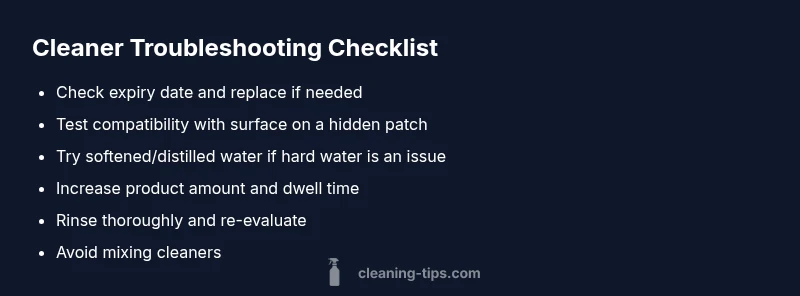
- easyCheck expiry date and replace if needed
- easySwitch to a cleaner formulated for your surface and water type
- easyUse softened/distilled water or pre-dampen the surface
- easyIncrease product amount slightly and extend dwell time by 1–2 minutes
- easyRinse thoroughly and reapply with proper technique
Questions & Answers
Why isn’t my cleanser removing dirt as expected?
Several factors can hinder cleaning performance, including diluted formula, hard water minerals, surface type, and insufficient contact time. Start with basic checks and test on a hidden area before wider use. If the issue continues, switch to a product designed for your surface.
Common reasons include dilution, hard water, and not allowing enough contact time. Start with quick basic checks and test on a hidden patch.
Could expired cleaner affect performance?
Yes. Expired cleaners can lose potency and may not perform as intended. Always check the expiry date and replace when past it to restore cleaning effectiveness.
Expired cleaners may lose potency; check the date and replace if needed.
Can hard water affect cleaning effectiveness?
Yes, minerals in hard water can interfere with cleaning action and suds. Use softened water or a formula designed for hard water when possible.
Hard water can reduce cleaning effectiveness; use softened water or a hard-water formula.
Is it safe to mix cleaners to boost results?
Avoid mixing products. Combining cleaners can release harmful fumes and damage surfaces. Use one product at a time and follow label directions.
Don’t mix cleaners; it can be dangerous. Use one product at a time.
When should I replace a cleaner rather than troubleshooting?
If the product shows expiry, changes in texture or color, or continues to underperform after steps, replace it. Fresh products perform best.
Replace if expired or still underperforms after troubleshooting.
Do I need professional help for tough stains?
For stubborn stains or potential contamination, a professional cleaner or service can provide tailored advice and safer methods.
For tough stains, a professional can offer targeted guidance.
Watch Video
The Essentials
- Test compatibility before large applications
- Check expiry and storage conditions
- Use correct product for surface and water type
- Don’t mix cleaners; follow label directions