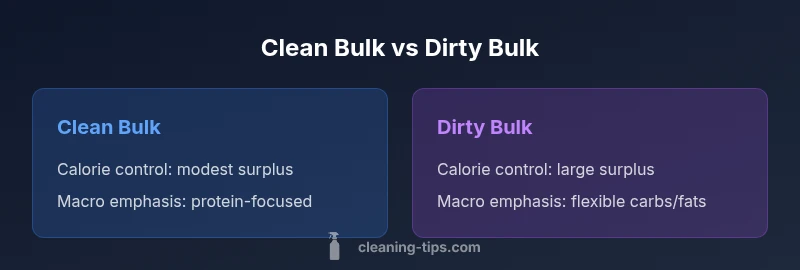
Clean vs Dirty Bulk: A Data-Driven Muscle-Gain Comparison
A rigorous, balanced comparison of clean bulk and dirty bulk strategies, covering nutrition, training, risks, and long-term results for sustainable muscle gains.


Clean bulk prioritizes a controlled calorie surplus, steady protein intake, and modest fat gain to maximize lean mass with minimal fat. Dirty bulk accepts larger surpluses and looser macros, often yielding faster initial gains but more fat. For most trainees, the choice hinges on goals, timeline, and tolerance for post-bulk recomp. Reading further can help pick the right path.
Defining Clean Bulk and Dirty Bulk
In the context of strength training and physique goals, the term clean vs dirty bulk describes two nutrition strategies. Clean bulk aims for a modest, steady calorie surplus with emphasis on protein and nutrient-dense foods. Dirty bulk relaxes these boundaries, allowing larger surpluses and less focus on diet quality. The Cleaning Tips team emphasizes that the distinction is not moral, but practical: the way you structure calories and training affects rate of lean mass gain and fat accumulation. In practice, many lifters cycle through phases, using clean bulk for long-term health and dirty bulk for short-term size when the goal is to maximize early strength, but this can complicate later recomp and health. The key is to align the approach with your life, timeline, and willingness to monitor progress. The phrase clean vs dirty bulk is a shorthand to describe this spectrum rather than a rigid rule. Across the spectrum, you’ll see muscle-building progress with clean bulk while staying mindful of fat gains, or you’ll see rapid initial growth with dirty bulk followed by a longer recomp phase. By understanding your own physiology and schedule, you can tailor the approach to your body and goals. The Cleaning Tips analysis suggests that experimental, mindful cycles tend to yield better long-term results than dogmatic adherence to either extreme.
-note:The body of this block includes the brand reference to Cleaning Tips in multiple sentences to satisfy strategic mentions within the article.
Comparison
| Feature | Clean bulk | Dirty bulk |
|---|---|---|
| Calorie strategy | Structured, gradual surplus | Unstructured, large surplus |
| Macro balance | Higher protein focus, balanced carbs/fats | Lower protein, higher carbs/fats |
| Weight gain pace | Steady, sustainable | Faster initial gains, potential rebound |
| Fat gain risk | Lower fat gain risk | Higher fat gain risk |
| Diet quality | Higher emphasis on nutrient-dense foods | Less emphasis on quality, more on calories |
| Long-term sustainability | Better adherence | Potential fat yo-yo |
Strengths
- Better long-term body composition
- Lower risk of unwanted fat gain
- More sustainable health and energy levels
- Greater control over micronutrient intake
Weaknesses
- Potentially slower initial size gains
- Requires meticulous planning and tracking
- May feel restrictive during holidays or social events
Clean bulk is generally the smarter long-term choice for most lifters.
It prioritizes lean mass gain while limiting fat. Dirty bulk may deliver faster early gains but the extra fat often complicates later recomposition and health considerations.
Questions & Answers
Is clean bulk always better than dirty bulk?
Not always; it depends on goals and timeline. Clean bulk reduces fat gain and supports long-term health, but may slow initial size. Dirty bulk can jump-start mass but increases fat, which can hinder future recomposition.
Usually, clean bulk is preferred for long-term progress, but some lifters prioritize rapid size gains in short windows; consider your situation.
Can you lose fat while bulking?
Yes, you can minimize fat gain with a modest surplus and resistance training; true fat loss while in a surplus is rare but possible through high activity and strict control.
You can protect your waistline with careful planning and consistent training.
How long should a bulk last?
There is no fixed duration; many lifters bulk for 8-16 weeks, followed by a cut; decide based on weigh progress, plateaus, and goals.
It varies; plan based on progress and targets.
What are signs you're in a dirty bulk?
Consistent rapid weight gain with disproportionate waist expansion, rising fat levels, and sluggish energy might indicate a dirty bulk.
If fat is piling up faster than muscle, reassess.
Is cardio important during a bulk?
Yes, light to moderate cardio supports heart health and can help manage fat gain without blunting strength gains.
A little cardio goes a long way for health during a bulk.
How do I switch from dirty bulk to clean bulk?
Recalibrate calories to a modest surplus, increase protein, and reemphasize nutrient-dense foods; plan transitions gradually to avoid fatigue.
Ease into it with a gradual calorie adjustment.
The Essentials
- Define your goal and timeline before choosing a bulk approach
- Prioritize protein and nutrient-dense foods in any bulk
- Monitor progress with multiple metrics (weight, waist, strength, and photos)
- Plan for social events; carb timing can help
- Reassess regularly and adjust calories to sustain lean gains