Difference Between Clean and Unclean in the KJV: A Comparative Analysis
Explore the difference between clean and unclean kjv, examining Levitical purity, ritual boundaries, and how New Testament teaching reframes these terms for readers today in a balanced, analytical study.


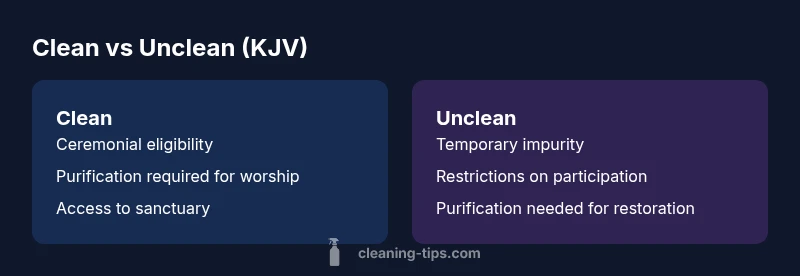
The difference between clean and unclean kjv describes ceremonial purity boundaries in biblical law, not direct moral judgment. In the KJV, these terms regulate worship, ritual purity, and access to the sanctuary, with purification rituals restoring status. This quick distinction sets the stage for deeper study of Levitical codes and gospel reinterpretation.
Context and Purpose
According to Cleaning Tips, the 'difference between clean and unclean kjv' is not a simple hygiene scheme but a structured lens for ceremonial life. In the King James Version, terms like clean and unclean distinguish objects, foods, people, and activities that carry ceremonial status rather than making value judgments about character. For modern readers, this distinction invites careful interpretation: it concerns order, worship, and obedience to divine commands within a covenant framework. By studying the difference between clean and unclean kjv, readers gain insight into how ancient communities organized purity rules, prepared offerings, and maintained community boundaries. The KJV uses ritual categories to regulate access to the sanctuary, to define sacrifices, and to structure daily life around sacred time. Three guiding questions help: what is being qualified, what makes it clean or unclean, and how purification restores status. The Cleaning Tips team emphasizes approaching these terms within historical context and avoiding anachronistic moral judgments.
Linguistic framing in the KJV
Linguistically, the KJV renders Hebrew terms related to purity with a mix of direct and nuanced phrasing. The same root concepts appear across foods, containers, and people, but the surrounding context determines whether an item is deemed clean or unclean for worship or daily life. Translators faced choices about how literally to render ritual concepts versus how to communicate them to 17th-century English readers. The result is a spectrum rather than a binary: some passages emphasize boundary maintenance, others highlight the idea of separation for holiness without denying God’s ongoing presence with the people. This framing matters for careful exegesis because it shapes how readers approach passages about cleansing rites, temple service, and the implementation of purity laws in later biblical books.
Definitions and scope
Clean and unclean function as categories rather than moral adjectives in many biblical contexts. In Leviticus, cleanliness is tied to ritual status that affects participation in communal worship and offerings. Unclean status in some cases is temporary, requiring specific acts of purification like washing, waiting periods, or sacrificial rites. The scope includes foods, contact with the dead, skin diseases, bodily discharges, and sacred garments. However, the same terms can appear in different theological frames—sometimes signaling ceremonial separation, sometimes indicating a need for moral reform in light of covenant expectations. An important nuance is that being declared clean or unclean does not inevitably imply moral virtue or lack thereof, but rather situates the individual or object within a system of purity that undergirds worship and communal life.
Levitical law and ritual purity
Leviticus lays out the core structure of ritual purity, with explicit lists and procedures that explain how purity is gained, maintained, and restored. The text presents a model of order: certain foods are declared clean for consumption, others unclean and forbidden; contact with corpses or certain diseases creates temporary impurity; purification involves ritual washing, time, and sometimes sacrifices. The covenantal framework ties these practices to the holiness of God and the sanctity of the community. Readers should note that purity regulations serve liturgical aims, not arbitrary personal preference. The most important takeaway is that purity boundaries reflect a divine order intended to honor God and protect Israel’s worship life.
Food laws and purity
Food purity represents a significant portion of the clean/unclean scheme. Clean foods are permitted, unclean foods are prohibited for sacred reasons, and both categories influence daily life and ritual meals. The dietary codes are not mere dietary guidelines; they embody theological statements about separation, stewardship, and dependence on divine instruction. In the KJV, these rules illustrate how everyday choices—what one eats and how one handles food—are connected to worship and covenant fidelity. When reading these passages, consider the symbolic meaning behind the restrictions and how purification rituals intersect with meal practices, community identity, and the sense of belonging to a gathered people before God.
Worship life and purity in daily practice
Purity concepts extend beyond food into worship settings, including how one interacts with the sanctuary, priests, and sacrificial procedures. Cleanliness affects eligibility for service, during ceremonial washings and the preparation for offerings. The distinction therefore shapes the rhythm of religious life: festivals, sacrifices, and daily routines assume a level of ritual cleanliness that sustains contact with the divine. This section emphasizes that purity is not merely about personal hygiene; it is about alignment with the holiness of God in communal worship. For readers, this means recognizing how ritual acts reinforce covenantal boundaries and the holiness that underpins Israelite worship life.
Jesus and the purity discourse in the Gospels
The gospel narratives reframe purity language while preserving some underlying concerns about devotion and worship. Jesus challenges some ceremonial expectations while affirming deeper principles such as mercy, faith, and the heart’s condition. In the New Testament context, the emphasis shifts from external ritual status to interior transformation and the reformulation of purity in light of Christ’s redemptive work. The Gospels show how early Christian communities navigated Jewish purity norms and began articulating a broader understanding of holiness that includes all people who place trust in God. This shift is central to interpreting passages that mention clean and unclean in the synoptic gospels and other early Christian writings.
Key passages in Leviticus and the Gospels
Key passages in Leviticus establish the primary framework for purity: lists of clean and unclean foods, rules about bodily impurities, and guidelines for purification rituals. In the Gospels, you will see Jesus addressing purification in ways that reveal a transition from boundary-focused purity to heart-centered righteousness. Interpreting these passages side by side helps readers grasp how early readers understood purity both as worshipful obedience and as a lens on human nature. The juxtaposition underscores continuity and change across biblical books and highlights how translators of the KJV highlighted certain terms to convey these enduring themes.
Interpretive approaches across translations
Different Bible translations render purity language with varying emphasis. Some translations lean toward literal Hebrew roots, while others simplify or reinterpret terms to communicate broader themes of holiness and worship. The King James Version preserves traditional phrasing that often emphasizes ritual boundaries, while more recent translations may foreground metaphorical or ethical dimensions. For readers, comparing translations can illuminate how translation choices influence interpretation, particularly for terms related to cleanliness, ritual status, and ceremonial requirements. This comparative method enhances understanding and helps readers avoid misreading ceremonial language as universal moral judgments.
Common misconceptions Debunked
A frequent misconception is that 'clean' equals moral virtue and 'unclean' equals moral failing. In many biblical contexts, purity terms operate within a ceremonial frame that is distinct from ethical character, even if later Christian writers discuss purity in moral terms. Another misperception is that purity rules are outdated or irrelevant to faith today; the historical and theological significance remains a legitimate field of study, and some symbols continue to influence liturgical practice or symbolic readings in contemporary communities. Finally, readers should avoid assuming that the purity system solves every moral question; rather, it shows how ancient societies organized worship and social boundaries around divine commands.
Practical implications for modern readers
For modern readers, the main lesson is to distinguish ceremonial purity from ethical instruction. Recognize when purity language describes ritual status and when it illustrates broader themes about devotion, obedience, and reverence. Study methods should include cross-referencing Levitical passages with gospel texts and consulting scholarly commentaries that discuss historical context and translation choices. This balanced approach prevents anachronistic readings and helps readers appreciate how ancient purity concepts contribute to a fuller understanding of biblical theology. In practice, you can treat purity terms as historical keys to interpreting worship practices rather than as universal moral judgments that apply to contemporary ethics.
How to study responsibly and ethically
A responsible study plan begins with a clear definition of what 'clean' and 'unclean' mean within their original covenant context. Use reputable commentaries, scholarly articles, and translation notes to track how terms shift across books and over time. When you encounter passages that discuss purity, write down the questions you want answered: what is being purified, what is the purpose of purification, and how does the surrounding narrative frame the term? Finally, integrate this understanding with a broader biblical theology that emphasizes God’s holiness and mercy. This approach ensures a rigorous, fair, and historically grounded interpretation of the KJV’s purity language.
Authority and further reading
For readers who want to deepen their understanding, consult scholarly sources and canonical references. This article draws on established commentaries and historical analyses of biblical purity language. Recommended starting points include major reference works on Leviticus, ritual purity, and New Testament reinterpretation of purity concepts. Cross-check terms against other translations to see how rendering choices affect interpretation. While this topic can be intricate, a careful, thoughtful study yields a richer appreciation of how the KJV’s cleanliness vocabulary functions within its theological and liturgical framework.
Comparison
| Feature | Clean (KJV) | Unclean (KJV) |
|---|---|---|
| Scope | Ceremonial purity boundaries | Ceremonial impurity boundaries |
| Source | Levitical laws and ritual practice | Levitical laws and ritual practice |
| Purification | Washing, time, offerings as prescribed | Purification often implied or ritual waiting periods |
| Context in NT | Reframing through Christ’s teaching | Shift toward mercy and interior purity |
| Modern application | Mostly historical and liturgical study | Symbolic/hegemonic discussions in some traditions |
Strengths
- Clarifies Levitical purity for focused study
- Illustrates how ritual boundaries framed worship
- Supports careful cross-translation comparison
- Helps readers distinguish ceremonial vs moral language
Weaknesses
- Can be misread as moral judgment
- Modern practice often de-emphasizes ritual purity
- Translations may obscure historical nuance
Ceremonial boundaries define the KJV purity vocabulary; moral ethics require separate interpretation
Understanding purity in the KJV means tracing its ceremonial purpose within Leviticus and recognizing how the gospel reinterprets these terms. This approach honors historical context while guiding responsible modern reading.
Questions & Answers
What does clean mean in Leviticus and how is it determined?
In Leviticus, 'clean' describes ritual eligibility for worship and offerings. It is determined by specific criteria and procedures that separate what is appropriate for sacred use from what is not. The aim is to preserve holiness in the community and before God.
Clean means fit for sacred use under the covenant. It’s about ritual status, not moral judgment.
Does the KJV equate clean with moral righteousness?
Not inherently. The terms often relate to ceremonial order rather than direct moral virtue. Some passages use purity language to illustrate inner devotion, but the primary framework is ritual, not ethics alone.
Usually not—it's about ritual status rather than moral character.
How does Jesus’ teaching affect the understanding of purity?
Jesus shifts emphasis from external ritual boundaries to inward faith and mercy. He often critiques ceremonial rigidity while reaffirming the heart’s relationship to God, showing that holiness includes genuine compassion and obedience beyond ritual rules.
Heredirects purity from outward acts to inner faith and love.
Are ritual purity rules still binding for Christians today?
Most Christian traditions interpret purity laws as part of historical Israel’s covenant context, not as universal binding rules for believers today. Contemporary application tends to focus on spiritual cleanliness, holiness of life, and ethical behavior.
They’re generally seen as historical, not binding today.
What are key passages to study for this topic?
Leviticus contains the primary purity lists and rites, while the Gospels present Jesus’ reinterpretation of purity boundaries. Cross-reference with Pauline discussions on the body and moral purity for a fuller view.
Look at Leviticus and the Gospels for contrast and development.
How should I approach translations when researching this topic?
Compare how different translations render terms for clean and unclean. Note shifts in nuance, especially between literal renderings and interpretive paraphrases, to grasp how terminology influences interpretation.
Use multiple translations to see wording differences.
The Essentials
- Define purity in its covenantal, ceremonial sense
- Differentiate ritual cleanliness from moral virtue
- Compare Levitical and Gospel portrayals of purity
- Use multiple translations to reveal wording nuances
- Consult scholarly sources to ground interpretation
- Apply insights to historical and liturgical study